Safaricom’s M-Pesa Enters Ethiopia as Wave Secures a West African Bank Licence
Fintech · Africa
—The stakes. Africa’s mobile money and fintech sector is being reshaped by new bank licences, regional expansion, and tighter regulation.
—The date. Key developments run through the financial year ending March 31, 2026, and mid-2026 regulatory approvals.
—The players. Safaricom’s M-Pesa, Wave Mobile Money, and Nigerian unicorns Flutterwave and Moniepoint are driving the current shift.
—The friction. Safaricom’s Ethiopian M-Pesa unit posted a loss after tax of KSh 47.1 billion despite rapid user growth.
—The outlook. Interoperability schemes like PAPSS and central bank digital currency experiments are pushing the sector toward cross-border integration.
Africa’s fintech frontier is hardening into a regulatory battlefield where telecoms, standalone fintechs, and central banks now compete for the same deposit base. The year to March 2026 shows that winning licences is easier than converting them into profits, as Safaricom’s Ethiopian M-Pesa losses demonstrate.
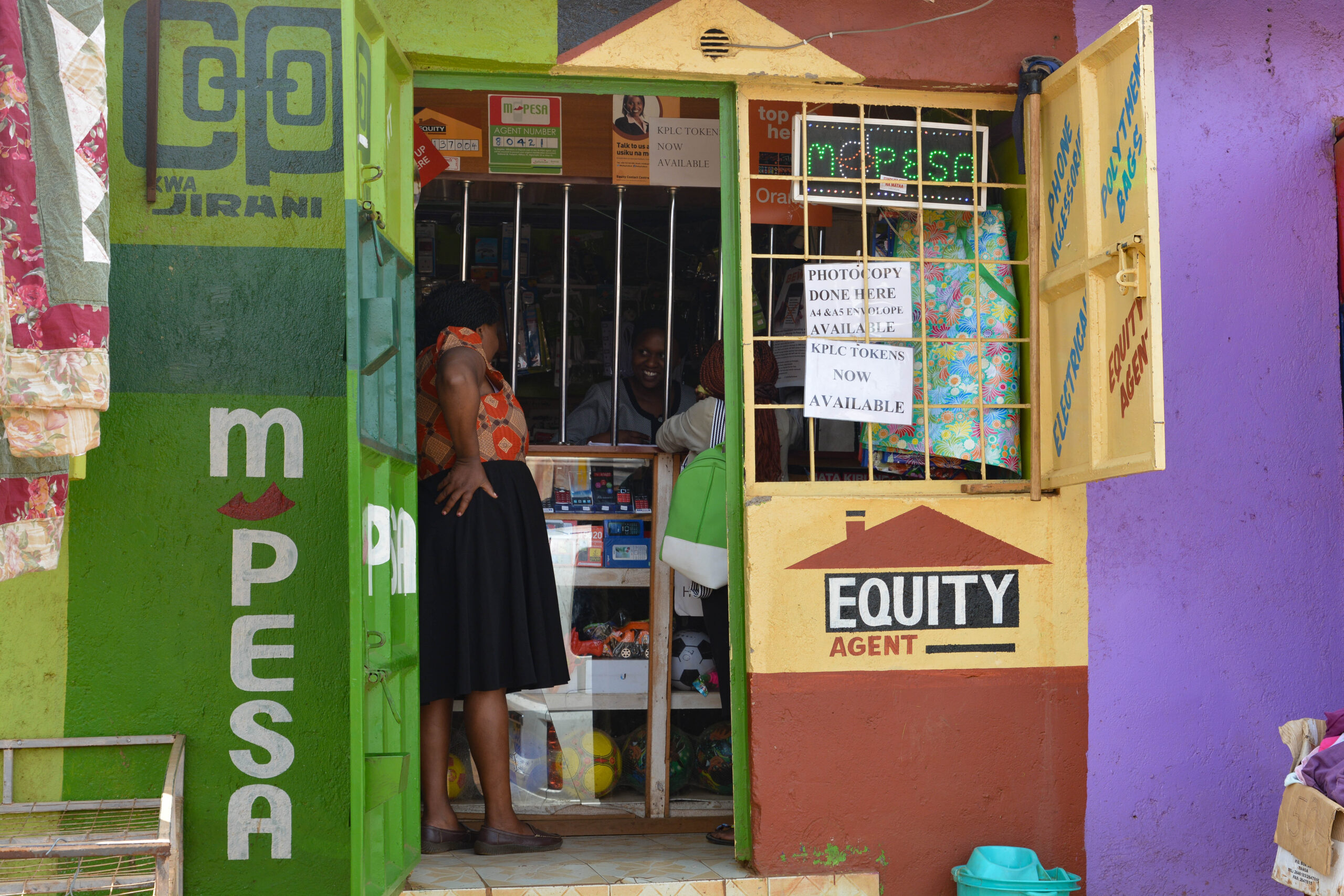
M-Pesa’s Ethiopian Expansion Tests a Dominant Model
Safaricom Ethiopia received a Payment Instrument Issuer License from the National Bank of Ethiopia to operate M-Pesa.
The regulator amended its National Payment Systems Proclamation to permit foreign-owned telecom operators in mobile financial services.
Safaricom paid US$150 million for the mobile money licence, on top of a US$850 million telecom licence.
Consortium partners including Sumitomo, British International Investment and Vodacom invested over US$2.27 billion in the Ethiopian venture.
M-Pesa launched in Ethiopia in August 2023, about two and a half years before the close of FY26.
Ethiopian Growth, But a Deep Loss
M-Pesa Ethiopia reached 5.2 million users active in the past 90 days, and 2.69 million in the past 30 days, after integration with EthSwitch, the national switch.
Transaction volumes grew 168.7 percent year-on-year for the financial year ending March 31, 2026.
Revenue from M-Pesa Ethiopia was only KSh 14.4 million, approximately US$77,000.
That contribution equalled about 0.10 percent of Safaricom Ethiopia’s service revenue.
The Ethiopian unit posted a group loss after tax of KSh 47,148.6 million, about US$364 million.
The Cost of a Licence Versus Its Return
A World Bank assessment put licence costs at about US$66.7 million a year, or US$1 billion over 15 years, far exceeding early M-Pesa revenue.
Safaricom is targeting EBITDA break-even for the Ethiopia unit by FY27.
The company’s direct licence-related costs rose to about US$126.7 million for the year ended March 2026.
That was up from roughly US$113.4 million in the previous year.
Safaricom now holds a 25-year operating licence from Kenya’s Communications Authority under the Unified Licensing Framework.
Wave’s West African Bank Licence Changes Its Status
Wave Mobile Money obtained an electronic money licence from the Central Bank of West African States in April 2022.
It became the first non-bank, non-telecom fintech authorised to operate in the West African Economic and Monetary Union.
Wave launched a commercial bank called Wave Bank Africa S.A. in Côte d’Ivoire.
The bank launch followed a €117 million debt financing round completed in June 2025.
Rand Merchant Bank led that round, with British International Investment, Finnfund, and Norfund participating.
Wave’s Low-Fee Model and Public Infrastructure Push
Wave reports serving more than 21 million users across Africa and emphasises a low-fee model.
The 2025 debt financing raised US$137 million to expand operational capacity across the continent.
Wave obtained operational approval in Cameroon in 2025 through a partnership with Commercial Bank Cameroon.
Senegal’s Ministry of Health signed a formal partnership with Wave to digitise payments across public health facilities.
Health Minister Ibrahima Sy said digital payments would become a permanent standard in all health facilities.
Nigeria’s Fintech Unicorns Move Into Deposit-Taking
Flutterwave Inc., often described as Africa’s most valuable fintech unicorn, secured a Nigerian national microfinance bank licence in April 2026.
The Central Bank of Nigeria granted the licence, allowing Flutterwave to offer bank accounts and hold customer deposits.
The licence also permits Flutterwave to lend money subject to regulatory limits.
Moniepoint and OPay have similarly obtained Nigerian banking-related licences, expanding their deposit-taking capacity.
This shift places fintech unicorns in direct competition with traditional commercial banks for retail deposits.
New Banking Licences Reshape Competition
The CBN’s licensing moves give fintechs a stronger domestic funding base and lending capacity.
Flutterwave’s licence allows it to move beyond payments into core banking services.
Moniepoint and OPay, already dominant in Nigerian agent banking, can now deepen their product offerings.
Traditional banks face pressure on deposit costs and customer acquisition as fintechs expand.
The licensing wave reflects a broader CBN strategy to formalise fintech operations while tightening oversight.
PAPSS and the Push for Cross-Border Interoperability
The Pan-African Payment and Settlement System, PAPSS, supports instant cross-border payments in local currencies.
Interoperability schemes like PAPSS aim to reduce reliance on correspondent banking and hard currency.
They connect national switches and payment systems, including Ethiopia’s EthSwitch and West African platforms.
For investors, PAPSS represents a structural reduction in the cost of moving money across African markets.
CBDC Experiments Advance Amid Regulatory Caution
Several African central banks are running central bank digital currency, or CBDC, pilot programmes in 2026.
Other central banks are testing wholesale CBDCs for settlement between financial institutions.
Regulators are tightening rules on fintech capital, consumer protection, and data governance.
CBDC development is proceeding alongside, not replacing, private mobile money ecosystems.
Tighter Regulation Closes the Arbitrage Window
Kenya’s 25-year Safaricom licence signals a shift from short-term permits to long-term regulatory certainty.
Ethiopia’s amended National Payment Systems Proclamation created a framework for foreign operators but at a high licensing cost.
Nigeria‘s CBN is requiring fintechs to hold more capital and meet stricter reporting standards.
Wave’s BCEAO licence and bank launch in Côte d’Ivoire subject it to dual oversight as a fintech and a bank.
The regulatory trend is toward formalisation, higher compliance costs, and fewer lightly-regulated entrants.
The Numbers Behind Africa Mobile Money
Mobile money in Africa is no longer just about Kenya. The GSMA counted 1.75 billion registered mobile money accounts worldwide in its 2024 report, based on 2023 data. Of these, 435 million were active every month. Global transaction value reached US$1.4 trillion in 2023, a 14 percent jump from the year before. Transaction volumes grew even faster, rising 23 percent to 85 billion.
This global growth is visible in specific markets. In Ethiopia, M-Pesa processed 442.2 million transactions in the 2026 financial year, up 168.7 percent. Transaction values reached KSh 28.6 billion, about ETB 32.5 billion, across the full financial year. Yet the local leader, Telebirr, had 58.61 million subscriptions by December 2025 and was handling ETB 7.6 billion daily. The gap shows how much room M-Pesa still has to grow.
In Nigeria, the broader e-payments market hit ₦3.46 quadrillion in 2025, about 26 percent above the prior year. Mobile money agent transactions rose 65.8 percent in volume, from 17.337 billion in 2024 to 28.741 billion in 2025. Their value rose from ₦205.31 trillion to ₦372.14 trillion. PAPSS activity by Nigerian participants also jumped, from US$29.23 million settled in 2024 to US$143.40 million in 2025.
What the 2026 Market Means for Investors
Safaricom’s Ethiopian losses show that scale in users does not quickly translate into scale in revenue.
Wave’s €117 million debt round and bank launch indicate a shift toward balance-sheet-heavy fintech models.
Nigeria’s unicorn licences create new lending and deposit franchises but also bring capital and compliance burdens.
PAPSS and CBDCs point to a future of lower friction for cross-border trade and investment.
The common thread is that mobile money is becoming a regulated banking layer, not just a payments rail.
Connected Coverage
DR Congo: Kinshasa Comics Festival Returns After Six Years
The Big Picture
This article was produced by The Rio Times’ automated newsroom system. How we use AI · Report an error
LatAm Markets: Live Signals → — real-time movers, turnover leaders and FX across Latin America.
Read More from The Rio Times