Argentina Markets: Merval & the Peso — October 2, 2026
Updated 1 time · Latest: 2 October 2026
Key Facts
- The Merval fell 2.15% to 2,758,840 points, its lowest close since mid-May, according to Argentine market reports.
- Country risk climbed to roughly 636 basis points, the highest since December 2025, weighing on the Milei reform trade.
- The peso was virtually flat at 1,525 per US dollar, holding near the weak end of its 52-week range.
- Banks led the sell-off with Grupo Galicia down 3.1% and Banco Macro losing 2.3%.
- Brazil was the only gainer among the region’s main indices, while Mexico and Chile also fell.
Today’s Focus
Argentina’s benchmark stock index, the Merval, closed Thursday down 2.15% at 2,758,840 points, its lowest close since mid-May according to Argentine market reports. Argentine ADRs also fell sharply on Wall Street.
The real story was in the bond market’s mood. Country risk, a gauge of how much extra yield investors demand to hold Argentine debt over safe US Treasuries, touched about 636 basis points, the highest since December 2025, according to local reports.
Banking and energy shares took the brunt. Grupo Galicia, Banco Macro, and Central Puerto all fell more than 2%, while oil giant YPF slipped 1.1%.
The peso, meanwhile, barely moved. The official wholesale rate closed at 1,525 per dollar, down just 0.01%.
What matters today. Investors are demanding a higher premium for Argentine risk, and sovereign dollar bonds came under pressure, which keeps pressure on local shares.
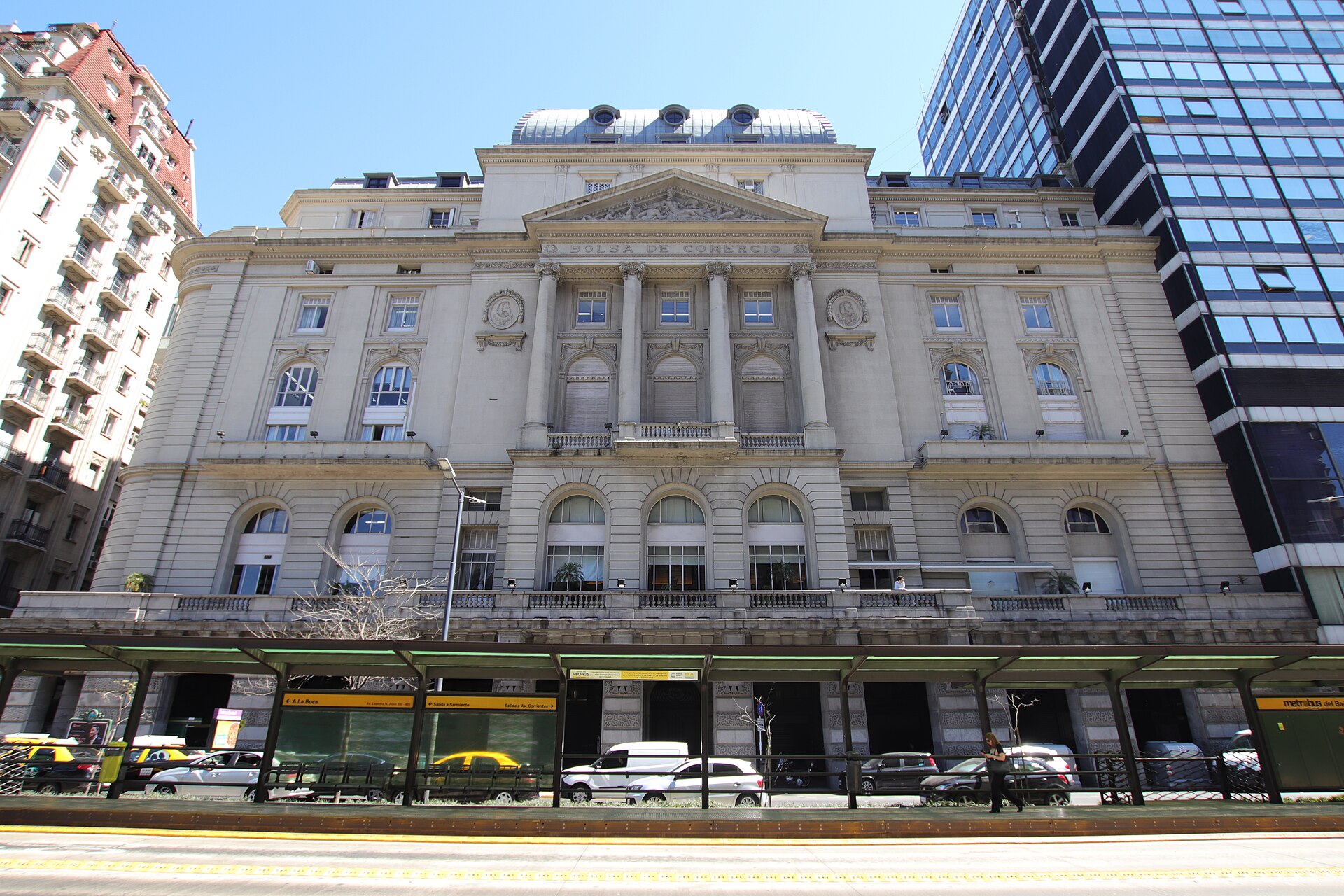
01 The session in one read
Argentina’s Merval index, the main barometer of Buenos Aires-listed shares, closed Thursday down 2.15% at 2,758,840 points. It was a sobering start to October for the Milei reform trade, the wave of buying tied to the president’s pro-market deregulation drive.
The slide was broad but hardly panicked. Banks and utilities absorbed the heaviest selling, while state-controlled oil producer YPF slipped only 1.1%.
The peso offered little drama. The official wholesale rate stood at 1,525 per dollar, a fraction weaker than the previous session and hugging the weak end of its 52-week range of 1,355 to 1,525.
Behind the quiet equity tape, government bond traders grew edgier. Country risk, the premium investors charge to hold Argentine debt instead of US Treasuries, rose to around 636 basis points, the highest since December 2025.
This was a classic risk-off day for Argentina. Country risk reached its highest since December 2025, and Argentine ADRs fell by as much as 5% on Wall Street. The Merval remains 30.51% higher over 12 months, which suggests investors are trimming exposure rather than abandoning the trade. The variable to watch is whether country risk stabilises below 640 basis points, because a further climb would add pressure on local banks and utilities. We could not confirm a single domestic trigger for the move.
02 The day’s numbers
| Measure | Level | Change | Read |
|---|---|---|---|
| Merval index | 2,758,840 | +0.00% | Profit-taking across the board |
| USD/ARS (peso) | 1,525 | -0.01% | Stable near 52-week low |
| 52-week range (peso) | 1,355–1,525 | — | Peso at weak end of range |
| Country risk | ~636 bps | higher | Highest since Dec 2025 |
The Merval closed the session at 2,758,840 points, down 2.15%, a move that still leaves the index about 30.5% higher than a year ago. The peso’s tiny 0.01% decline against the dollar masked a longer story: it sits at the very bottom of its one-year band.
Country risk is not listed on the stock exchange but it shapes every Argentine trade. The jump to roughly 636 basis points tells you that bond investors, who usually sniff out trouble first, are demanding more compensation for political and fiscal uncertainty. Rio Times · Live Market Intelligence
Live Market IntelligenceArgentina — Live Market Board
Argentina — Live Market Board
Instrument Last Change YoY Prev. High Low Volume
MERVAL
2,758,840
+0.00%
+30.51%
3,022,485
3,042,365
2,991,150
—
USD/ARS
1,493
+0.10%
+12.96%
1,491
1,494
1,480
—
YPF
7,810
+0.26%
+72.84%
7,790
7,850
7,600
1,763,858
GGAL
6,980
-0.78%
+1.82%
7,035
7,115
6,920
1,564,062
PAMPA
5,115
+0.69%
+26.70%
5,080
5,140
5,000
721,190
TXAR
747.50
-2.35%
+18.67%
765.50
770.00
742.50
771,892
ALUAR
938.00
-1.21%
+29.83%
949.50
951.00
932.50
135,426
TGS
8,870
-0.17%
+15.05%
8,885
9,075
8,720
143,546
CEPU
2,156
+1.84%
+28.36%
2,117
2,165
2,086
404,146
MIRGOR
1,650
-1.20%
-92.90%
1,670
1,670
1,635
20,877
COME
40.93
-0.73%
-30.47%
41.23
41.60
40.50
4,258,884
LOMA NEGRA
3,130
+0.08%
+5.80%
3,128
3,205
3,090
182,992
BYMA
275.00
-1.70%
+35.14%
279.75
282.50
272.00
1,409,575
TELECOM ARG
4,233
-0.70%
+55.19%
4,263
4,335
4,160
31,896
GLOBANT
38.10
-2.26%
-49.65%
38.98
38.70
36.77
793,552
MERCADOLIBRE
1,870
-3.59%
-20.71%
1,940
1,927
1,870
329,640
03 Why it moved: Argentine assets sell off
The selling was concentrated in Argentine assets listed in New York. Argentine ADRs fell by as much as 5% on Wall Street, with IRSA down 5.2%, Telecom 5.1% and Corporación América 4.6%, according to Argentine market reports.
Country risk closed at about 636 basis points, 29 above the previous sessions and the highest since December 2025, local reports said. September had already been negative, with the measure adding almost 100 points over the month.
We could not confirm a single domestic trigger in the market reports reviewed, so the day reads as broad risk-off selling in Argentine assets rather than a reaction to one piece of news.
Sovereign dollar bonds also came under selling pressure, with Bonares and Globales losing about 0.6% on average during the session, according to El Economista.
Tax data arrived after the close. ARCA, the national tax agency, reported September collection of ARS 21.36 trillion (about US$14.0 billion at 1,525 pesos per dollar), up 38.3% from a year earlier and from ARS 20.5 trillion (about US$13.4 billion at the same rate) in August. The consultancy IARAF puts the real increase at 3.7%. Firmer receipts help the state’s finances, though they did not stop country risk from rising on the day.
04 The day’s movers
| Driver | Level / Move | Change | Note |
|---|---|---|---|
| Grupo Galicia (GGAL) | -3.1% | $21m | Largest bank decliner |
| Banco Macro (BMA) | -2.3% | $2m | Fell with financial sector |
| YPF (YPFD) | -1.1% | $7m | Energy major resisted heavier losses |
| Pampa (PAMP) | -1.7% | $3m | Utilities under pressure |
| Central Puerto | -2.3% | — | Power generator slipped |
Grupo Galicia, one of Argentina’s biggest private banks, led the most-traded names with a 3.1% drop on US$21 million in turnover. Its peer Banco Macro fell 2.3%.
Pampa and Central Puerto, the power generators, fell 1.7% and 2.3%, so the utilities did not offer shelter either.
05 The regional scoreboard
| Index | Country | Change |
|---|---|---|
| Ibovespa | Brazil | +0.46% |
| S&P/BMV IPC | Mexico | −0.60% |
| S&P IPSA | Chile | −0.56% |
| Merval | Argentina | +0.00% |
Argentina underperformed its Latin American peers by a wide margin. Brazil’s Ibovespa gained 0.46%, while Mexico’s IPC fell 0.60% and Chile’s IPSA slipped 0.56%.
The regional picture was one of drift rather than panic, but Argentina’s slide stands out because it was concentrated in Argentine assets, not a synchronised emerging-market sell-off.
06 The technical picture
The Merval closed at 2,758,840 points, which still puts it well above its year-ago level despite the session’s drop. The index has been climbing a wall of political worry, and this pullback looks like normal digestion after a strong run.
For the peso, the technical story is simpler. Trading at 1,525 per dollar means the currency is pinned to the weak end of its 52-week range—any fresh political shock would likely test that floor first.
The practical level to watch on the Merval is whether buyers defend the 2.7 million mark. A close below that on rising volume would signal that the reform trade is losing its most patient supporters.
07 What to watch
- ADR moves in New York: A rebound in Argentine ADRs after Thursday’s fall of up to 5% would signal that the sell-off is easing.
- Country risk trend: Now near December highs, further widening would signal deeper investor unease about fiscal and political stability.
- Sovereign dollar bonds: Whether Bonares and Globales stabilise after Thursday’s selling will shape country risk.
- Regional peers: Brazil’s vote on 4 October and Friday’s US jobs report will shape sentiment across Latin American markets.
Frequently Asked Questions
What is the Merval?
It is Argentina’s benchmark stock index, tracking the biggest and most traded companies listed on the Buenos Aires exchange.
Why did the Merval fall on October 1?
Investors grew cautious as country risk rose to its highest since December 2025, while Argentine ADRs fell by as much as 5% on Wall Street.
What is country risk?
It measures the extra yield investors demand to hold a country’s debt over safe US Treasuries; higher readings mean less confidence in that country’s finances.
Did the peso weaken?
Barely. The official wholesale rate closed at 1,525 per US dollar, down just 0.01% and still near the weak end of its 52-week range.
Market data: RT; exchange figures from BYMA
This article was produced by The Rio Times’ automated newsroom system. How we use AI · Report an error · Editorial responsibility: Matthias Camenzind, Editor-in-Chief
LatAm Markets: Live Signals → — real-time movers, turnover leaders and FX across Latin America.
Read More from The Rio Times