Argentina Mining Exports Jump 75 Percent, but Most of It Is the Gold Price
Argentina · Analysis
Key Facts
- —The headline Argentina earned US$4.74 billion from mining exports in the first six months of 2026.
- —The comparison That is 75 percent above the same period last year and more than double the old record.
- —What is inside it Gold is 61 percent of the total, lithium about a quarter, silver most of the rest.
- —The part that is real growth Lithium shipments rose 68 percent by volume as four new plants came online.
- —The part that is not Gold and silver output is falling; the export gain there comes from world prices.
- —Why foreign money is arriving A 2024 incentive law offers tax and currency guarantees to very large projects.
Argentina has just posted the best half-year its mining industry has ever recorded, and the government is promoting the number hard. Underneath it, the country is digging up less gold than before and selling it for more.
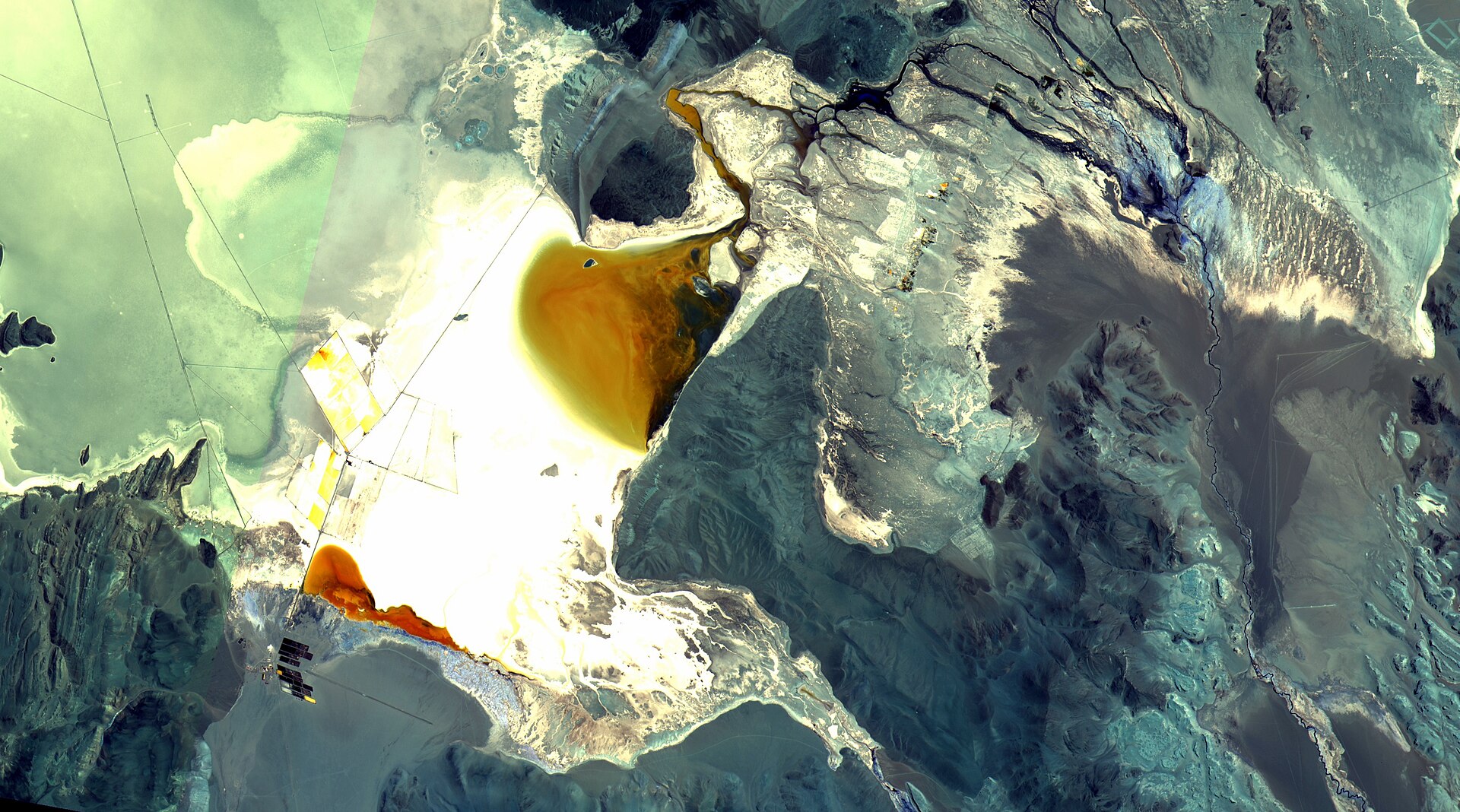
Argentina mining exports reached US$4.742 billion in the first half of 2026. That is a record, it is 75 percent above the same months of 2025, and it is mostly a price story.
The Number and Where It Comes From
The Argentina mining exports figure was compiled by the mining chamber CAEM with the Rosario commodities exchange. The comparison period, the first half of 2025, produced US$2.712 billion.
The previous best first half was around US$2.26 billion, set in 2011. Mining now accounts for close to 10 percent of everything Argentina sells abroad, also a record.
The national statistics office publishes the same period in a different format and reaches almost the same place. Its gold and silver complex came to US$3.504 billion and its lithium complex to US$1.126 billion.
Add the smaller metal categories and the total is US$4.722 billion, within half a percentage point of the industry figure. The 75 percent claim survives the cross-check.
Gold Is Most of It, and Gold Output Is Falling
Gold made up just over 61 percent of Argentina mining exports in the half of the year just closed. In June alone it was 52 percent of the month’s total.
The awkward part is what sits behind that. Argentine gold and silver production has been declining, so the export gain comes from the price rather than from the metal.
Gold reached about US$5,450 an ounce in late January, fell below US$3,900 in mid-July, and traded near US$4,380 on Monday. Those are very large swings for a metal that is 61 percent of a national export line.
A sustained fall in the gold price would shrink Argentina mining exports quickly. There is no production growth underneath to cushion it.
Live Market IntelligenceArgentina — Live Market Board
Rio Times · Live Market Intelligence
Argentina — Live Market Board
-0.16%
186,502.64
+0.54%
63,570.30
-1.01%
11,322.60
-0.17%
3,079,779
-0.16%
2,567.27
-0.81%
58,641.32
-0.25%
| Instrument | Last | Change | YoY | Prev. | High | Low | Volume |
|---|---|---|---|---|---|---|---|
| MERVAL | 3,079,779 | -0.16% | +30.51% | 3,022,485 | 3,042,365 | 2,991,150 | — |
| USD/ARS | 1,493 | +0.10% | +12.96% | 1,491 | 1,494 | 1,480 | — |
| YPF | 7,810 | +0.26% | +72.84% | 7,790 | 7,850 | 7,600 | 1,763,858 |
| GGAL | 6,980 | -0.78% | +1.82% | 7,035 | 7,115 | 6,920 | 1,564,062 |
| PAMPA | 5,115 | +0.69% | +26.70% | 5,080 | 5,140 | 5,000 | 721,190 |
| TXAR | 747.50 | -2.35% | +18.67% | 765.50 | 770.00 | 742.50 | 771,892 |
| ALUAR | 938.00 | -1.21% | +29.83% | 949.50 | 951.00 | 932.50 | 135,426 |
| TGS | 8,870 | -0.17% | +15.05% | 8,885 | 9,075 | 8,720 | 143,546 |
| CEPU | 2,156 | +1.84% | +28.36% | 2,117 | 2,165 | 2,086 | 404,146 |
| MIRGOR | 1,650 | -1.20% | -92.90% | 1,670 | 1,670 | 1,635 | 20,877 |
| COME | 40.93 | -0.73% | -30.47% | 41.23 | 41.60 | 40.50 | 4,258,884 |
| LOMA NEGRA | 3,130 | +0.08% | +5.80% | 3,128 | 3,205 | 3,090 | 182,992 |
| BYMA | 275.00 | -1.70% | +35.14% | 279.75 | 282.50 | 272.00 | 1,409,575 |
| TELECOM ARG | 4,233 | -0.70% | +55.19% | 4,263 | 4,335 | 4,160 | 31,896 |
| GLOBANT | 38.10 | -2.26% | -49.65% | 38.98 | 38.70 | 36.77 | 793,552 |
| MERCADOLIBRE | 1,870 | -3.59% | -20.71% | 1,940 | 1,927 | 1,870 | 329,640 |
Lithium Is the Genuine Expansion
Lithium was about a quarter of the half-year total and rose 186 percent by value. Volumes rose 68 percent, which makes it the one line where Argentina is actually shipping more.
In June the country exported 10,378 tonnes, up 65 percent on the same month a year earlier. National output went from 18,000 tonnes in 2024 to 23,000 in 2025.
Four plants that started in 2025 are still ramping up. They are Sal de Oro, run by Posco; Mariana, run by Ganfeng; 3Q, run by Zijin; and Centenario-Ratones, run by Eramet.
Two older operations, Fénix and Olaroz, have been expanded by Rio Tinto. Seven Argentine projects now produce lithium carbonate.
Lithium carbonate makes up 88 percent of the lithium complex by value. Argentina sits in the salt-flat triangle it shares with Chile and Bolivia.
The Money Coming In
Foreign direct investment held in Argentine mining stood at US$24.849 billion in March, the highest ever recorded. The central bank compiles the series.
That number is a stock, meaning the accumulated position, not an annual flow. The flow figure for the first quarter was US$2.799 billion, itself the largest quarterly inflow on record.
Much of the interest traces to a 2024 law offering thirty-year tax, customs and currency guarantees to investments above a size threshold. It is known by its Spanish initials as RIGI.
By mid-August, twelve mining projects had been approved under it. The largest is Vicuña in San Juan at US$9.7 billion.
Rincón in Salta follows at US$2.7 billion. Los Azules, also in San Juan, carries a similar figure.
All three of those are copper or lithium projects still being built. Copper contributes nothing to this year’s export figure.
What Could Go Wrong
Close to 80 percent of the announced investment is attached to projects still under evaluation rather than approved. Announcements and spades in the ground are different things.
Provincial politics has already stopped one project. Río Negro suspended the Calcatreu gold and silver mine on 21 August.
The province cited a rule requiring most workers to be permanent residents. Operations are halted pending a remediation plan.
In Mendoza, a copper project approved in May faces organised opposition over water. Campaigners argue it threatens the river that supplies three-quarters of the province’s residents, in a region already a decade into drought.
Mendoza’s legislature approved the environmental assessment in December over protests. Construction is not due to begin until mid-2027.
How to Read the Record
The government is presenting the Argentina mining exports record as proof that its investment regime works. The lithium numbers support that reading, and the new plants are real.
The gold numbers do not. They show an industry earning more from a shrinking output because the world has bid up the metal.
Both can be true at once, and the distinction matters for anyone forecasting Argentina’s export earnings. A country that sells less gold at a higher price is not the same as a country that mines more.
The test comes when copper arrives. Argentina has not exported meaningful copper for years, and the projects now under construction are what the incentive regime was written for.
More: Argentina coverage, every day from The Rio Times.
Frequently Asked Questions
How much did Argentina earn from mining this year?
US$4.742 billion in the first half of 2026, according to the mining chamber CAEM and the Rosario commodities exchange, against US$2.712 billion in the same period of 2025. The national statistics office reaches US$4.722 billion using its own export-complex categories, which is within half a percentage point.
Is Argentina producing more gold?
No. Argentine gold and silver output has been declining. The rise in export value comes from the world gold price, which has moved between roughly US$3,900 and US$5,450 an ounce this year. Gold is just over 61 percent of the mining export total, so the headline is highly sensitive to that price.
What is the RIGI?
It is an Argentine incentive regime created in 2024 that offers large investments thirty-year guarantees on tax, customs and access to foreign currency. Twelve mining projects had been approved under it by mid-August 2026, led by the Vicuña copper project in San Juan at US$9.7 billion.
Which minerals matter most to Argentina now?
Gold by value, lithium by growth. Lithium export volumes rose 68 percent in the first half as four new plants came online, and seven Argentine projects now produce lithium carbonate. Copper is the future of the industry but contributes nothing to current exports.
Sources: Ámbito on the half-year mining export record, citing CAEM and the Rosario exchange, INDEC, export complexes for the first half of 2026, Infobae on gold prices and falling Argentine output, La Nación on approved projects under the RIGI incentive regime, iProfesional on the suspension of the Calcatreu project in Río Negro, Ámbito on the composition of mining exports and the investment pipeline
This article was produced by The Rio Times’ automated newsroom system. How we use AI · Report an error
In depth
Read More from The Rio Times