Botswana Diamond Production Rises After Two Lost Years
BOTSWANA · MINING & ECONOMY
Key Facts
- —The increase Debswana plans about 18 million carats in 2026, up from 15 million in 2025, roughly a fifth more.
- —The source The figure came from a central bank official in June 2026 and was confirmed by a Debswana spokesperson. It is not a published company release.
- —The recession Real GDP fell 2.8% in 2024 and 0.7% in 2025. The trough was the fourth quarter of 2025, at minus 5.4% year on year.
- —The turn The first quarter of 2026 returned to growth of 3.5% year on year, with mining up 3.4% and diamond traders up 60.5%.
- —The dependence Diamonds are around 80% of exports on World Bank figures, historically about a third of fiscal receipts and a quarter of GDP.
- —The debt Public debt rose from about 22% of GDP in 2023 to close to 40% in 2025. Ratings were cut twice in late 2025.
- —The sale Anglo American put its 85% of De Beers up for sale in May 2024. Botswana holds 15% with pre-emption rights.
Botswana spent two years in recession because the world stopped buying diamonds. It is now digging more of them, and the question of who will own De Beers is still open.
Two Years of Contraction, Then a Turn
Botswana is the clearest example anywhere of a country whose national accounts move with a single commodity.
Real GDP fell 2.8% in 2024 and a further 0.7% in 2025, according to the national statistics office. The trough came in the fourth quarter of 2025, when output fell 5.4% year on year. Mining and quarrying fell 47.0% in that quarter, and diamond production fell 54.6%.
The first quarter of 2026 turned. Output grew 3.5% year on year, against a fall of 0.3% in the same quarter of 2025. Water and electricity grew 87.4% and diamond traders 60.5%. Mining grew 3.4%.
Diamond production in that quarter was 4,886 thousand carats, against 4,665 thousand a year earlier, a rise of 4.7%. Set that against the fourth quarter of 2025, when production was just 1,970 thousand carats, and the shape of the collapse becomes visible.
Copper is the quiet gainer. Copper in concentrates rose 15.1% year on year in the first quarter of 2026.
Debswana Opens the Taps
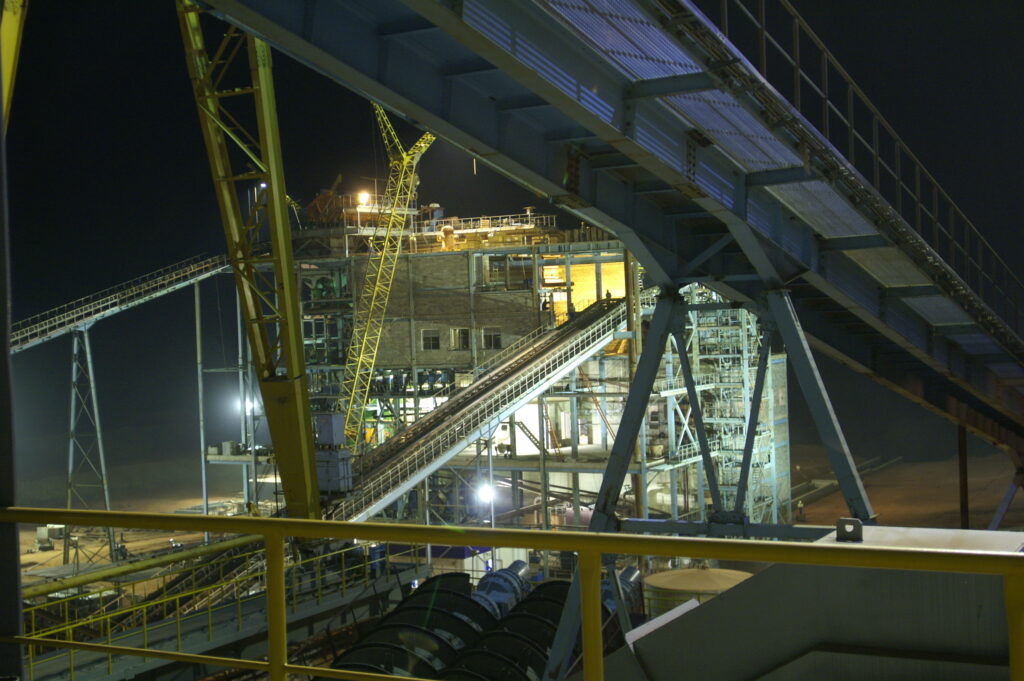
Debswana is the joint venture between the government of Botswana and De Beers, owned equally by each, and it produces about 90% of the country’s diamonds.
It plans to lift production to about 18 million carats in 2026, from 15 million in 2025. That is roughly a fifth more.
The sourcing matters. That figure came from a central bank official speaking in June 2026 and was confirmed by a Debswana spokesperson. It is not a published company production target, and it should be attributed that way.
Company-reported figures from the parent group corroborate the direction. Botswana production in the second quarter of 2026 was 5.488 million carats, against 2.651 million in the same quarter of 2025, a rise of 107%. First-half production was 10.302 million carats against 7.223 million, up 43%. Jwaneng rose 22% in the half and Orapa 70%.
Group guidance for 2026 was left unchanged at 21 to 26 million carats, with the second half lower on planned maintenance.
Raising output into a soft market is a deliberate bet. It assumes demand recovers enough to absorb the volume without pushing prices down further. If it does not, the extra carats worsen the problem they were meant to solve.
The Fiscal Hole Diamonds Dug
The recession left a large hole in the public finances. The figures differ by institution, because Botswana’s fiscal year runs April to March while the national accounts run to December.
The World Bank puts the 2025 fiscal deficit at about 6.5% of GDP, against 8% budgeted. It puts public debt at about 39.5% of GDP by March 2026, up from 22.5% in 2023. The African Development Bank puts the 2025 deficit at 9.4% and debt at 40.7%. A ratings agency puts the general government deficit for fiscal 2025 at 6.2% against a 9.5% target, with 8.9% budgeted for fiscal 2026.
Reserves are similarly contested. The World Bank records a rise from US$3.4 billion in 2024 to US$4.2 billion in 2025. The African Development Bank records a fall from US$3.5 billion to US$3.1 billion, or 4.4 months of imports. The IMF cited US$3.5 billion at end-July 2025.
Ratings were cut twice in late 2025 and the outlook remains negative. Unemployment stood at 27.6%, with youth unemployment at 38.2%.
The central bank has been adjusting its exchange rate regime. The rate of crawl was raised from 1.51% to 2.76% a year in July 2025, and trading bands were widened substantially. From January 2026 the margins became asymmetric. The government investment account is the country’s savings buffer. It was drawn down to about US$60 million at end-2025, from a far larger figure eighteen months earlier, before recovering to about US$276 million by July 2026.
Who Will Own De Beers
The ownership question hanging over all of this has not been resolved, and it moves quickly enough that any account needs a date attached.
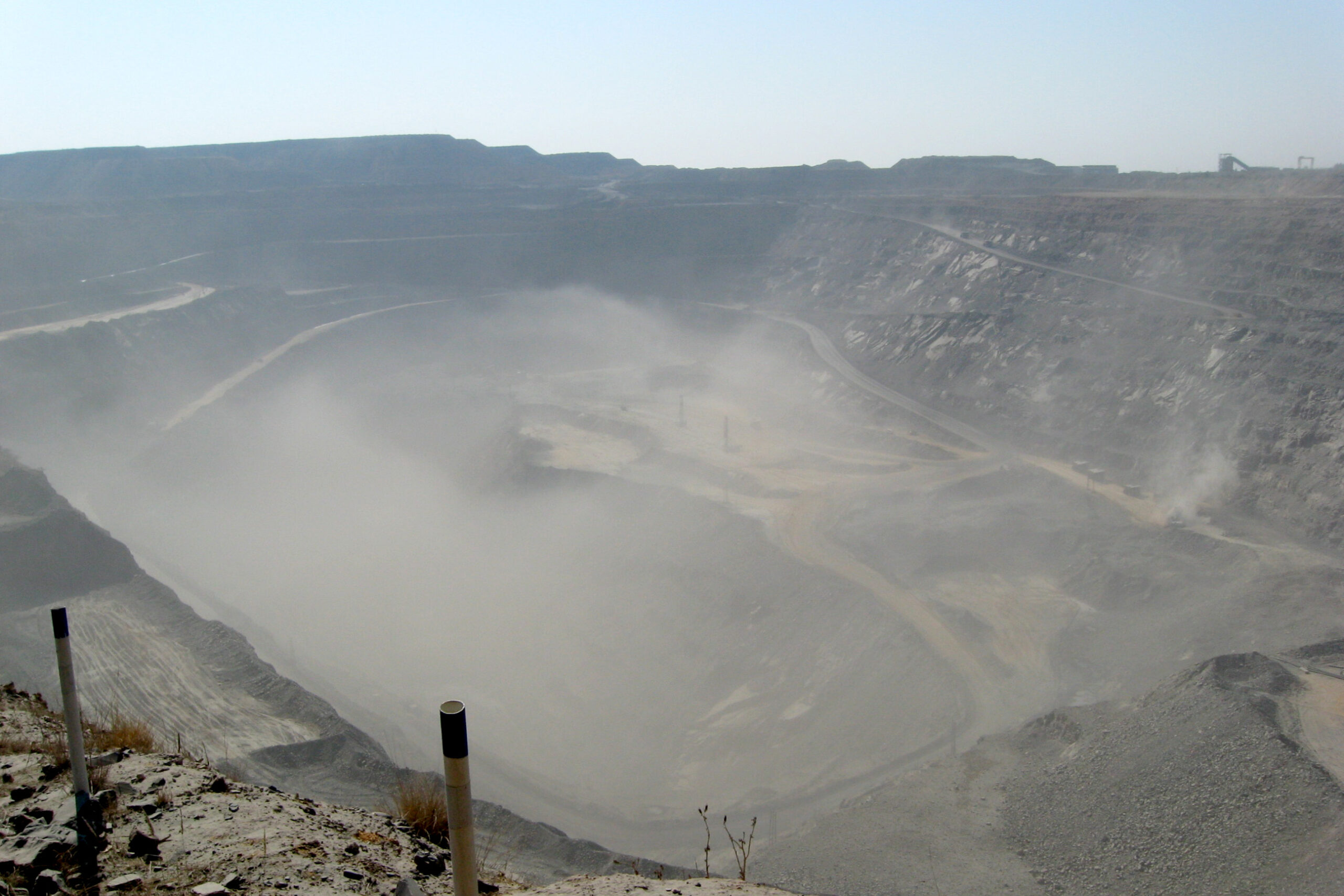
Anglo American put De Beers up for sale in May 2024. It holds 85%. Botswana holds 15% and has pre-emption rights, which means it can match an offer rather than simply accept a new partner.
In July 2026 a government minister told parliament that a competitive process among three shortlisted bidders had identified a preferred bidder. It was described as a consortium led by a former De Beers chief executive, with envisaged participation by Angola and Namibia. The Anglo chief executive publicly walked that back at the end of July. He said the process was not exclusive to any particular consortium. He also confirmed it was in its final and most challenging phase, and that it would be a private sale rather than a public listing.
Reported deal terms put the price at around US$1 billion for the 85%, with the consortium injecting a further sum. Those terms come from financial press reporting and have not been confirmed by Anglo. The carrying value had been written down to about US$2.2 to 2.3 billion after three impairments in three years.
Botswana appointed advisers, and its due diligence was due to complete at the end of September 2026. The transaction was expected to conclude in the fourth quarter, with approvals taking about a year after that. The president said in 2025 that Botswana wanted majority control.
This is the most perishable fact in this article. Anyone relying on it should check the position on the day.
What This Means If You Invest Here
For investors, Botswana is a well-governed middle-income country with one very large concentration risk, and the last two years were a demonstration of it.
The February 2025 sales agreement between the government and De Beers is the structural change worth understanding. It runs ten years with a five-year extension option. It renewed Debswana’s mining licences from 2029 to 2054. And it progressively raises the share of Debswana output sold through the state-owned Okavango Diamond Company, while creating a development fund.
That shifts marketing power toward the state over time, which matters more for the long-run economics than any single year’s production figure.
Diversification remains the unsolved problem. Copper is the visible non-diamond gainer. Customs union receipts account for 34.7% of the 2026 budget, which is its own concentration.
The currency is managed against a basket that is half South African rand and half the IMF’s unit of account, with a crawling adjustment. The widening bands and asymmetric margins signal a central bank giving itself more room, which is worth watching for anyone with pula exposure.
Why the Diamond Market Broke
The two lost years were not a Botswana failure. They were a market event, and it is worth knowing what happened.
Natural diamond demand fell as laboratory-grown stones took share at the lower end of the jewellery market. Lab-grown prices collapsed as capacity expanded, which pulled the entry-level natural market down with them. At the same time, Chinese demand weakened.
The industry’s response was to hold back supply. That is what produced the fourth quarter of 2025, when Botswana’s diamond production fell more than half year on year. Miners were not unable to dig; they chose not to sell into a falling market.
Raising output in 2026 therefore signals a judgement that the correction has run its course. Midstream inventories, meaning the stones held by cutters and polishers, had to clear before that judgement was defensible.
For Botswana the stakes in that judgement are unusually high. A quarter of GDP and a third of government revenue have historically come from this one product. A wrong call on the cycle is not a corporate disappointment here; it is a fiscal event.
What Is Not Known
Debswana has not published a 2026 production target of its own. The 18 million carat figure traces to a central bank official and a company spokesperson quoted in the press.
Whether Botswana exercised, waived or extended its pre-emption rights after the end-September 2026 due diligence deadline was not established. This is the single most perishable item here.
Full-year 2026 official GDP is not available. Only the first quarter has been published.
The current central bank policy rate could not be confirmed from a monetary policy statement. Different institutions cite different figures for different dates.
And reserve figures differ materially between the World Bank, the African Development Bank and ratings agencies, in one case within a single document.
Connected Coverage
- Taxes in Morocco for Expats 2026: The 37% Band Starts Early
- Kenya Residency Visa Requirements 2026: Class K Starts at 35
- Is Tanzania Safe for Expats in 2026: A Level 3 With One Hotspot
Sources
- Statistics Botswana — gross domestic product, first quarter 2026
- De Beers Group — production report for the second quarter of 2026
- World Bank — Botswana Economic Update, July 2026
- Mining Weekly — Botswana says Anglo picks a De Beers buyer, July 2026
Related coverage: The Zanzibar Unity Government Reserves Seats for the.
Related coverage: Asia Intelligence Brief — Wednesday, September 16,.
Frequently Asked Questions
How much more will Debswana produce in 2026?
About 18 million carats, up from 15 million in 2025, roughly a fifth more. The figure came from a central bank official in June 2026 and was confirmed by a Debswana spokesperson, not from a published company release.
How bad was Botswana’s recession?
Real GDP fell 2.8% in 2024 and 0.7% in 2025. The trough was the fourth quarter of 2025, when output fell 5.4% year on year and diamond production fell 54.6%. The first quarter of 2026 returned to growth of 3.5%.
Who is buying De Beers?
It is not settled. Anglo American put its 85% stake up for sale in May 2024 and Botswana holds 15% with pre-emption rights. A preferred bidder was named in parliament in July 2026 and the Anglo chief executive publicly qualified that shortly afterwards.
How dependent is Botswana on diamonds?
Diamonds are around 80% of exports on World Bank figures, and historically about a third of fiscal receipts and a quarter of GDP. Debswana produces roughly 90% of national output.
This article was produced by The Rio Times’ automated newsroom system. How we use AI · Report an error
Read More from The Rio Times