Brazil Markets: Ibovespa & the Real — September 17, 2026
Key Facts
- Ibovespa fell 0.51% to 185,547 points, pausing after a strong run that still leaves it up more than 27% for the year.
- Petrobras led the decline as its preferred shares dropped 3.5% and ordinary shares fell 4.3%, the heaviest drag on the index.
- The real firmed slightly to 5.151 per US dollar, a move of 0.06% stronger on the session.
- Banco do Brasil rose 3.0% bucking the market, while Vale fell 2.1% and the big private banks were largely flat.
- The move followed the Fed’s quarter-point increase to a range of 3.75 to 4 percent, and came hours before Brazil’s central bank cut the Selic rate to 13.75 percent.
Today’s Focus
Brazil’s Ibovespa stock index slipped 0.51% to 185,547 points on Wednesday, its first pause in a strong September. The real was essentially flat at 5.151 per US dollar, a touch stronger on the session.
Petrobras, Brazil’s state-controlled oil giant, was the main weight. Its preferred shares fell 3.5% and its ordinary shares dropped 4.3%, while Vale, the iron-ore miner, lost 2.1%.
The decline tracked a cautious global mood after the US Federal Reserve raised its policy rate by a quarter of a percentage point, to a range of 3.75 to 4 percent, in a unanimous 12-0 vote. Context matters: the index is still up 11.25% this month and 27.44% for the year.
Banco do Brasil was the standout gainer, up 3.0%, while the big private banks were little changed.
What matters today. The session was a pause, not a reversal: Brazil’s market is still up strongly for the year and the currency remains near its best levels of 2026.
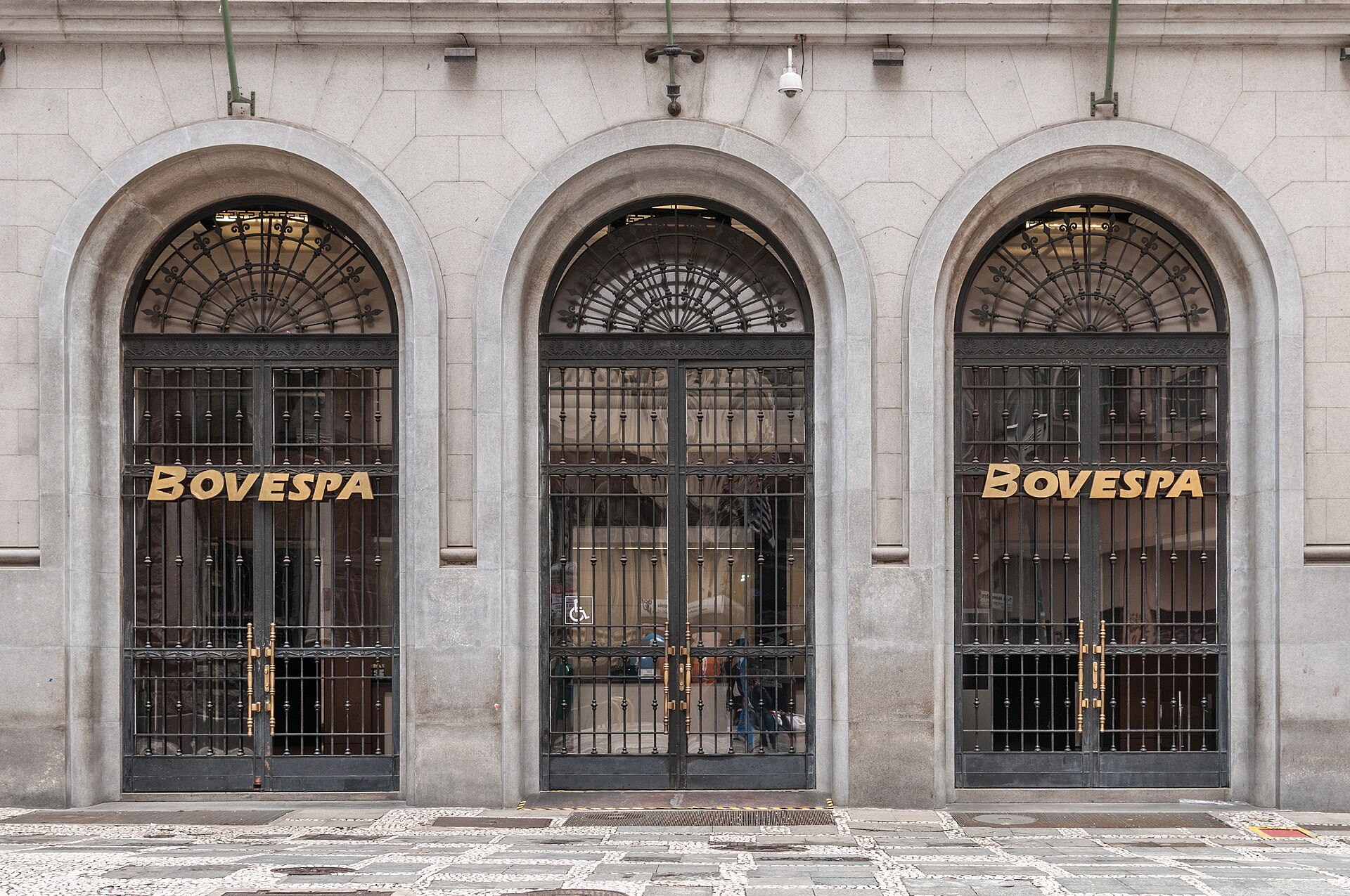
01 The session in one read
Brazil’s Ibovespa — the benchmark index for the country’s largest listed companies — finished Wednesday at 185,547 points, down 0.51%. The real, Brazil’s currency, was little changed at 5.151 per US dollar, a touch stronger on the session.
The declines were concentrated in two heavyweight resource names: Petrobras, the state-controlled oil producer, and Vale, the iron-ore miner. Their falls accounted for most of the index’s loss.
Later the same evening, Brazil’s rate-setting committee cut the Selic — the country’s benchmark interest rate — to 13.75 percent. It was the fifth consecutive cut, and the bank left its next move open.
The real’s flat close was notable: it has not joined the pull-back in local share prices, a sign that higher Brazilian interest rates still reward holding the currency, even as the gap to American rates narrows.
The evidence points to a routine cautious session rather than any fundamental shift: the index fell less than one percent, the real barely moved, and the year-to-date gains remain huge. Petrobras’s decline, which reflects oil prices and the company’s diesel-price news, accounted for much of the index loss.
The variable to watch is the guidance on the pace of further Selic cuts, which will determine whether this is a one-day breather or the start of a bigger unwind.
02 The day’s numbers
| Measure | Level | Change | Read |
|---|---|---|---|
| Ibovespa | 185,547 | -0.51% | A pause after strong September gains |
| USD/BRL | 5.151 | -0.06% | Real a touch stronger against the dollar |
| Session range | 184,754 – 186,738 | — | Active but orderly trade |
| 52-week high | 198,657 | — | Index is 6.6% below that peak |
| 52-week low | 140,680 | — | Index is 31.9% above that floor |
| USD/BRL 52-week high | 5.5901 | — | Real is 7.8% stronger now |
| USD/BRL 52-week low | 4.8909 | — | Real is 5.1% weaker now |
The table shows the day’s move in context: the Ibovespa sits comfortably between its 52-week low and high, closer to the high. The real is also well inside its annual range, and its tiny daily move suggests little stress in the currency market.
The session’s range of roughly 2,000 points was not particularly wide. That is consistent with investors waiting for the Selic decision rather than making big directional bets. Rio Times · Live Market Intelligence
Live Market IntelligenceBrazil — Live Market Board
Brazil — Live Market Board
Instrument Last Change YoY Prev. High Low Volume
IBOV
185,547.66
-0.51%
+21.85%
186,502.64
168,310
167,142
—
USD/BRL
5.16
+0.01%
-5.13%
5.16
5.18
5.14
—
SELIC
14.00%
—
—
—
—
—
PETR4
41.64
-0.05%
+35.19%
41.66
41.97
41.15
41,499,400
VALE3
72.97
+0.83%
+30.75%
72.37
73.54
72.66
17,658,000
ITUB4
38.60
-1.03%
+4.57%
39.00
39.34
38.39
29,487,800
BBDC4
16.85
+0.36%
+3.50%
16.79
16.90
16.67
19,416,900
BBAS3
19.37
+0.47%
+0.73%
19.28
19.44
19.16
11,069,200
B3SA3
14.26
-0.21%
+12.73%
14.29
14.47
14.11
33,037,800
ABEV3
14.89
-0.80%
+21.91%
15.01
15.07
14.81
16,453,100
WEGE3
47.59
+0.49%
+29.99%
47.36
48.08
47.36
3,364,600
PRIO3
59.14
-0.19%
+50.67%
59.25
59.81
58.74
3,325,600
SUZB3
41.33
+2.35%
-23.55%
40.38
41.48
40.35
3,914,900
RENT3
34.68
-0.09%
+0.84%
34.71
34.96
34.35
7,979,100
AZZA3
15.89
-2.63%
-53.76%
16.32
16.42
15.82
1,330,300
CSNA3
4.30
+0.47%
-42.65%
4.28
4.41
4.26
10,076,100
GGBR4
24.69
+2.19%
+51.38%
24.16
24.85
24.18
7,047,600
ENEV3
24.21
-1.38%
+70.49%
24.55
24.64
23.99
9,297,000
Live Company IntelligencePetroleo Brasileiro Petrobras SA ADR — the full investor dossier
Wall Street view
Valuation & profitability
Price & risk
$10.6552-wk high
$21.99
Revenue trend · 6y
Ownership
Dividend
03 Why it moved — Fed caution and Selic waiting
The immediate trigger was the Federal Reserve’s meeting. Chair Kevin Warsh said inflation is too high and has been for too long, and the committee’s projections showed 16 of its 18 participants expecting at least one further increase this year.
But the bigger local story was the Brazilian central bank’s own rate decision. The central bank cut the Selic for the fifth straight time, to 13.75% a year, and left its next move open. Brazil’s inflation-adjusted rate remains among the highest of any large economy.
For stock investors, the high Selic is a double-edged sword. It supports the real and draws foreign capital, but it also makes bonds very attractive relative to stocks, capping the market’s upside.
Petrobras’s decline had a company-specific element. Local reports noted the company would adjust diesel prices, but the change would be neutralised by a government subsidy, leaving the effective price to distributors unchanged — a reminder that political considerations still touch Brazil’s energy sector.
04 The day’s movers
| Driver | Level / Move | Change | Note |
|---|---|---|---|
| PETR4 (Petrobras PN) | R$ mid-50s | -3.5% | Heaviest index drag, $495m traded |
| PETR3 (Petrobras ON) | — | -4.3% | Ordinary shares fell further |
| VALE3 (Vale) | — | -2.1% | Miner faded with iron-ore caution |
| BBAS3 (Banco do Brasil) | — | +3.0% | State-owned lender bucked the trend |
| ASAI3 (Assaí) | — | +4.7% | Biggest domestic gainer |
| PRIO3 (PRIO) | — | -4.7% | Biggest domestic loser, oil-linked |
| ITUB4 (Itaú) | — | -0.1% | Largest private bank traded flat |
The movers table shows the pressure was concentrated in oil names: Petrobras’s two share classes and PRIO, an independent oil producer, all fell sharply. Vale’s 2.1% drop added to the resource-led decline.
What is striking is the strength in domestic-facing names. Assaí, a cash-and-carry retailer, rose 4.7%, while Banco do Brasil gained 3.0% — a sign that not all investors were running from Brazil risk.
05 The regional scoreboard
| Index | Country | Change |
|---|---|---|
| Ibovespa | Brazil | -0.51% |
| IPSA | Chile | -0.77% |
| Merval | Argentina | -1.70% |
| COLCAP | Colombia | -2.16% |
| BVL Perú | Peru | +0.80% |
| S&P 500 | United States | -0.45% |
Brazil’s decline was roughly in line with the United States, where the S&P 500 fell 0.45%. But Latin American markets had a tougher day: Colombia’s COLCAP fell 2.16% and Argentina’s Merval dropped 1.70%.
The outlier was Peru, whose BVL rose 0.80%. The varied performance suggests country-specific factors mattered more than a single regional theme.
06 The technical picture
The Ibovespa’s 0.51% fall is tiny compared with its strong year. It remains well above its 52-week low of 140,680 points and still closer to its high of 198,657 than to the bottom.
The session’s high near 186,738 and low near 184,754 suggest supply near 187,000 and support around 184,750. A break below the day’s low would likely open the way toward the 180,000 round number.
The real’s technical picture is calmer. At 5.151, it is closer to its 52-week strong point of 4.8909 than to its weak point of 5.5901, reflecting a currency that has been trending stronger.
07 What to watch
- Selic decision and guidance: The central bank’s rate path will set the tone for shares that move with interest rates and the real’s carry appeal.
- Petrobras diesel pricing: Watch whether the subsidy neutralising the diesel increase survives budget discussions or becomes a political flashpoint.
- Vale and iron-ore prices: A further drop in iron-ore prices would add pressure to the Ibovespa’s second-biggest weight.
- US Federal Reserve follow-through: If global markets stay cautious, Brazil’s recent gains could face more short-term consolidation.
Background: Selic Cut Odds Hit 95% as Brazil’s Copom Meets on Fed’s Days.
Background: Brazil Shuts Two Brokerages Tied to Banco Master.
Frequently Asked Questions
What is the Ibovespa?
The Ibovespa is Brazil’s main stock index, tracking the largest and most-traded companies listed on the B3 exchange.
Why did Petrobras fall so much?
Petrobras shares fell 3.5% to 4.3% on a diesel-price adjustment that was neutralised by a government subsidy, alongside broader caution in oil-linked stocks.
What is the Selic?
The Selic is Brazil’s benchmark interest rate, set by the central bank. The bank has been cutting it, but Brazil still has the world’s highest real interest rate.
How is the real doing this year?
The real closed at 5.151 per US dollar, nearly 8% stronger than its 52-week low, a sign of relative currency strength in 2026.
Ibovespa — Market data: RT; exchange figures from B3
This article was produced by The Rio Times’ automated newsroom system. How we use AI · Report an error
LatAm Markets: Live Signals → — real-time movers, turnover leaders and FX across Latin America.
Read More from The Rio Times