2019 International Trade Balance Declines; Brazil Awaits Good News from Abroad
RIO DE JANEIRO, BRAZIL – Brazil’s trade balance recorded a 4.7 percent decline between January and November 2019, compared to the same period in 2018.
Data from the Ministry of Economy show that the country exported and imported US$370.6 billion in products in 2019, compared to US$388.2 billion last year. When separating exports from imports, a drop of 6.8 percent in foreign sales and 2.1 percent in purchases is noted.

According to economists and the National Confederation of Industry, the reduction is a worldwide trend, mainly due to the trade conflict between the United States and China. In addition, political or economic shocks of Brazil’s regional partners have interfered with this balance drop.
“Argentina is in an economic crisis. Chile faces strong political headwinds. And Venezuela has been in deep crisis for four years. Sometime this could reach Brazil,” said economist José Luis Oreiro, a professor at the University of Brasília (UnB).
Sales to Argentina between January and November fell from US$14.2 billion in 2018 to US$9 billion over the same period this year. In contrast, imports stood at US$9.6 billion, compared to US$10 billion in 2018.
Thus, the country has gone from a trade surplus with Argentines last year to a deficit. Argentina also dropped from third to fourth trading partner this year. In two years, there was a 50 percent loss in sales to the neighboring country.
In turn, China continues to be Brazil’s main trading partner. They traded US$370.6 billion this year. However, part of this is expected to decline in the coming months, by at least US$10 billion.
The projection was carried out by Insper University, and takes into account the main Brazilian agricultural products that would no longer be sold to China should the agreement between the Chinese and Americans be accomplished. One of the measures announced by the two governments was that China should increase the import of American agribusiness. There would be a direct impact on Brazil.
Analyzing the reduction in import figures, two scenarios arise in Oreiro’s opinion. The first is that the unfavorable exchange rate has caused buyers to replace imported products with equivalent domestic products.
The dollar has suffered a sharp variation in Brazil. It began the year worth R$3.80 and now ended November costing R$4.24. The second scenario, which he points out as less likely, is that Brazil may have been able to do better business by buying the same amount of products at lower prices.
Official data shows that business fell with eight of Brazil’s top ten trading partners. There was only an increase in business with the United States, which grew 4.3 percent and with Japan, up 7.2 percent. In the Japanese case, the result is mainly due to an 18 percent increase in exports.
Regarding the Americans, its second main partner, Brazil started to import 5.9 percent more this year. “When Jair Bolsonaro’s government allied itself with Donald Trump’s, it was expected that there would be a considerable increase in business between these countries, but this did not happen and will not happen. Trump’s concern is China,” Oreiro said.
In this scenario, the CNI’s conjunctural report published last week reached the following conclusion: “The poor performance of the trade balance throughout the year has compromised the balance of payments accounts and deepened the current account deficit”.
“The current account deficit should reach US$55 billion, approximately three percent of GDP”. The current deficit is the difference between what the country spent and collected in its international transactions (related to foreign trade, income and international transfers/loans).
Thus, the year should close with the worst data since December 2015, when the deficit was 3.03 percent of GDP, according to Central Bank data. In other words, four years ago, Brazil did not record such negative data on imports and exports of goods and services. The data have been recorded by the Central Bank since 2009.
Inertia in 2020, a promising future
José Augusto Castro, president of the Brazilian Association of Exporting Companies (AEB) projects that in 2020 the country will maintain this inertia, with a drop in imports and exports. “We have to look for other markets for this time, more so with Argentina in crisis,” Castro says.
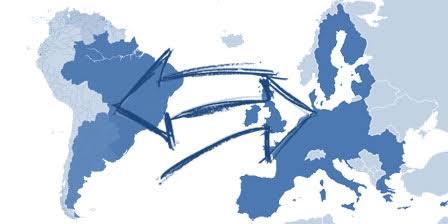
Despite the downturn, AEB’s president is optimistic about the long term. He believes the European Union and Mercosur agreement, signed in May, represents a decisive opportunity to change the pattern of Brazil’s international trade. It still needs to be ratified in order for it to come into force and Brazil to have access to the 500 million consumers from the Old Continent.
Moreover, the government is keeping an eye on new agreements that could boost Brazilian exports, while at the same time easing imports from other countries will force national companies to reinvent themselves for the new challenges.
More: Brazil news in English, every day from The Rio Times.
This article was produced by The Rio Times’ automated newsroom system. How we use AI · Report an error · Editorial responsibility: Matthias Camenzind, Editor-in-Chief