Agricultural Census: Brazil Has Five Million Rural Enterprises
RIO DE JANEIRO, BRAZIL – With a territory covering 851 million hectares, Brazil has a total of 5,073,324 agribusiness enterprises, which cover a total area of 351 million hectares, in other words, approximately 41 percent of the country’s total area.
In relation to the previous survey, carried out in 2006, there was an increase of 5.8 percent in the rural area occupied by businesses, despite the reduction, during that period, of 102,312 rural enterprises.

The survey also shows a total of indigenous lands that add up to 117.6 million hectares and conservation units spread over a further 151.9 million hectares.
This is shown by the 2017 Agricultural Census, which had its final results published yesterday, October 25th, by the Brazilian Institute of Geography and Statistics (IBGE). The survey mapped the Brazilian countryside on September 30th, 2017, with data for the period between October 1st, 2016 and the base date.
The country’s first Agricultural Census was conducted in 1920 and occurs at roughly ten-year intervals since 1940, with the exception of the period between 1970 and 1985, when it was conducted every five years.
A total of 7.5 million addresses were visited for the last survey, along a 5.56 million kilometer route by census takers. Data collection took place between October 1st, 2017 and February 28th, 2018.
The census manager, Antônio Florido, explains that there was an increase in the number of enterprises with land areas in the large property range in regions of the agricultural border, while the number of enterprises in the Northeast decreased.
“New enterprises were incorporated into the production process, mainly in the North and Midwest regions, which are agricultural border regions. In the Northeast, there was a reduction in the number of enterprises and in the farming area”.
“It may have been caused by the aging of the producer and no replacement, by the drought that occurred in the period before the census, it was a very severe drought, which caused people to abandon their enterprises”.
According to the IBGE, an agricultural enterprise is any production or exploitation business unit dedicated, totally or partially, to agricultural, forestry or aquaculture activities, regardless of its size, its legal structure (if it belongs to a producer, to several producers, to a company, to a group of companies), or its location (urban or rural area), with the aim of producing either for sale (marketing production) or for subsistence (supporting the producer or his or her family).
Area
Within the large property category (over 1,000 hectares), there are 51,203 enterprises, occupying 167.227 million hectares. Small-scale properties, with up to ten hectares, number 2,543,681 businesses occupying in 7.993 million hectares.
A total of 77,037 agribusiness enterprises were identified without a land area, i.e., producers who work with extraction and beekeeping, for instance.
Regarding land use, there was a 34 percent decrease in the number of permanent crops, standing at 7.755 million hectares, and 18 percent in natural grasslands, which total 47.323 million hectares.
On the other hand, the areas destined to temporary plantations grew 14 percent (55,761,998 hectares), those of planted pastures increased ten percent (112,174,148 hectares), natural forests within agricultural enterprises increased 12 percent (106,574,867 hectares) and planted forests occupy an area 83 percent greater than in 2006 (8,658,850 hectares).
According to Florido, the increase in the natural forest area results from the approval of the Forest Code in 2012.
“Every agricultural enterprise, within the Forest Code, is required to maintain a percentage of natural forests, according to the region. It is logical that you increase the enterprise, increase the total area and increase the forest area because this forest area was not being accounted for as part of the agricultural enterprise”.
Producers who own the land increased from 76 percent in 2006 to 81 percent in 2017. The leased land is the second largest proportion, with a total of 6.3 percent of the properties, although its share in hectares has increased from 4.5 to 8.6 percent of the total in area.
Family farming
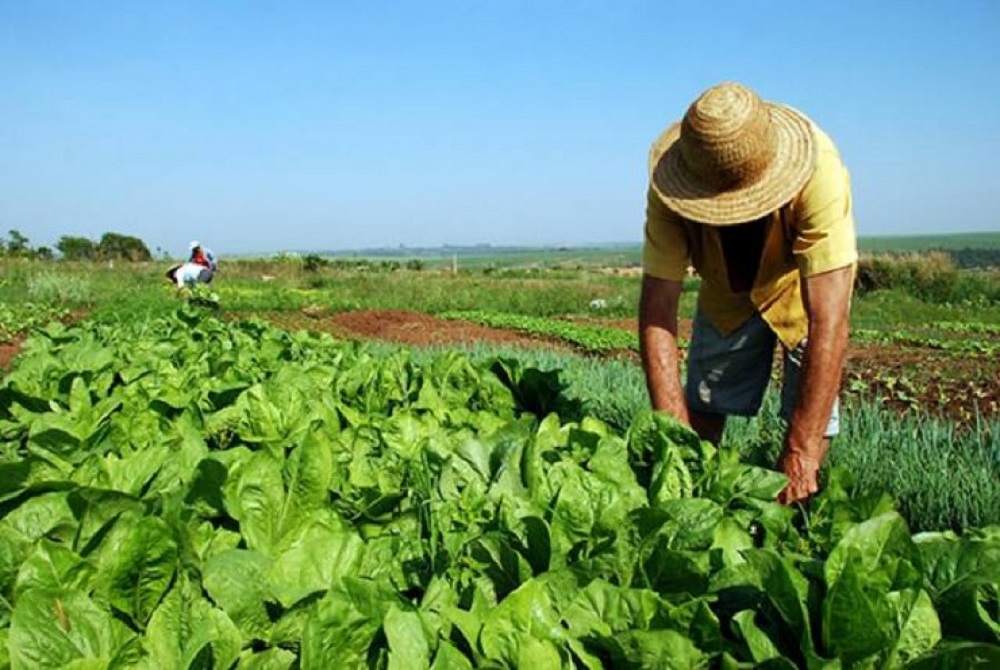
Of the total number of agricultural enterprises in the country, 77 percent (3,897,408) were classified as family farms, accounting for 23 percent of the value of production and covering an area of 80.89 million hectares, or 23 percent of the total area.
In 2006, family farming had accounted for 84.4 percent of agricultural enterprises, with a total of 4,367,902.
In 2017, family farming employed 10.1 million people, 67 percent of all workers in agricultural enterprises.
Florido points out that there was no change in the profile of family farmers, but the changes in the law’s criteria for classification in this category led to the decrease, with a requirement that at least half of the producer’s income be of rural origin.
“Producers who previously met the legal criteria, with family labor corresponding to more than half of the total in the enterprise. With the reduction in the number of people, the producer needs to hire people even if temporarily, and by having to seek activity elsewhere, this new reality prevents them from meeting the legal criteria”.
Source: Agência Brasil
More: Brazil news in English, every day from The Rio Times.
This article was drafted with automated assistance and reviewed before publication. How we use AI · Report an error · Editorial responsibility: Matthias Camenzind, Editor-in-Chief