Amid Corona Chaos, Brazil Quietly Passes 5G Regulations
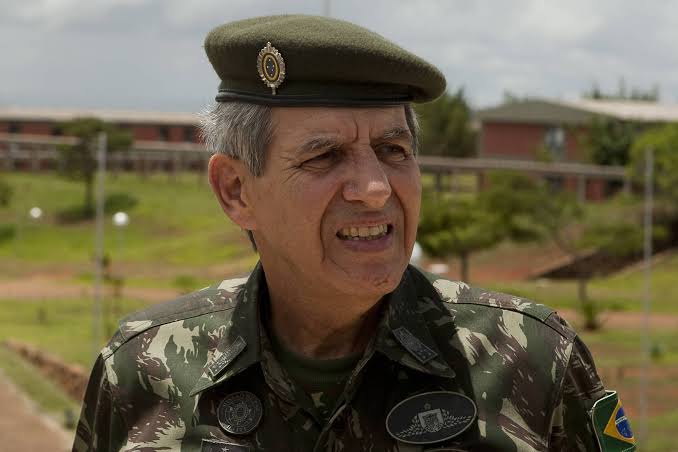
RIO DE JANEIRO, BRAZIL – In a curious turn of events, General Augusto Heleno, head of Brazil’s Presidential Institutional Security Office (GSI), abruptly returned to work last week, a scant five days after testing positive for Covid-19.
Conspicuously not wearing a protective mask, nor keeping the recommended 1.5-meter distance from his colleagues, his first act on this premature return was low-profile but consequential.

Reference to Brazil’s Federal Register reveals that the retired general almost immediately signed an ordinance defining the terms of the cybersecurity requirements for the adoption of fifth-generation (5G) wireless communication networks in Brazil.
The event took place without public fanfare and, amid the furor of the all-encompassing coronavirus pandemic, received little media attention. Nevertheless, the legislation – and it’s unusual genesis – is freighted with implications and carries potentially far-reaching consequences.
Before the Covid-19 outbreak inundated Brazil, it was thought possible that Brazil might auction its 5G frequencies before the end of the year. This now seems highly unlikely. Nevertheless, the ordinance signed by General Heleno constitutes a seminal step in Brazil’s passage to the next generation of internet connectivity.
What is remarkable about the document is that it effectively places Brazil’s technology sector equidistant from it’s two biggest trading partners: the USA and China – and their respective tech industry leaders.
While this may seem like a sensibly open competitive position for the country to adopt, it simultaneously embroils Brazil in an ongoing diplomatic feud between the two nations – and places the Bolsonaro administration in direct opposition to the express wishes of the Trump White House.
At the heart of the controversy lies the Chinese tech behemoth, Huawei, and US President Trump’s conviction that the company is a covert agent of the Chinese Communist Party.
The Trump administration has excluded Huawei from participation in the USA’s 5G expansion arguing – thus far without the backing of any evidence – that Huawei hardware would provide “backdoor” access to the Chinese government, enabling it to monitor and control communication networks worldwide and even place malware in government systems.
An executive order issued by President Trump added Huawei to the US Department of Commerce’s “entity list” of foreign persons, businesses and institutions subject to specific licensing requirements, effectively blacklisting the company for US corporations. Following Trump’s insistence that US allies follow its lead, Australia and New Zealand adopted similar restrictions on Huawei.
Despite Huawei’s insistence that they are an independent entity with no formal relationship to the Chinese government, the Trump administration continues to portray the company as an international security threat. The resulting legal and diplomatic feud has dragged on for over a year but the ban remains.
In light of the close relationship between the two Presidents, it was widely expected that Brazil would follow the lead of the United States and exclude Huawei from bidding – or would support other operators’ bids – in the auction of the country’s 5G frequencies. Indeed, until very recently, all 5G signals were pointing to a US-Brazil alignment, especially given the high-profile and aggressively anti-China advocacy of Eduardo Bolsonaro.
Yet, while the new rules open the Brazilian market to US-backed companies such as AT&T and Verizon, Nordic giants Ericsson and Nokia, they also give equal access to Huawei. Accordingly, the ordinance espouses the principles of “diversity” and anti-monopoly aimed at “fostering competition .. resulting in improved quality of service.”
While this may well be the desired outcome, it is likely not the only – or possibly even the primary – motivation for allowing Huawei access to Brazil’s 5G network. Ironically, the president’s eldest son – who many regard as Brazil’s de facto foreign minister – may have inadvertently triggered this reversal when he sparked a major diplomatic incident by declaring on Twitter: “The blame for the global coronavirus pandemic has a name and surname: the Chinese Communist party.”
The blow-back from increasingly pugnacious Chinese diplomats was swift and ferocious. Yang Wanming, Beijing’s top diplomat in Brazil, demanded an immediate retraction and apology for the “evil insult,” and the younger Bolsonaro was forced to backtrack and clarify that his tweet did not represent the government position.
However, Brazil does not enjoy the global influence of the USA, and the President was subsequently forced to call Xi Jinping, the Chinese leader, to apologize and appease. Three days after that call, General Heleno abruptly ended his quarantine and the GSI issued standards for the auction that would not allow the imposition of vetoes on suppliers – effectively allowing Huawei to provide infrastructure for Brazil’s 5G operators.
Given Huawei’s global leadership in 5G technology, and the lack of any actual evidence that their equipment represents a security risk, the decision to allow it to potentially provide technology to Brazilian operators may ultimately be a beneficial one for local consumers.
But the likelihood – or even the appearance of that possibility – that the nation’s 5G policy was actually shaped by the need to atone for the intemperate outbursts of the President’s son, who is a Federal Deputy, not a Minister or Cabinet official, is nothing short of absurd.
General Heleno has shared the results of a new coronavirus test, taken this week, declaring him negative. It remains to be seen how President Trump will respond to any of this news.
More: Brazil news in English, every day from The Rio Times.
Editorial responsibility: Matthias Camenzind, Editor-in-Chief · Editorial standards · Report an error