Revival of Brazil’s First Black Opera, ‘Lídia de Oxum’, Will Be Staged in Salvador
RIO DE JANEIRO, BRAZIL – Marked by ‘axé’ music, Bahia is also the birthplace of Brazil’s first black opera and the only one produced in Portuguese and Yoruba – the Niger-Congolese dialect.
Some 25 years after its creation, ‘Lídia de Oxum’ (“Lídia of Oxum”) will be performed again between November 21st and 23rd, at Teatro Castro Alves (TCA), in Salvador, State capital of Bahia.

The dates were chosen in homage to Black Awareness Day, celebrated today, November 20th, a local legal holiday in Salvador, Rio de Janeiro, São Paulo and other Brazilian cities.
Written by the Bahian poet Ildásio Tavares in partnership with Bahian maestro Lindembergue Cardoso, the foundation for the opera was the play ‘Os Sete Poemas Negros’ (“The Seven Black Poems”). Ildásio wrote it at the request of musician Djalma Corrêa.
Actor Sebastião Prata, famous as “Grande Otelo”, also asked Ildásio to try to introduce a play to the commercial circuit, in which blacks were the main characters. As a result, the writer wrote the libretto O Barão de Santo Amaro (“The Baron of Santo Amaro”). Subsequently, the opera was conceived by the writer and the conductor.
The show premiered in 1994 at TCA (Castro Alves Theatre). Three years later, a second version was performed in the Metropolitan Park of Abaeté, in the Bahian capital. Now, the work’s remake will be produced by the children of the original show’s creator: Ildazio Junior, general coordinator, and Gil Vicente Tavares, artistic director.
According to Gil, each stage of work production is the result of a specific creative team. “I will have a different approach to the other two productions, without losing the essence of the work, with its Afro-Brazilian power and its political power, two central elements,” he explained.
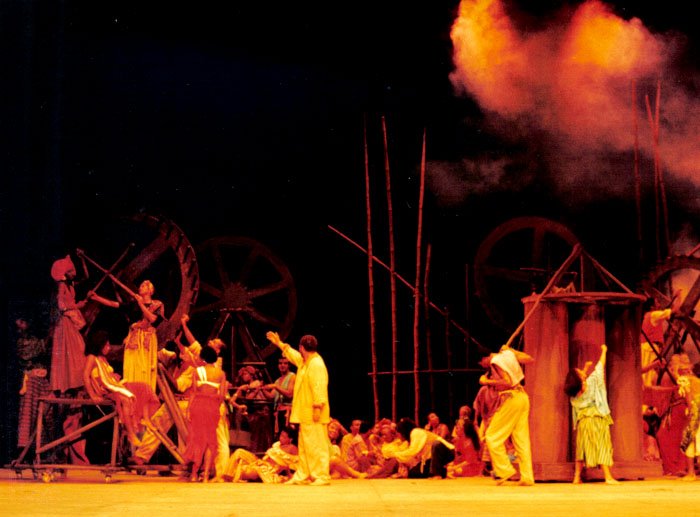
What is the story of Lídia de Oxum
The opera’s plot, which involves over 200 people directly, speaks of racism and machismo in Brazil’s pre-abolitionist era.
In the story, Lourenço de Aragão, son of an aristocrat, comes from Europe with abolitionist ideas, engages in racial causes and falls in love with Lídia – daughter of a former slave. Lourenço eventually comes into conflict — both with blacks, for being white, but also with whites, for supporting the liberation of slaves.
“We reflect on feminism, machismo, reparation and, in addition, entertainment and ethnic tourism, in homage to the black November, to draw attention to the moment in which we are. Bahia is resistance and Lídia is a questioning performance,” said Ildazio Junior.
Asked about the expectation regarding the audience’s receptiveness, he said it is one of the best. According to the coordinator, the ticket sales are quite “reasonable”. Sector A to Z costs R$80 (full) and R$40 (half) and the section from Z7 to Z11 is priced at R$50 (full) and R$25 (half).
In the first version, the plan was to premiere the opera in 1988, on the 100th anniversary of the Abolition of Slavery, but the work only came to fruition in 1995. At the time, the opera was rejected by several producers in Brazil with the argument that not even blacks would be in the audience to watch the show.
For this new version, Ildásio’s son stated that, in addition to the Castro Alves Theatre, they intend to take the opera to the Pelourinho and other iconic locations in the Bahian capital. “We have a social commitment,” he said.
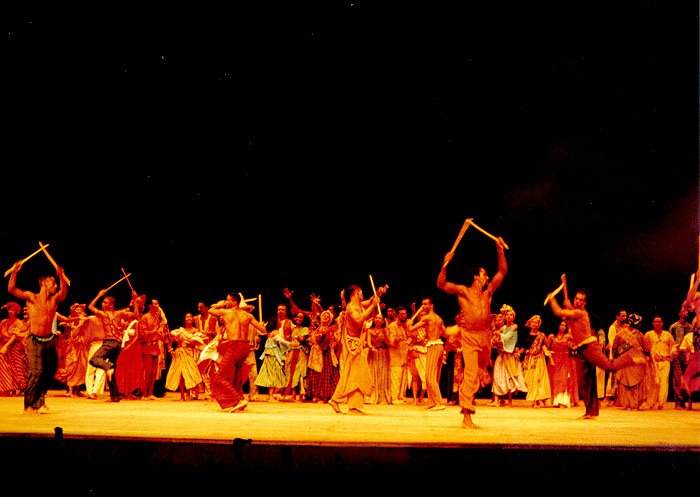
Soprano and main character Irma Ferreira says that living a character like Lídia is a milestone in her career, but also in her personal life. “Being a woman and a black woman in this society is always a challenge.”
“And to give life to Lydia, who is a strong woman, is wonderful. The only thing I can do is give as much of myself as I can,” she said. The main cast includes soprano Izadora França (Gracinha), tenor Carlos Eduardo dos Santos (from Romão), bass Josehr Santos (Bonfim) and baritone Miguel Nador (Tomás de Ogum).
The only member of the original cast, Inácio de Nonno will now play Teodoro de Aragão, father of the character Lourenço de Aragão, which he himself played 25 years ago.
The remake of the opera is part of the collection of tributes that mark Ildásio Tavares’ 80th birthday, in January 2020. Maestro Lindembergue Cardoso would also have completed the same age in June this year.
Tributes to the writer, scheduled until 2021 by an initiative of Ildazio Junior’s producer, Viramundo, include poems, books, the Caramuru Opera, the play Os Orixás, and Lídia de Oxum.
“It has a greater impact because I’ve seen up close its ideals and aesthetic paths. I can have a privileged immersion in the work and the feeling of being able to keep the flame of its creation alive. It’s a way of keeping my father’s best alive through art”, said artistic director Gil Vicente.
Event
Lídia de Oxum Opera
November 21st to 23rd, at 9 PM
Venue: Castro Alves Theatre
Address: Praça Dois de Julho, s/n – Campo Grande, Salvador, Bahia State
Source: Estadão
More: Brazil news in English, every day from The Rio Times.
Editorial responsibility: Matthias Camenzind, Editor-in-Chief · Editorial standards · Report an error
Living in or visiting Salvador? See this month's events and our Salvador city guide with rents, safety and upcoming concerts.