Datafolha Poll: Bolsonaro Rejection Stands at 44 Percent, Approval at 32 Percent
RIO DE JANEIRO, BRAZIL – The popularity of President Jair Bolsonaro remains stable in the week following the arrest of his former family adviser Fabrício Queiroz. According to a Datafolha survey, Bolsonaro held his approval at 32 percent, the same rate as in late May (33 percent).
The government’s rejection stands at 44 percent, compared to 43 percent in the previous round, while those who rate Bolsonaro as only fair stood at 23 percent (from 22 percent).

Datafolha interviewed 2,016 people by telephone on June 23rd and 24th. The error margin is two percentage points plus or minus.
The stability contrasts with the political tension resulting from the arrest of Queiroz, Bolsonaro’s friend since 1984, and former adviser to his son Flávio, a senator today.
Investigated under the “splitting” salary kickback scheme when Flavio was a state legislator in Rio, Queiroz is the link between the presidential clan and members of the militia’s underworld in Rio.
However, the case is charged with considerable destructive potential. The approval of Bolsonaro drops to 15 percent among those who think the President was aware of where Queiroz was hiding until he was arrested on June 18th. This is the rate of popularity deemed critical in politics when it comes to opening impeachment proceedings.
Bolsonaro maintains the same approval pattern. He is rejected by younger people (16 to 24 years old, 54 percent), university graduates (53 percent), and the wealthy (income above ten minimum wages, 52 percent). Residents of the southern region, a Bolsonarist stronghold, approve the President more: 42 percent rate him as excellent or good.
On the other hand, people between 35 and 44 years of age (37 percent), entrepreneurs (51 percent), and those who always trust Bolsonaro (92 percent) are the most pleased with the President’s administration.
Bolsonaro does not instill much confidence. Some 46 percent say they never trust him, while 20 percent always do, and 32 percent sometimes do.
Once again, the South stands out as the President’s fortress, with the lowest rate of distrust (35 percent) among the regions. The Northeast, which is still the place where Bolsonaro is most rejected (52 percent as bad or terrible), is the most distrustful region: 53 percent of respondents never give him any credit.
The President remains the most poorly rated in history in their first terms, since the return of direct elections to the Planalto in the post-dictatorship period in 1989.
Before him, the worst-rated was Fernando Collor. With a year and six months in office in September 1991, the President was bitterly rejected by 41 percent. He was eventually impeached in 1992.
Fernando Henrique Cardoso (FHC) was rejected by 25 percent at the same time into his first term, while Luiz Inácio Lula da Silva was rejected by 17 percent and Dilma Rousseff by five percent.
The wear and tear on re-elected Presidents re-elected has spared only Lula. FHC was rated as bad/terrible by 41 percent at that point into his second term, and Dilma would be impeached shortly after a 63 percent disapproval rating.
The vice presidents who took over after impeachment were rated no better. Itamar Franco scored a 37 percent rejection in mid-1994, and Michel Temer a 71 percent just after the Joesley Batista case erupted.
GOVERNORS
Datafolha’s survey shows that the governors’ approval in dealing with the Covid-19 pandemic has reached its worst level since March. Most are dealing with a high number of cases of the disease in the states while discussing how to reopen local economies.
After achieving a 58 percent good and excellent rating in April, they now stand at 44 percent. The bad/terrible rating is up from 16 to 29 percent. The news is worse for the Southeast region, where Rio governor Witzel is under police investigation for alleged irregularities in fighting the pandemic.
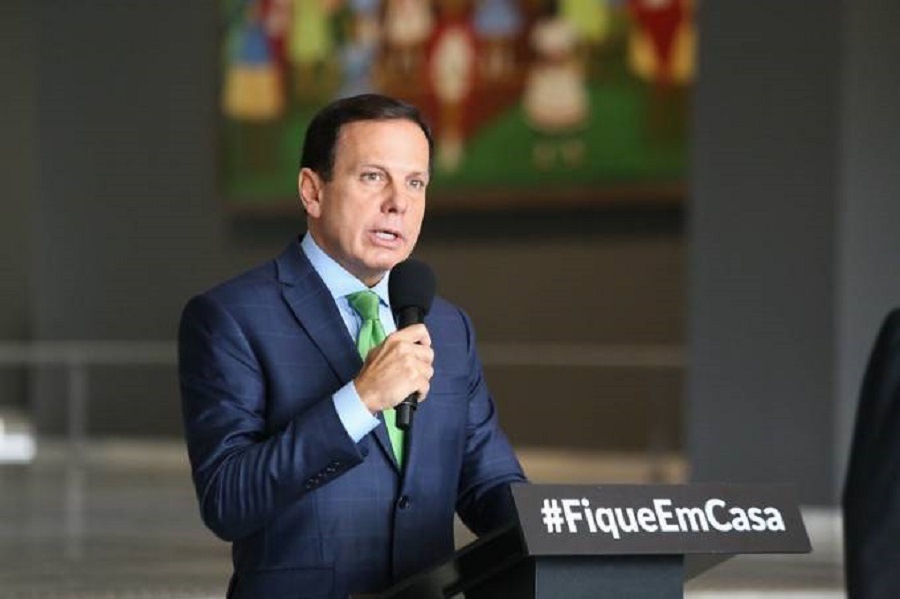
The region is also led by President Jair Bolsonaro’s greatest antagonist in the crisis, São Paulo governor João Doria. In the Southeast, 35 percent approve of the state chiefs’ performance. The Southerners are the most pleased, with a 61 percent rating.
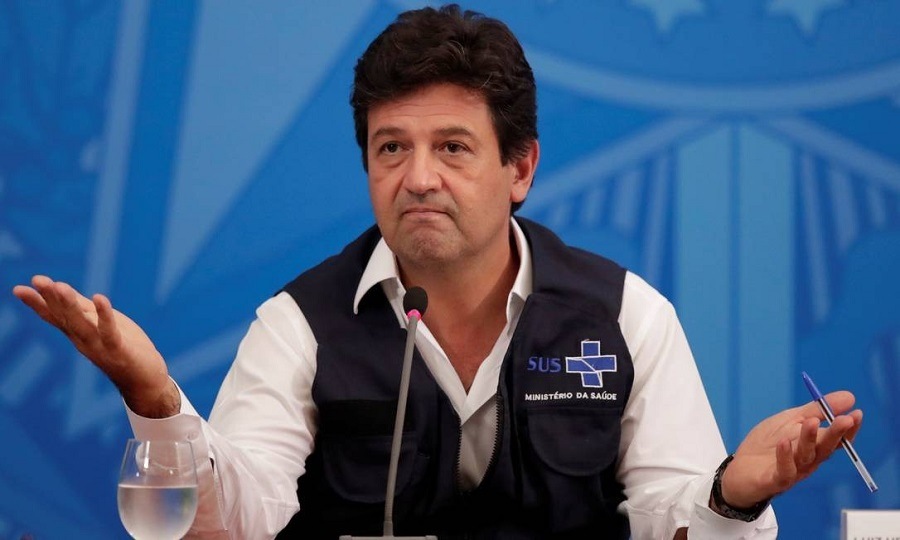
Discontent does not stop there and has also reached the Ministry of Health. The portfolio is under the interim management of active duty General Eduardo Pazuello.
The portfolio started the crisis with a good/excellent rating of 55 percent. Under the leadership of then-Minister Luiz Henrique Mandetta, the index rose to 76 percent in early April. Opposed to Jair Bolsonaro, who downplayed the severity of the Covid-19 pandemic, Mandetta was dismissed.
In late April, under Nelson Teich, the Ministry was again approved by 55 percent. Teich lasted a month, and his number 2, Pazuello took over. Ten days later, in late May, the Ministry’s approval rating was ten points lower.
Today, 33 percent consider the portfolio’s performance to be good, which brings the assessment closer to Bolsonaro’s, which has been stable for two months at only 27 percent excellent/good.
The disapproval of the Ministry has also grown, from a five percent rating in April to 34 percent now. The regular assessment is stable at 31 percent. Bolsonaro continues to be poorly rated. Compared to late May, his rejection is stable (49 compared to 50 percent).
Among those who reject the government, only three percent approve of its health management, while 71 percent of respondents who consider it excellent or good are pleased with the item.
Bolsonaro is poorly rated in the Southeast and Northeast, where he is only approved by 24 percent and is rejected by 52 percent and 55 percent, respectively.
Datafolha also polled opinions on mayors, which also dropped in relation to the same question asked in early April.
The work of municipalities in the crisis is rated as good or excellent by 44 percent, compared to 50 percent before. The disapproval increased from 22 to 34 percent and those who find their action only fair dropped from 25 to 21 percent.
TELEPHONE SURVEY
The telephone survey, used in this study, represents the total adult population of the country. The interviews are conducted by professionals trained in telephone approaches and calls made to cell phones, used by some 90 percent of the population.
The telephone method utilizes quick questionnaires, without the use of visual stimuli, such as cards with names of candidates, for instance.
Therefore, regardless of the sample distribution following gender and age quotas within each macro-region, and the subsequent consideration of results according to schooling, the data should be analyzed with some caution.
A total of 2,016 adult Brazilians with mobile phones in all regions and states in Brazil were interviewed. The error margin is two percentage points plus or minus.
Data collection occurred on June 23rd and 24th, 2020.
More: Brazil news in English, every day from The Rio Times.
Editorial responsibility: Matthias Camenzind, Editor-in-Chief · Editorial standards · Report an error