Brazil pressures EU at WTO over French soy production incentive program
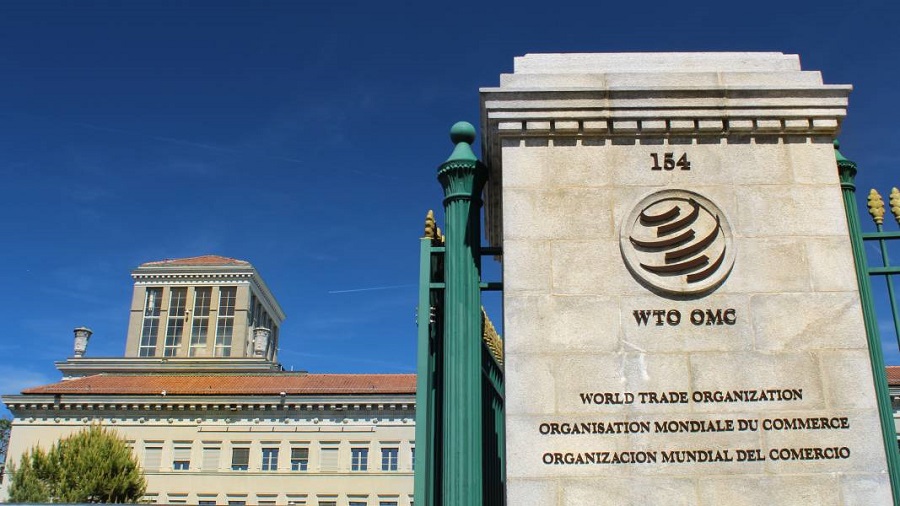
RIO DE JANEIRO, BRAZIL – Brazil has begun to press the European Union at the World Trade Organization (WTO) over how France is expanding its soybean production. The questions are whether production is environmentally sustainable and if subsidies used in the program are legal.
These questions, presented by Brazil in the WTO Committee on Agriculture, go far beyond the technical aspect, and have a political component, given the tension in relations between Brasilia and Paris over the protection of the Amazon.

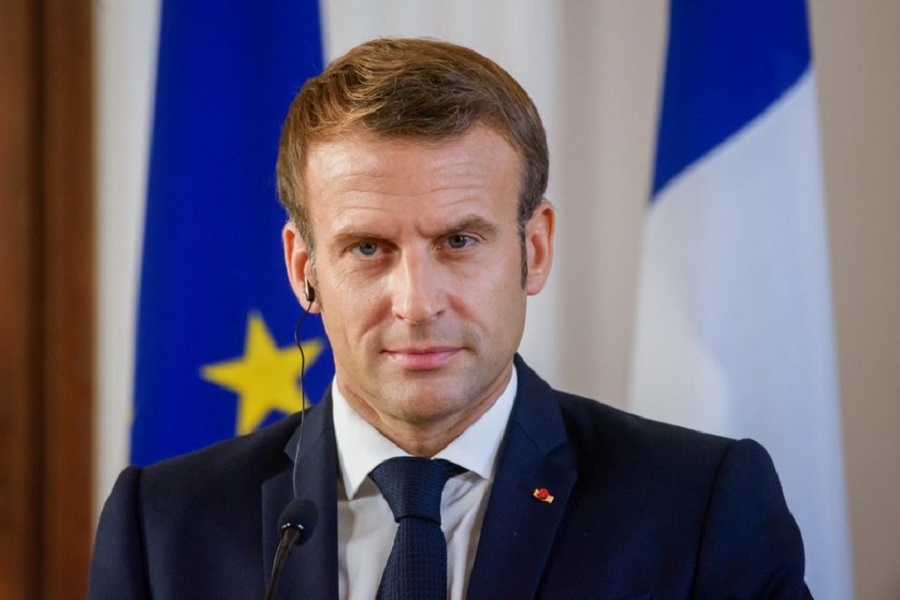
Recently, French President Emmanuel Macron once again linked Brazilian soy production to deforestation in the biome. And he confirmed stimuli for the production of the commodity in France in order to no longer depend on Brazil in this market.
Macron posted a video on social networks in which he said that “to continue to depend on Brazilian soybeans would be to endorse the deforestation of the Amazon. And that “we are not coherent when we import” soy produced at a rapid pace from the destroyed forest.
The French plan to “produce European soybeans or equivalent [grains]” has thrived under Macron, who has a tense relationship with President Jair Bolsonaro.
Now, Brazil has taken advantage of the regular meeting of the Agriculture Committee to question the EU about France’s new “national strategy for vegetable proteins.” The plan is to increase the total area cultivated with plant proteins in the country by 40% by the end of 2022, at an initial cost of 100 million euros.
Brazil also questioned the sharp increase in French production between 2008 and 2019, from 63,100 to 428,500 tons, and how support for this was being notified to the WTO. In this case, what Brasilia wants to know is whether the subsidies for the production increase are compatible with international rules.
If the French plan appears in the “so-called blue box,” then something is wrong, because the aid from this box is intended precisely to limit production.
In addition, Brazil asked about the agreement signed by the ten largest supermarket groups in France that foresees visible mention to consumers of the origin of goods and spaces reserved for local products on shelves dedicated to “special offers.”
Regarding the French strategy for plant proteins, the EU responded that the funds come from the French recovery plan (French and EU budget) and from other resources to be provided through the EU’s Common Agricultural Policy (CAP).
The European answers will certainly not satisfy Brazil, and one can expect a progressive increase of questioning about the French plan. If, on the one hand, Paris maintains criticism about the protection of the Amazon and the production of soybeans in the forest, on the other hand Brasilia clearly signals that the French also have explanations to give.
As for the letter from supermarkets in France, the EU stated in the WTO Agriculture Committee that the authorities of the European country do not contribute to this movement and that there is no provision for validation and control, by public authorities, of the commitments that the companies have undertaken.
Paraguay has followed Brazil in worrying about how France turbocharges its soybean production. Argentina has been coy so far – not because it disagrees with its Mercosur partners, but because its entire mission in Geneva is in the process of changing.
When French Agriculture Minister Julien Denormandie announced the plan for more vegetable protein production last year, he argued that France could not accept being so dependent on Brazilian soy imports.
However, in an interview with Valor news magazine the president of the French National Union of the Animal Nutrition Industry (SNIA), François Cholat, seemed skeptical. “The goal is good, but I don’t believe it. It is the fifth project in the last 20 years. And each time it runs into the economic problem,” he said at the time.
According to Cholat, French soy is 25% more expensive than Brazilian or American soy. In a complicated economic context, it is difficult for producers to give up Brazilian soybeans, especially those rich in protein.
The EU imports of Brazilian soybeans fell from 5 million to 3 million tons in recent years. Part of the imported meal was replaced by canola meal produced in Europe.
The area devoted to soybeans in Europe has doubled to more than 1 million hectares since the reform of the Common Agricultural Policy in 2013, and production reached a record 2.8 million tons for the crop in 2017/18.
The main European soybean producers are Italy, France and Romania. About 93% of soybeans in Europe are destined for animal feed production. Demand for vegetable proteins, meanwhile, has grown by double digits among consumers, seeking to replace meat and dairy products in their menus.
In 2017, the “Danube Soy” project was started, with the participation of 8,500 farmers from 21 countries, most of them in Eastern Europe, including Ukraine and Russia. Production has already reached 700,000 tons. The assessment is that the soybeans produced in countries like Romania or Hungary are able to compete with those from Brazil in terms of price.
Source: Valor
More: Brazil news in English, every day from The Rio Times.
This article was produced by The Rio Times’ automated AI newsroom. Editorial responsibility: Matthias Camenzind, Publisher and Editor-in-Chief. The Rio Times also runs Ask Rio Times, which answers from 100,000+ of our own articles, the daily Latin America Power Map, and prediction-market odds on elections and markets.. How we use AI · Report an error
Brazil runoff, Sunday, October 25: Brazil runoff date. Latest: Brazil runoff polls, Flávio 51%, Lula 49%.