Brazil Registers Record Number of Individuals Out of Labor Market
RIO DE JANEIRO, BRAZIL – The novel coronavirus pandemic has caused massive job loss. In the quarter during which the health crisis worsened in the country, between March and May, 7.8 million people lost their jobs.
And for the first time, over half of Brazil’s working-age population is jobless, according to data from the Brazilian Institute of Geography and Statistics (IBGE)’s National Continuous Household Sample Survey (Continuous PNAD).

“It’s very bad for the country because it shows that the activity level has dropped dramatically. Consequently, the rebound is compromised and, once it starts, it will be slow.”
“In the medium and long term, this will require people to start developing activities cooperatively, labor cooperatives,” summarized Silvio Paixão, a professor of Macroeconomics linked to USP (University of São Paulo), who expects a contraction of at least ten percent in Brazil’s Gross Domestic Product (GDP) in 2020.
Currently, there are more people out of the job market and unemployed – a total of 87.7 million Brazilians – than people working. In addition to those looking for jobs and not finding them, this account includes all individuals over 14 who could be working, from those discouraged, to students or housewives.
The occupied population, on the other hand, has dropped to 85.9 million, the lowest since the Continuous PNAD’s records began in 2012. “It’s the worst moment in terms of the number of people out of the job market,” said Adriana Beringuy, an analyst with the Labor and Income Coordination of IBGE.
Dismissals in the quarter set a record in eight of the ten business activity sectors, exceeding the one million mark in the industry, construction, domestic services, and lodging and catering sectors. In commerce, almost two million workers were dismissed.
Informality
In only one quarter, over 2.5 million jobs with a signed worker’s record book were lost, but the worst affected were casual workers: almost 5.8 million people who worked in this capacity lost their jobs during the pandemic. As a consequence, almost R$11 (US$2.04) billion in workers’ salaries stopped flowing into the economy between the months of March and May.
In order to assure that the return to the labor market of the massive pushed-out contingent does not revert to informal employment, the government needs to initiate a second stage of public policies, with a greater focus on sectors and workers’ qualifications, assesses analyst Thiago Xavier, from Tendências Consultancy.
“We need to think about measures to ease formal hiring, not only related to the cost, such as payroll relief but also workers’ qualification, because that is what will influence medium-term growth and potential GDP,” said Xavier.
The country’s unemployment rate rose from 11.6 percent in the quarter ended in February – the period before the pandemic hit – to 12.9 percent in the quarter ended in May when the first three months of the health crisis also brought down the economy.
The only reason the rate was not higher was due to the fact that dismissed workers did not seek employment, discouraged by social isolation measures, fear of contracting the virus, and the very perception of a lack of job offers in the labor market, according to IBGE researchers.
Over nine million people left the workforce in a trimester, and the inactive population, including those who were neither working nor looking for work, rose to a record of nearly 75 million. “A reaction of labor absorption is not looming on the horizon, quite the opposite. We have seen companies and retailers expecting a reduction in sales and demand,” observed Adriana.
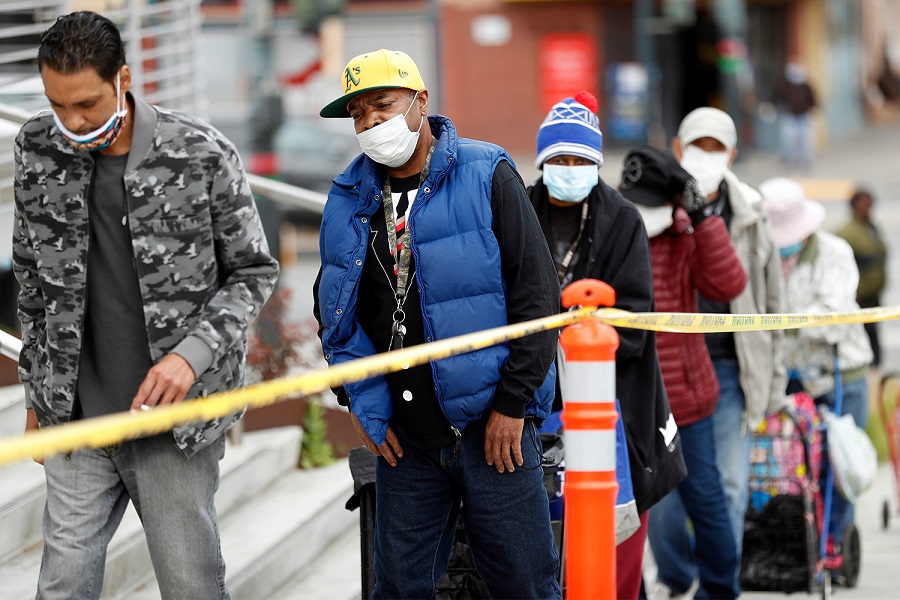
The number of discouraged people – who are not looking for work because they simply do not believe they will get a job – has reached a peak of 5.4 million. The result means 718,000 more discouraged people than in the quarter ended in February, a rise of 15.3 percent during the first three months of the pandemic.
“We perceive that discouragement has favored a lower rate of unemployment, but that doesn’t mean that the labor market isn’t in a state of severe deterioration,” said Luciano Rostagno, chief strategist at Mizuho Bank.
Source: Infomoney
More: Brazil news in English, every day from The Rio Times.
This article was produced by The Rio Times’ automated newsroom system. How we use AI · Report an error · Editorial responsibility: Matthias Camenzind, Editor-in-Chief