“Brazil should reassume the leadership of Mercosur and revive trade with its neighbors” – economist
RIO DE JANEIRO, BRAZIL – According to economist Luciano Wexell Severo, the Southern Common Market (Mercosur) is going through one of the worst moments in its 30 years of existence, due to falling trade within the bloc and also because of Brazil’s withdrawal from the group’s leadership role.
“What Brazil exports to Argentina, Paraguay and Uruguay are mostly industrialized products. When this trade drops, as it is now, we lose income, jobs, taxes, science, technology. Even so, we have not seen the government mobilize to give Mercosur back its leading role,” says Severo, professor at the Federal University of Latin American Integration (Unila) and coordinator of the South American Economic Integration Observatory.
Severo says that Brazilians in general are still unaware of Mercosur’s existence: “Since citizens do not see the relevance of Mercosur, they do not charge their political representatives to act in favor of integration. The ruling class itself has an incomplete vision of Mercosur’s relevance for Brazil.”

Read the entire interview with Luciano Wexell Severo, professor at the Federal University of Latin American Integration (Unila).
Q – Mercosur doesn’t have much weight in Brazil’s foreign trade. Of the total value of the products we imported in 2020, only 6.5% came from Mercosur countries. Of the value of the products we exported, 6% went to Mercosur countries. Given these relatively low numbers, does Brazil really need to give priority to the bloc’s partners?
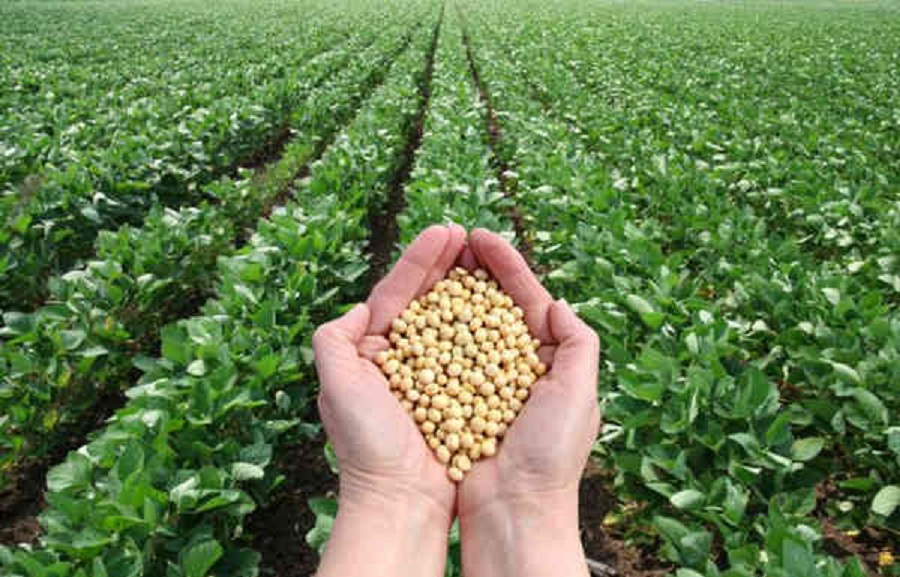
Luciano Wexell Severo – It is necessary to verify the type of product that we export to the world and the type that we export to Mercosur. To the world, we mostly sell primary products, raw materials, such as soy, chicken and beef, cellulose, coffee ore. To Mercosur, 85% of our exports are industrialized products, such as automobiles, tractors, engines, footwear, processed food, and beverages.
In comparison with primary products, industrialized products trigger a much more extensive and complex production chain and generate more jobs, income, and tax collection. Trade with Mercosur, with high added value products, benefits small and large companies in Brazil, the cooperatives, the workers, and contributes to the development of our universities, our research institutes, our science, our technology. There is still a lot of room for trade between Brazil and the other Mercosul countries to grow.
Q – Critics usually say that, in the scale of regional integration, Mercosur is at the initial levels, far away from the European Union, which is already at the top. While the Europeans managed to become an economic union, we have only reached the customs union. Is this really Mercosur’s weak point?
Severo: The classical theory of integration establishes a kind of step-by-step to be followed by the countries. There are five steps. First, they eliminate customs barriers between them. Then, they create common import taxes in the trade with countries outside the block. Next, they liberalize the movement of labor and the flow of capital.
After that, they fund a Central Bank to guide the macroeconomic policies of all countries, including the inflation target, the exchange rate, and the limit on government spending and borrowing to ensure fiscal balance. To complete the process, they eliminate local currencies and adopt a single currency.
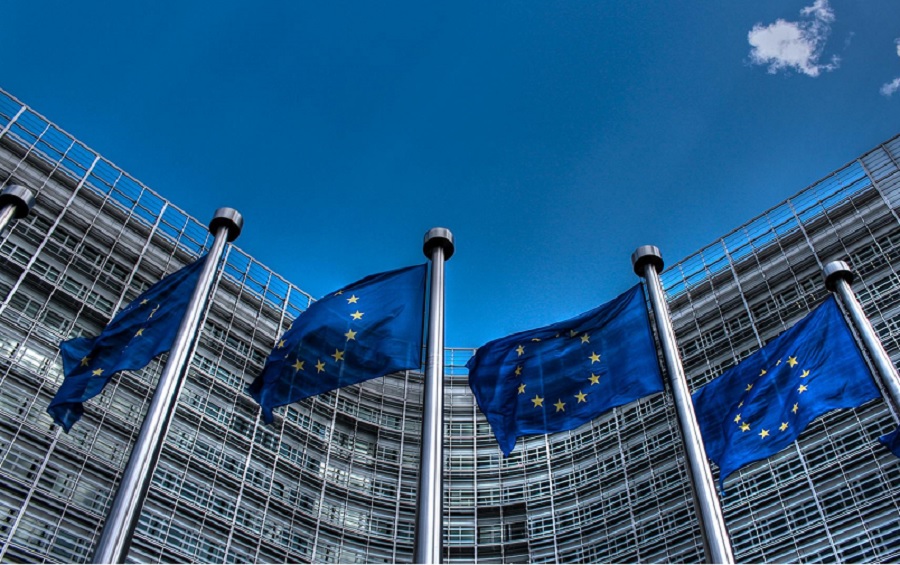
The European Union has gone through all five steps. Mercosur, on the other hand, has reached only the second. The comparison, however, is not adequate. Europe began the integration process at the end of World War II, more than 70 years ago. In the case of Mercosur, integration is only completing 30 years. In any case, this classical theory, dictated by European thinkers, has received a lot of criticism.
The main problem lies in the last two steps of integration. The headquarters of the European Central Bank is in Germany, the richest country. It was from there, when the single currency was created at the end of the 1990s, that the instructions were issued that forced Portugal, Italy, Ireland, Greece and Spain, the poorest countries in the euro zone, pejoratively known by the acronym Piigs, to follow an accelerated and cruel diet of slimming down, with reduced public spending, cutting of social rights, privatization of services and state companies. Moreover, once they lost their national currencies, these countries also lost the prerogative to control their own economies by devaluing their currencies.
The less developed countries now have many complaints about integration. In the last 20 years, the Piigs have experienced deindustrialization, impoverishment of the population, and a deterioration of the quality of life. They have become strong only in the services sector. Some of them are even threatening to leave the euro zone. It’s no wonder that Great Britain accepted joining the European Union without giving up the pound. Brexit [in 2020], therefore, was no surprise to those who have been following European integration more closely.
Q – So the European Union should not be considered a model for Mercosur?
Severo – It should not. In Mercosur we have enough specialists in international relations and economics to think of alternative paths, more suitable to our reality. The critics usually scorn Mercosur, saying that it is an incomplete customs union, since the first and second steps of integration have been accomplished, but not completely. We have not fully liberalized trade between our economies.
Each country was able to create a list of exceptions, establishing import taxes for certain products from the other Mercosur partners. The objective is to defend sectors of the domestic economy from foreign competition.
This is, yes, protectionism. From the liberal point of view, as we know, this means failure. From a political and strategic point of view, however, it is essential. Paraguay, for example, imposes taxes on sandals and furniture manufactured in Brazil. If liberalization were unrestricted and mandatory, its traditional Guarani sandal and wicker furniture industries would die.
Protectionist exceptions are necessary to guarantee the survival of sectors that are strategic, either because they employ many young people, or because they are made up of small businesses, or because they generate significant tax income. In Mercosur, liberalization is not total, but selective. It exists only when it is not negative for the countries involved.
Q – So the creation of a single currency in Mercosur, as there is in Europe, would also be inadvisable?
Severo – The European Union is a steel box. To be able to enter it, the country needs to bend, compress, and even suffer fractures, because of the fiscal policy requirements. That’s what happened with the Piigs and that’s what will happen with Ukraine and Turkey if their entry process becomes a reality. Mercosur, on the other hand, is a rubber box. It adapts to the shape of the different countries. The gigantic asymmetries between them, including the size of their economies and production structures, are taken into account.
Argentina’s economy is equivalent to 25% of Brazil’s economy. Uruguay’s economy is equivalent to 10% of Argentina’s. Paraguay’s economy is a bit larger than Uruguay’s.
If there were a Mercosur Central Bank, it would certainly be located on Avenida Faria Lima in São Paulo or Avenida Rio Branco in Rio de Janeiro. If a single currency were adopted, it would be very close to the real. The other countries would be obliged to follow Brazil’s rhythm and rules. Especially for Paraguay and Uruguay, this would demand absurd sacrifices. After a while they would end up abandoning Mercosur.
Q – Why is it important for Brazil to worry about the economy of Paraguay or Uruguay, for example?
Severo – If the liberalization were complete, Brazilian industries could invade the neighboring country with our products. In the first moment, this would even be beneficial for us. Later, however, we would see that it is a shot in our own foot. If there is unemployment, bankruptcies and crisis in the neighboring country, its economy will shrink, there will be resentment toward Brazil and Mercosur will head towards ruin.
We cannot look only at the short term. When our Mercosur partners grow, we gain space to grow too. Brazil, in order to build its development process, needs to link more with its partners. This includes buying more from them. Today there are products that Brazil imports from Ukraine, Morocco and Belarus that could perfectly well be bought from its neighbors. If Paraguay and Uruguay do not integrate with Brazil, they will end up integrating with China, with the United States or with Europe.
Besides, when all the countries in the bloc grow, including the smaller ones, Mercosur as a whole gains the muscle to negotiate better agreements with other partners. And not only commercial agreements, but also political ones. Brazil needs to face Mercosur as a springboard for its better insertion in the world.
Q – How do you see Mercosur’s current moment, 30 years after the signing of the Asunción Treaty?
Severo – Mercosul, in my opinion, is going through one of its worst moments. The current picture is one of emptiness and paralysis. Since the creation of the bloc until some time ago, Brazil, due to the size of its territory, population, and economy, naturally exercised leadership and invested in integration. This began to change in 2016, when it began to move away from Mercosur both politically and commercially.
The political disintegration became explicit during the pandemic. Mercosur did little in the face of the health crisis, while other regional blocs in the world managed to respond with agility, creating funds to mitigate the effects of the disease, taking care of border control, taking measures so that trade could continue.
Faced with Mercosur’s paralysis, the partners are no longer acting in an coordinated manner. Take the case of Ford, which, after a century of activities in Brazil, feeding an entire supply chain and generating innumerable direct and indirect jobs, has decided to stop manufacturing cars in our country and concentrate production in Argentina.
Mercosul, which once had a policy of integration of the automotive sector chains, did not even intervene. Ford realized the mismatch between the countries and made its decision. It would have been merely bad if the company had just left Brazil. It was much worse because it left Brazil to rely on its neighbor. Countries that should be partners are becoming competitors.
Look also at the case of China. Currently, the Chinese buy from us only soy beans. They don’t buy our soy oil, processed, because it costs twice as much as the grain. They process the beans themselves. Note that 75% of the soy that China buys from the world comes from Brazil, Argentina and Paraguay. The three form practically a soy OPEC [a reference to the group of the world’s largest petroleum producers, which dictate the rules of the market], but are unable to act as such.
If there were communication, our countries could pressure China to buy our soy oil. When Mercosur is abandoned, Brazil loses a lot.
In this scenario, Uruguay decided to move to try to gain the right to negotiate individually with the rest of the world, without involving Mercosur. If the country succeeds in this flexibilization of the bloc, an idea that recently won the support of the Brazilian and Paraguayan governments, Mercosur will be exterminated.
Uruguay itself, as a country, will be weakened. What strength does it have to negotiate alone with China, a country with a GDP [gross domestic product] 200 times greater than that of Uruguay?
Source: Senate News Agency
More: Brazil news in English, every day from The Rio Times.
This article was produced by The Rio Times’ automated newsroom system. How we use AI · Report an error · Editorial responsibility: Matthias Camenzind, Editor-in-Chief