Brazil Government Study: Privatized Sanitation Companies Could Be Worth R$140 Billion
RIO DE JANEIRO, BRAZIL – In an attempt to encourage governors to sell state sanitation companies, the Ministry of Economy conducted a study to detail the potential gains to public coffers with privatizations.
Should the option be to sell 100 percent of capital, these companies could reach a figure close to R$140 billion (US$35 billion). The calculations do not consider debts incurred by companies. To find the actual amount that would be collected by states, therefore, debits must be deducted.

The debate comes at a time when Congress is discussing a new legal framework for sanitation and the government advocates greater openness.
In the document obtained by Folha de S.Paulo, the ministry led by Paulo Guedes comes to the conclusion that the goal of universalizing basic sanitation in the country by 2033 will not be achieved without privatizations.
On Wednesday, October 9th, when the publication of a number of reports on Sanitation in Brazil began, Folha showed that Brazil’s universalization target could be pushed back by at least 30 years if the current pace of improvements and investments in the sector is upheld.
While following the congressional drafting of a new legal framework for the sector, the federal government is seeking arguments to persuade governors to follow the privatization path, particularly at a time of tightening state accounts.
The survey, prepared by the Infrastructure Development Secretariat, assessed the companies that provide water treatment and sewage collection and treatment in 22 states. In the federal bodies, the portfolio did not have access to the information required to make its calculations.
Data from state-owned companies under the power of regional governments were compared in two ways to make estimates, using company assessment techniques.
First, the amounts that the companies in the sector would be worth if the states sold 49 percent of the companies’ assets while keeping state control, were determined. The second scenario evaluated the amounts that would be reached with the potential sale of 100 percent of the capital.
To obtain the result, the technical team used the figures observed in sanitation companies that have already gone public and companies in the electricity sector that were privatized as a basis.
The result shows that the gain potential multiplies when 100 percent of the companies are privatized. In this scenario, the 22 state-owned companies analyzed would be worth R$139.7 billion.
The option to sell 49 percent of the interest would make this share of the companies to be worth R$30.6 billion, or only 22 percent of the amount initially projected.
According to the Secretary of Infrastructure Development, Diogo MacCord, the calculation shows that if states were to choose to retain control of companies, the country would give up R$109 billion to be able to invest in other areas, such as education and safety.
According to him, Brazil will not have the R$700 billion needed to meet the target of universalizing sanitation by 2033, as set out in the National Plan for Basic Sanitation, which projected that this would happen by 2033 were it not to choose privatizations.
NUMBERED LIST
“The public sector doesn’t have that kind of money. Either the private sector comes in, or the government won’t deliver,” he says. “According to the Ministry of Economy, privatization is the best way, but that does not mean that we want to force those who do not agree with us to follow this path. The important thing is to deliver a good service,” says Mac Cord.
The secretary points out that the coverage and service rates to the population reach almost 100 percent in the telecommunications and electricity sectors, which were opened to privatizations.
In sanitation, however, the coverage of sewage collection is approximately 52 percent. Today, 100 million people in Brazil live without access to the sewage network.
Current legislation prevents the full privatization of sanitation companies and requires that state control over them be retained.
The government expects this to be lifted with the approval of the new legal framework for the sector, which is being discussed in Congress with no expected deadline for completion.
The ministry’s experts argue that the inadequacies of a state-run company are ultimately paid for by the entire population, while the negative results of a private company are absorbed by its shareholders.
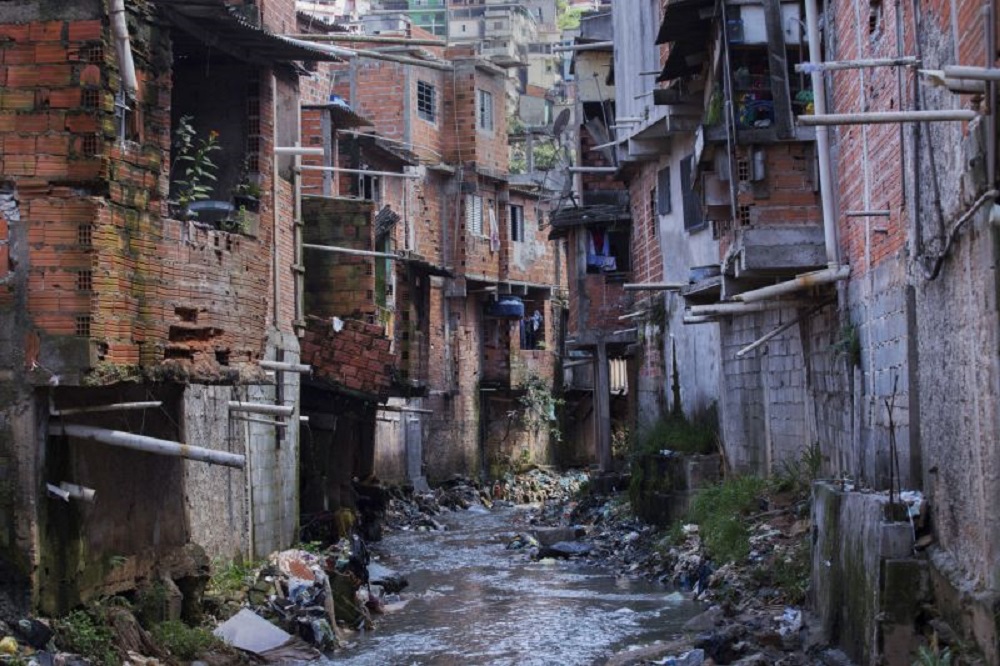
The ministry’s report also shows that companies that have already gone public without control being taken away from the government have continued their inefficiencies and privileges.
“When a public company makes a minority IPO [initial public offering], while retaining public control, it adds inefficiency to the need to measure profit [promised to new shareholders], creating a hard-to-manage dichotomy,” the document states.
According to the study, SABESP (Basic Sanitation Company of the State of São Paulo) would have the largest market value, reaching R$44.9 billion in the event of selling 100 percent of the shares.
CEDAE (Rio de Janeiro State Water and Sewage Company) would be the second most valuable, at R$19.3 billion.
The president of AESBE (Brazilian Association of State Sanitation Companies), Marcus Vinícius Fernandes Neves, disagrees with the conclusion that the solution would be total privatization.
According to him, the private sector cannot provide sanitation in the country by itself. “There are some areas that do not interest the market, and simple privatization is not the solution. Each state has its own strategy,” Neves says.
“We understand that the universalization of sanitation is achieved by combining public and private efforts. There is room for both and there is a need for complementation”.
Source: Folhapress
More: Brazil news in English, every day from The Rio Times.
This article was produced by The Rio Times’ automated newsroom system. How we use AI · Report an error · Editorial responsibility: Matthias Camenzind, Editor-in-Chief