IBOV 171,031.73 ▲ 1.85% IPSA 11,338.38 ▲ 0.89% IPC MEX 65,729.18 ▲ 2.14% MERVAL 2,913,184 ▲ 1.30% COLCAP 2,459.23 ▲ 0.61% BVL PERÚ 58,698.13 ▲ 2.60% USD/BRL5.14▼ 0.14% USD/MXN16.95▲ 0.30% USD/CLP914.28— 0.00% USD/COP3,038▼ 1.18% USD/PEN3.35▼ 0.06% USD/ARS1,499▲ 0.12% USD/UYU40.20▲ 1.58% USD/PYG5,996▲ 1.55% USD/BOB11.43▲ 0.41% USD/DOP58.82▲ 0.20% USD/CRC450.05▲ 3.34% USD/GTQ7.62▲ 2.21% USD/HNL26.81▲ 0.31% USD/NIO36.62▲ 0.61% USD/VES778.00▼ 0.13% USD/PAB1.00— 0.00% USD/BZD2.00— 0.00% USD/JMD 157.28 — 0.00% USD/TTD6.71▲ 0.79% EUR/BRL6.00▼ 0.64% BRENT 88.88 ▼ 0.03% WTI 83.11 ▼ 0.11% IRON ORE 161.91 — — COPPER 6.61 ▲ 0.03% GOLD 4,461 ▲ 1.78% SILVER 65.59 ▲ 1.26% SOY 1,184 ▲ 3.20% CORN 480.50 ▲ 10.02% WHEAT 655.00 ▲ 3.93% COFFEE 317.25 ▼ 5.51% SUGAR 16.43 ▼ 1.79% ORANGE JUICE 138.55 ▼ 0.47% COTTON 85.03 ▲ 2.33% COCOA 5,719 ▲ 3.18% BEEF 223.60 ▼ 3.93% CATTLE 339.10 ▼ 3.16% LITHIUM 75.20 ▲ 1.47% PETR4 41.64 ▼ 0.05% VALE3 72.97 ▲ 0.83% ITUB4 38.60 ▼ 1.03% BBDC4 16.85 ▲ 0.36% ABEV3 14.89 ▼ 0.80% BBAS3 19.37 ▲ 0.47% B3SA3 14.26 ▼ 0.21% WEGE3 47.59 ▲ 0.49% PRIO3 59.14 ▼ 0.19% SUZB3 41.33 ▲ 2.35% RENT3 34.68 ▼ 0.09% AZZA3 15.89 ▼ 2.63% CSAN3 3.22 ▼ 1.83% RAIZ4 0.25 — 0.00% PCAR3 2.75 ▼ 0.36% GMAT3 3.65 ▼ 1.08% PSSA3 48.13 ▼ 0.54% CVCB3 1.33 ▼ 2.92% POSI3 3.36 ▲ 2.44% SLCE3 13.34 ▲ 0.30% NATU3 8.14 ▼ 0.73% IBOV 171,031.73 ▲ 1.85% IPSA 11,338.38 ▲ 0.89% IPC MEX 65,729.18 ▲ 2.14% MERVAL 2,913,184 ▲ 1.30% COLCAP 2,459.23 ▲ 0.61% BVL PERÚ 58,698.13 ▲ 2.60% USD/BRL 5.16 ▲ 0.01% USD/MXN 17.06 ▼ 0.24% USD/CLP 913.98 ▲ 0.04% USD/COP 3,140 ▲ 0.03% USD/PEN 3.36 ▼ 0.66% USD/ARS 1,493 ▲ 0.10% USD/UYU 40.27 ▲ 1.24% USD/PYG 5,939 ▲ 1.68% USD/BOB 11.64 ▼ 0.76% USD/DOP 58.34 ▲ 1.25% USD/CRC 445.92 ▲ 0.89% USD/GTQ 7.62 ▲ 2.21% USD/HNL 26.79 ▲ 1.57% USD/NIO 36.62 ▲ 0.69% USD/VES 762.44 ▼ 0.13% USD/PAB 1.00 — 0.00% USD/BZD 2.00 — 0.00% USD/JMD 157.28 — 0.00% USD/TTD 6.70 ▲ 0.61% EUR/BRL 5.95 ▲ 1.01% BRENT 88.88 ▼ 0.03% WTI 83.11 ▼ 0.11% IRON ORE 161.91 — — COPPER 6.61 ▲ 0.03% GOLD 4,461 ▲ 1.78% SILVER 65.59 ▲ 1.26% SOY 1,184 ▲ 3.20% CORN 480.50 ▲ 10.02% WHEAT 655.00 ▲ 3.93% COFFEE 317.25 ▼ 5.51% SUGAR 16.43 ▼ 1.79% ORANGE JUICE 138.55 ▼ 0.47% COTTON 85.03 ▲ 2.33% COCOA 5,719 ▲ 3.18% BEEF 223.60 ▼ 3.93% CATTLE 339.10 ▼ 3.16% LITHIUM 75.20 ▲ 1.47% PETR4 41.64 ▼ 0.05% VALE3 72.97 ▲ 0.83% ITUB4 38.60 ▼ 1.03% BBDC4 16.85 ▲ 0.36% ABEV3 14.89 ▼ 0.80% BBAS3 19.37 ▲ 0.47% B3SA3 14.26 ▼ 0.21% WEGE3 47.59 ▲ 0.49% PRIO3 59.14 ▼ 0.19% SUZB3 41.33 ▲ 2.35% RENT3 34.68 ▼ 0.09% AZZA3 15.89 ▼ 2.63% CSAN3 3.22 ▼ 1.83% RAIZ4 0.25 — 0.00% PCAR3 2.75 ▼ 0.36% GMAT3 3.65 ▼ 1.08% PSSA3 48.13 ▼ 0.54% CVCB3 1.33 ▼ 2.92% POSI3 3.36 ▲ 2.44% SLCE3 13.34 ▲ 0.30% NATU3 8.14 ▼ 0.73%
since 2009
Sunday, August 23, 2026

Brazil Politics - Brazil

Brazil’s Northeast Will Take Decades to Repair Oil Slick Damage, say Biologists

By · October 11, 2019 · 3 min read

Daily Brief

The morning intel from across Latin America. Free.

By subscribing you agree to our privacy policy. We never share your email.

RIO DE JANEIRO, BRAZIL – The toxic material has made its way into Environmental Protection Areas (APAs) such as Santa Isabel, Pirambu (Sergipe), Piaçabuçu (Alagoas) and Delta do Parnaíba (Piauí), in addition to the national parks of Jijoca de Jericoacoara (Ceará) and Lençóis Maranhenses (Maranhão).

According to the latest report by the Brazilian Institute for the Environment and Renewable Natural Resources (IBAMA), so far 133 beaches have been affected in 61 municipalities in the nine northeastern states.

The oil slicks in the northeast are worrying authorities and environmentalists, who are now projecting that it will take decades for the affected fauna and flora to recover. (Photo: Internet Reproduction)
One-stop reference
Company Intelligence
Every listed company in Latin America — financials, ownership and structure for 1,450+ companies across 26 exchanges, in one place.
Browse the directory →
RT
Ask Rio Times
This story and the bigger picture.
Open the full Ask Rio Times →

Biologist Cláudio Sampaio, professor of biology and fishing engineering, says that areas already damaged by human activity have been impacted, which will enhance the effects of the spill.

“These environments are now vulnerable as a result of a number of impacts, such as pollution, global warming, the introduction of exotic species, disorderly tourism and overfishing, people fishing more than the capacity of the ecosystems to replenish themselves,” says Sampaio.

He says that “the environment rebuilds itself, but once contaminated it may take decades to recover”.

Social and economic impacts

In addition to the environmental disaster, experts caution about the consequences for tourism, the economy and even for food.

This is because “the mangrove areas, and marine grasses, are important breeding grounds for various species of commercial, ecological and tourist value, such as fish, lobsters, shrimps, manatees, and turtles,” says Sampaio.

According to Adema (State Environmental Administration), in Sergipe, crabs, blue land crabs, and mangrove tree crabs died when the oil invaded their habitat. “The substance is dense and directly affects the survival of marine animals,” explains ADEMA.

Biologist Natali Ristau, founder, and president of the Amares Institute, which monitors marine life in Maranhão, also says that a month after the slicks appeared, “we are seeing a small fraction of the problem”.

She says the oil has spread throughout the coast of Maranhão and is present both in the open sea and on the beach sands.

“We know that even small particles can be lethal if ingested by animals. The material is toxic and if it is carried by sea, we can expect a dilution and dissipation of some chemical compounds, and a resulting absorption by filtering organisms, such as oysters and other shellfish.”

“That is only one of the problems. Bearing this in mind, we can imagine the chain effect for animals and humans who use fishing resources for survival,” says the biologist.
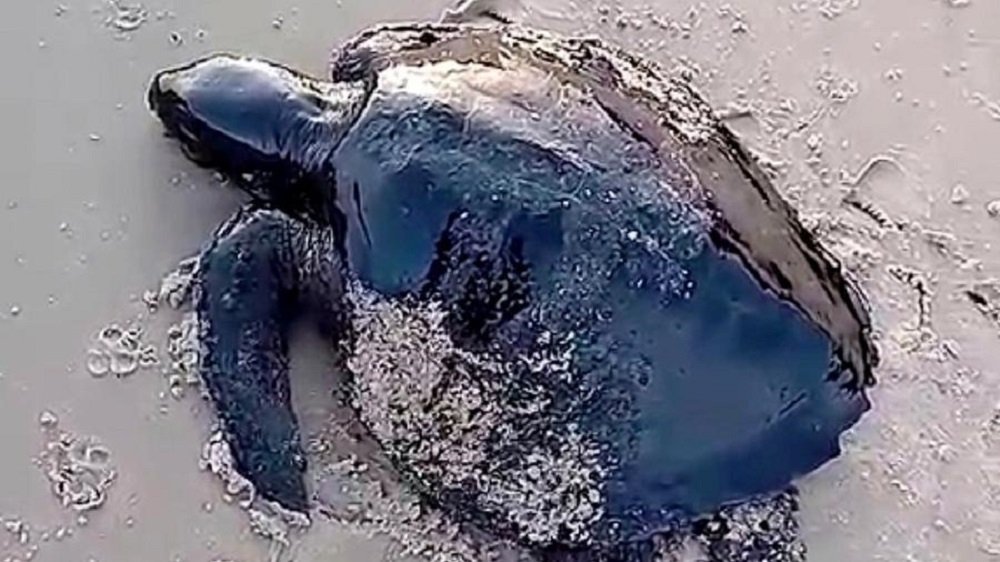
The mangrove areas are important breeding grounds for various species of commercial, ecological and tourist value, such as fish, lobsters, shrimps, manatees, and turtles. (Photo: Internet Reproduction)

River protection

The Sergipe government announced that it is taking measures to protect river waters, because oily slicks have been found near the mouths of important rivers, like São Francisco and the Jacaré.

Soon absorbent buoys will be installed so that the oil does not enter the rivers: “We are calling on the agencies and companies that have greater expertise in the subject to contain and not contaminate our rivers, since it entails the human supply,” says the State Secretary of Urban Development and Sustainability, Ubirajara Barreto.

Source: UOL


This article was drafted with automated assistance and reviewed before publication. How we use AI · Report an error

Read More from The Rio Times

The Rio Times · Power Map
See who really holds power in Latin America
Click to open the Power Map

Rotate for Best Experience

This report is optimized for landscape viewing. Rotate your phone for the full experience.