Brazil’s Publishers Rally Against Proposed Taxation of Book Sales
SÃO PAULO, BRAZIL – The Brazilian government’s recent tax reform proposal has raised criticism from the country’s publishers, authors and readers. The measure would remove the partial tax immunity that publishers have had since 1946. A petition created online has obtained more than one million signatures from those who say that if the tax reform is approved it will mean a blow to Brazil’s culture.
The book publishing segment has been immune from certain taxes since 1946. The 1988 Constitution, Article 150-VI (d) forbids federal, state and local governments from imposing certain taxes (called “impostos”) on books, journals, periodicals and the paper used to print them. The new CBS, however, is not an “imposto” but a different type of tax (called “contribuição”), so the constitutional immunity would not be applicable.

“Books change a person’s life. They show us a new, better world, increases our knowledge about things we would otherwise not know and keep our traditions, culture alive,” Silvana Moreira tells The Rio Times.
Moreira works as a cleaning lady in São Paulo and is the mother of four children, ranging from four to twenty years old. She says despite her low income she has always tried to introduce books into her kids’ daily routine.
“I sometimes ask my employers if they have children’s books they no longer want. My eldest got hooked on a science-fiction series and last Christmas that is all that he wanted, the rest of the series,” she says. “It is very gratifying to see that although we are poor I was able to instill the habit of reading into my kids.”
According to Brazil’s Economy Ministry, the reform, which calls for combining two major federal taxes into a new Goods and Services tax (CBS) charged at a fixed twelve percent rate, aims to simplify the country’s complex tax system and ultimately lower the overall tax burden. If approved, the tax may yield approximately R$700 million per year to the government.
Calculations made by Brazil’s top publishing associations, however, say that if approved, book prices to final consumers could increase as much as twenty percent. A group of eight publishing associations launched a manifesto at the beginning of August to criticize the end of the tax exemption for this segment and create an online petition to pressure lawmakers to change the bill.
“It is easy to calculate how much the government will be able to collect with the new CBS tax. It is much more difficult to assess what a nation loses when taxing the common good of the intellectual formation of its citizens,” says the manifesto titled “In Defense of Books”.
According to the manifesto, the entities recognize the need for tax reform in Brazil but point out that the answer “will not be with the increase in book prices that the issue will be resolved”.
Publishers argue that any increase in cost, however small, affects consumption. “(Tax) Exemption is a way of encouraging reading and promoting the benefits of long-term education,” says the document.
A petition was also created for readers to show their discontent with the new tax and was, die a few days, among the most commented topics on Twitter.
“It has been incredible – the response we have received,” Vitor Tavares, president of the Brazilian Book Chamber (CBL) told The Rio Times. “People are really rallying behind literature.”

For Minister of Economy Paulo Guedes tax exemption on books benefits those who could pay more taxes. According to Guedes the benefit does not distinguish those who really need government assistance. “We are going to give the book for free to the most fragile, to the poorest. I too, when I buy my book, I need to pay my tax. So it’s one thing to focus on help. The other thing is you, as a help the poorest, in fact, exempt people who can afford it,” Guedes told reporters last week.
The bill faces resistance in the Senate. According to Senator Flavio Arns (REDE – PR), with the advance of the internet and virtual books, publishers are already registering losses. “Taxing the printed books would then be an even bigger blow in this area, which is so important, because in it we leaf through our own culture,” said Arns.
For the head of the Mixed Parliamentary Front in Defense of Books, Senator Jean-Paul Prates (PT – RN), the taxation of books is not only a loss for the publishing segment, but for Brazil as a whole, further distancing the population from contacts with books. According to recent data the average Brazilian reads fewer than five books per year.
There are, however, those who support the withdrawal of the exemption.
“Do the poor buy books? Do the poor have a home to keep books? Unfortunately, low-income people (do not buy books and )depend much more on textbooks, provided by the government for learning in schools,” says Senator Carlos Viana (PSD – MG).
The discussion on lifting the tax exemption takes place at the moment when book sales begin to show a small recovery, with more people staying at home and reading during the pandemic. Despite the retraction of the book market in the last five years, during the period between May 18th and June 14th of this year, the book sector registered revenues of R$109 million, an increase of 31 percent compared to the previous month, according to a survey by Snel (National Book Editors Union).
According to publishers the taxation of books now would not only hinder readers but may force hundreds of smaller publishing companies throughout the country to close their doors.
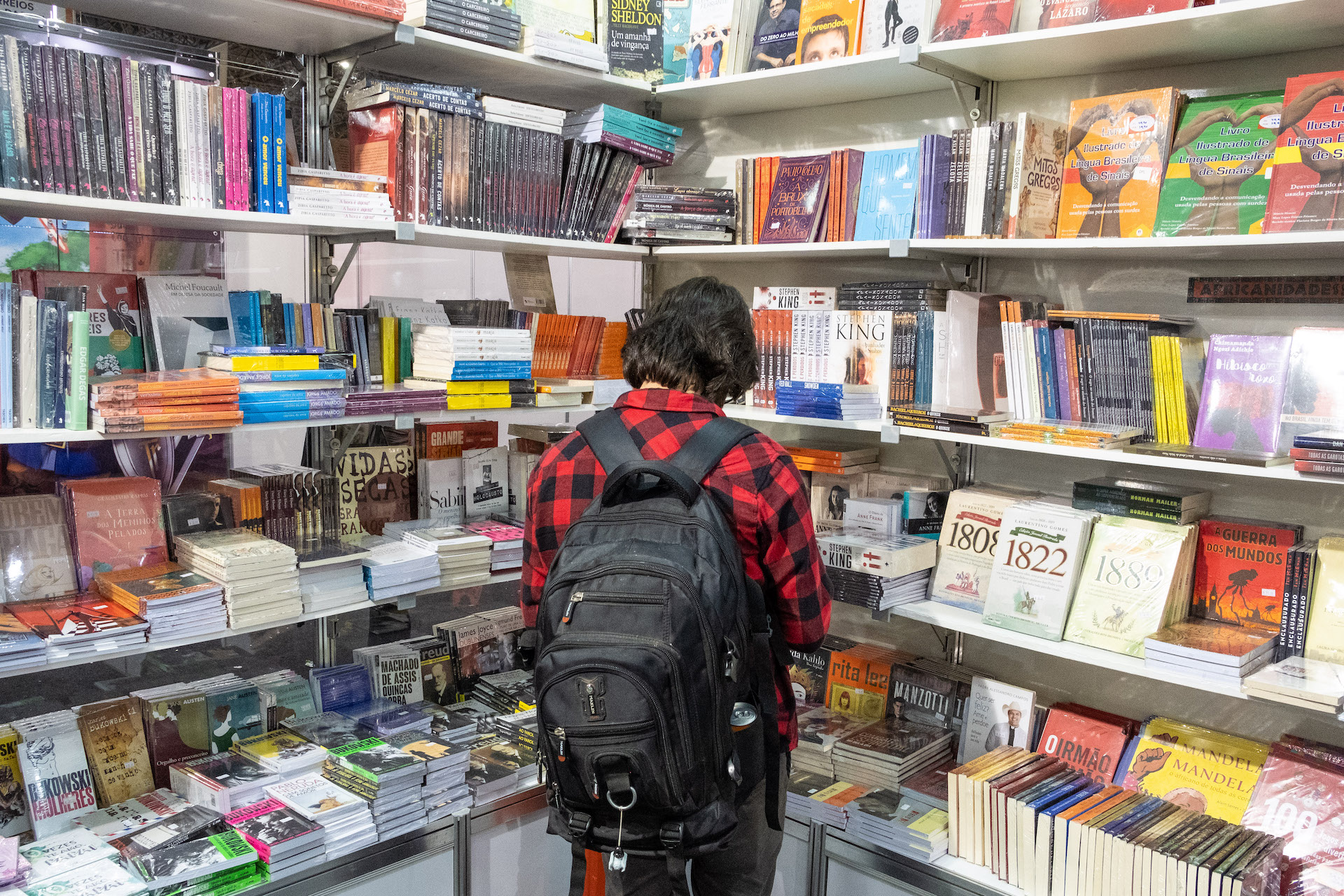
CBL president Tavares explains that in many small cities across Brazil, although there isn’t a bookstore, there is at least one micro-publishers – someone who produces reading material.
“Smaller publishers will stop producing. The biblio-diversity we have will be lost, doing away with the diversity of opinion, freedom of choice and the freedom of expression,” says Tavares.
Tavares explains that the end of the exemption would make books more expensive for the government itself, which is the main buyer of teaching material. “The government will have to increase the budget to buy books or buy fewer copies,” he said. In 2019, the federal government spent R$1.1 billion to acquire 126 thousand copies according to data from the PNDL (National Textbook Plan).
With a large part of the population reacting negatively to the taxation of books, publishers hope that this will be enough pressure on lawmakers to change the bill and maintain the tax exemptions.
“Fewer books in circulation means more elitism in knowledge and more unequal opportunities in the country of known, but little combated, inequalities,” concludes the publishing association manifesto.
More: Brazil news in English, every day from The Rio Times.
Editorial responsibility: Matthias Camenzind, Editor-in-Chief · Editorial standards · Report an error