Brazil’s semi-new truck sales soared in Q1 this year, driven by commodity producer buyers
RIO DE JANEIRO, BRAZIL – In 2021, truck sellers in Brazil experienced a “V-shaped recovery” in terms of sales numbers. According to ANFAVEA (Brazilian Association of Vehicle Manufacturers) data, between January and April this year, 35,862 trucks were licensed, up 48% compared to the same period in 2020 — and 19.5% compared to the period from January to April 2019.
According to automakers, the reasons for the increase involve the combination of record harvests and a high dollar, in addition to low interest rates, which prompted the renewal of fleets.
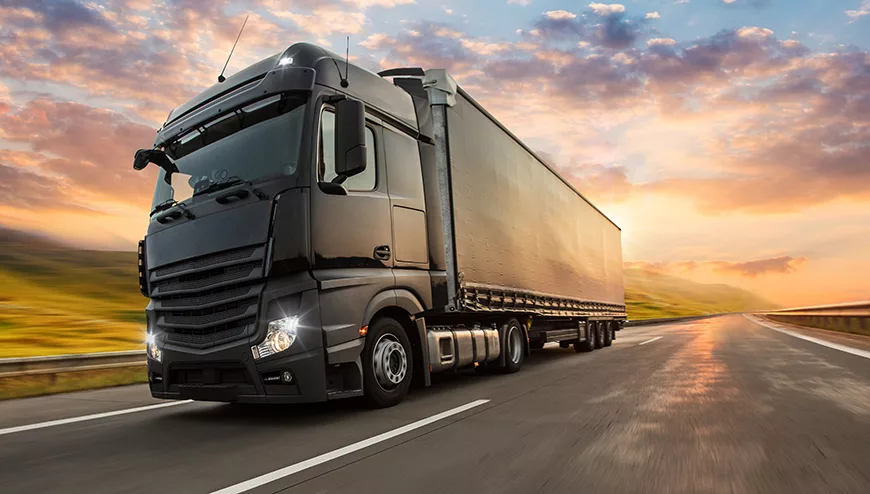
This growth masks a joint concern of automakers: the lack of supplies for vehicle production, given the high demand, particularly for semiconductors – which are now being sold mainly for the production of electronics, according to Volkswagen Trucks and Buses.
“We are confident in the sector’s growth, driven mainly by the good moment of agribusiness. However, the combination of uncertainty regarding the future scenario of Covid-19 in Brazil, coupled with the shortage of semiconductors, may prevent the growth of our sector from reaching its full potential,” says Roberto Cortes, the company’s president and CEO.
To understand this crisis, it is important to recall that Renesas Electronics, one of the main manufacturers of chips for the global automotive sector, suffered a fire that paralyzed for a month the production of the component, which is used in vehicle panels, engines, and transmission. Added to this is the already established global demand crisis for the component, mainly affected by the plant shutdown and shrinking demand in 2020.
With an eye on serving the sector, Cristiano Amon, Qualcomm’s CEO, recently stated that the company intends to invest in the relationship with the automotive sector to supply semiconductors – and the company currently has a division entirely dedicated to dealing with automakers. Still, he projects that supply and demand should not meet soon: only by late 2021.
Added to the lack of semiconductors is the challenge caused by the increase in steel prices: the product has seen a 46% variation this year alone and a 130% variation in the past 12 months, according to consulting firm S&P Global Platts. Added to this is a shortage of rubber, caused by factors such as the sudden resumption of growth and a disease that attacks the trees containing the raw material.
“We are faced with challenges throughout the whole supply chain. Nevertheless, we went through a somewhat ‘magical’ moment with the expressive increase in all segments in which we operate: in sales of semi-heavy vehicles, we grew 79%, 61% in heavy vehicles, and 95% in medium vehicles,” says Márcio Querichelli, leader of IVECO in South America.
Given the high demand and the shortage of components, the search for used trucks to attend the divisions dedicated to these vehicles is complicated. The urgency for a truck – which, when new can take months from purchase to delivery – has caused the sales of used trucks to increase 42.5% in the first quarter this year, according to OLX, a used-vehicle sales platform.
Those who work in this niche say that appreciation was so high that it exceeds prices charged for new vehicles on the market: “Prices rose 40% compared to the same period last year. It is a very ‘weird’ market if we think about the price, but for those who need a truck, agility is crucial. Paying more may be more worthwhile than waiting, to start meeting contracts that each one has,” says Alcides Cavalcanti, commercial director of Volvo Trucks and Buses.
The company also posted good results in the sales of new products: the FH 540 model remained as the best-selling model in Brazil, closing a cycle of 3 consecutive years in the leadership. However, concern with the components means that solutions have to be adopted to keep everything running.
“We are projecting 40% growth in 2021, but it is clear that we are aware of the problems faced by the sector. In addition to the problems with components, we also have challenges with logistics, as the reduction of ships to Latin America, still as a reflection of the pandemic, forces us to import parts by air freight, which is much more expensive,” says Volvo’s Cavalcanti. He points out that these factors compromise the company and the sector’s margins, despite the potential pass-through of part of the costs to consumers.
Despite these challenges, the sector’s perspectives still remain positive: ANFAVEA estimates show that the production of heavy trucks should grow 23% in 2021, despite the obstacles faced by the country with respect to the consequences of Covid-19. The difficulties faced by the industry may delay such growth, but it seems that as long as commodities are experiencing a good moment, automakers will have “a good problem:” meet a demand that has grown and should continue to grow.
More: Brazil news in English, every day from The Rio Times.
This article was produced by The Rio Times’ automated newsroom system. How we use AI · Report an error · Editorial responsibility: Matthias Camenzind, Editor-in-Chief
Brazil runoff, Sunday, October 25: Brazil runoff: date, poll closing times and when results start. Latest: Brazil runoff polls, Flávio 51%, Lula 49%.