Brazil’s Senate May Vote Anti-crime Package Later This Year
RIO DE JANEIRO, BRAZIL – Passed by the Chamber of Deputies last Wednesday, December 4th, the package includes part of the proposal submitted earlier this year by the Minister of Justice, Sérgio Moro, and parts of the text prepared by the committee of prominent lawyers coordinated by Supreme Court Justice (STF) Alexandre de Moraes.

The bill, which introduces changes in criminal law, such as increased sentences and new rules for regime progression for convicts, was eventually passed by deputies without controversy that could obstruct its advancement.
Several controversial issues were removed, including: imprisonment after one unsuccessful appeal of a conviction, now under discussion by different committees in the Chamber and Senate; the rules for plea bargains, providing for the reduction of sentences for defendants who confess to have committed a certain crime; and the so-called “illicit act exclusion” cause, which would protect security agents who, as a result of “violent emotion, excusable fear or surprise”, had exceeded their powers while performing their duties.
For Senators Randolfe Rodrigues and Eliziane Gama, the removal of the last point was very significant for the proposal to enjoy a favorable mood for voting in the Senate.
According to Randolfe, the final text passed by the deputies was “very reasonable” to be supported by the Senate. In the same vein, Eliziane Gama said that the message was that “everyone has the right to life” and that anyone who does not respect this right should have exemplary punishment.
A further point under consideration by supporters of the Senate vote later this year is that this is the possible text nearing a year of municipal elections.
“The man in charge of the agenda is Davi Alcolumbre, president of the Senate. If he wants to, I’ll hold as many meetings as necessary [in the CCJ – Constitution and Justice Committee], and we’ll take it to plenary session,” said Simone Tebet, president of CCJ in the Chamber. The text needs to be examined by the CCJ before being taken to the final vote by all senators.
According to the senator, in this case, “anything is better than nothing”. In Simone’s opinion, it is better to ensure progress on some points now and, if need be, improve points in the norm after the municipal elections.
Wellington Fagundes believes that the Anti-crime Package is a requirement for Brazil and a way to do justice for “those who need it most”. “The package contains legal tools that can offer society legal security. It comes at a good time, and we will approve it as soon as possible,” he said.
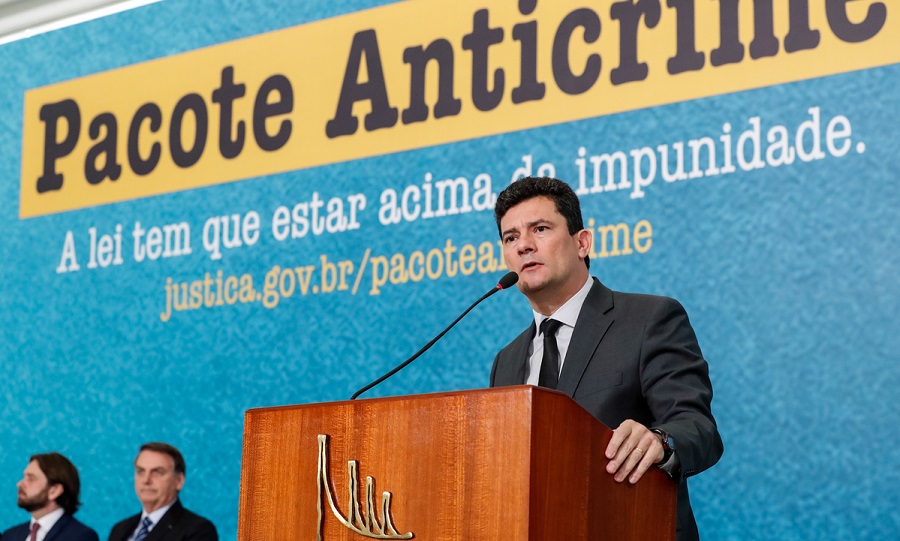
Main items in the bill sent to the Senate
Greater penalties: Penalties for various crimes, such as homicide with firearms of restricted or prohibited use, insulting on social media, illegal arms trade, and international arms trafficking, are increased. The maximum imprisonment limit in Brazil would also increase from 30 to 40 years.
Imprisonment after conviction by a jury: Currently, a defendant may appeal in freedom even after being convicted of homicide by a jury. The package provides that the defendant should be incarcerated immediately after conviction in cases where the sentence is at least 15 years. Moro’s initial proposal did not provide for this minimum time.
Parole: The conditions for a convicted prisoner to be released on parole are stricter. Only those who have behaved well, and not only acceptably, as before, and with no serious misconduct in the previous 12 months will be able to benefit.
Prisoner vs. Attorney: A judge’s authorization to record a conversation between attorney and client within maximum-security prisons is no longer required.
Sentence Progression: Currently compliance with at least one-sixth of a sentence in a closed regime is required to request progression to house arrest or work-release regimes. Minimum confinement required is now between 16 and 70 percent, depending on the severity of the crime and the prisoner’s criminal record.
A minimum of 40 percent of the sentence must be served in the case of a primary offender, and 60 percent in the case of a repeat offender. Defendants sentenced for belonging to criminal organizations or militias are no longer entitled to progression or probation, as long as the connection is proven.
Heinous crimes: Prisoners convicted of heinous crimes – when there is violence and great offensive potential – will have more stringent rules for serving their sentences, such as restrictions on temporary release and on regime progression.
The bill also increases the number of crimes deemed heinous, such as robbery that results in serious injury, theft using explosives, homicide committed with a firearm of restricted use.
Undercover: The text provides a description of the situations in which evidence may be obtained by undercover police officers and the validation of blatant evidence in special operations with undercover agents. For instance, those selling weapons or ammunition to an undercover police officer may be convicted, provided that there is evidence of pre-existing criminal conduct.
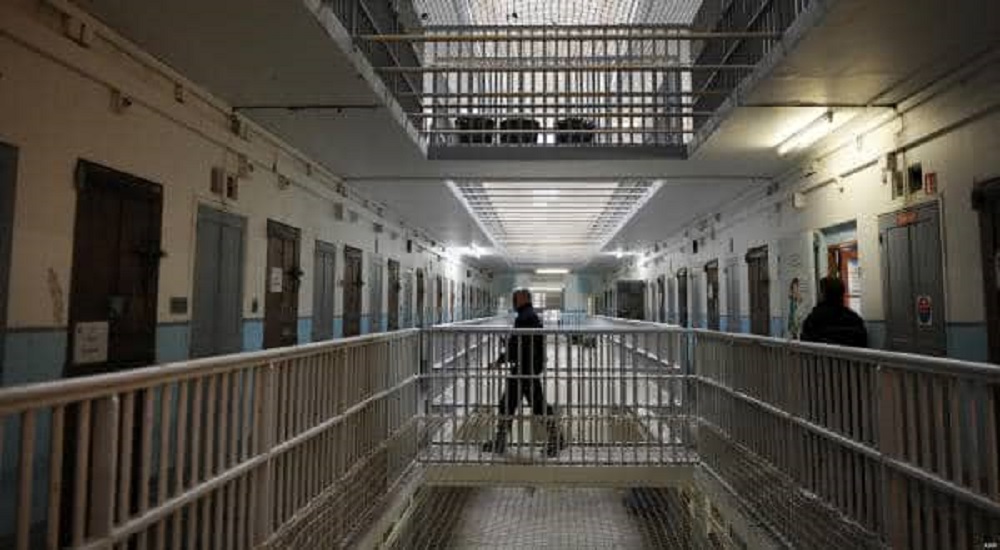
Federal prisons: The maximum length of stay of criminal faction leaders in federal prisons increases from 360 days to three years, with the option for renewal.
Assistance to police officers: Police officers investigated for killing someone with no confrontation or in legitimate defense in the exercise of their duties, who do not appoint a personal attorney, and in the absence of a chargeable public defender, will be entitled to have an attorney paid by the police force. The rule also applies to military personnel in Law and Order (GLO) enforcement actions.
Source: Agência Brasil
More: Brazil news in English, every day from The Rio Times.
This article was produced by The Rio Times’ automated newsroom system. How we use AI · Report an error · Editorial responsibility: Matthias Camenzind, Editor-in-Chief