IBOV 187,206.89 ▼ 0.56% IPSA 11,220.60 ▼ 0.16% IPC MEX 63,924.77 ▼ 0.28% MERVAL 3,098,898 ▼ 1.87% COLCAP 2,589.69 ▼ 1.41% BVL PERÚ 59,373.28 ▼ 0.32% USD/BRL5.13— 0.00% USD/MXN16.96▼ 0.14% USD/CLP941.13— 0.00% USD/COP3,077▼ 0.78% USD/PEN3.35▼ 0.01% USD/ARS1,509— 0.00% USD/UYU40.26▲ 3.12% USD/PYG5,903▲ 3.35% USD/BOB11.98▼ 2.70% USD/DOP58.96▲ 0.56% USD/CRC447.55▲ 1.64% USD/GTQ7.63▲ 2.97% USD/HNL26.85▲ 3.13% USD/NIO36.62— 0.00% USD/VES830.41▼ 1.28% USD/PAB1.00— 0.00% USD/BZD2.00— 0.00% USD/JMD 157.28 — 0.00% USD/TTD6.74▲ 2.35% EUR/BRL5.95▲ 0.25% BRENT 88.88 ▼ 0.03% WTI 83.11 ▼ 0.11% IRON ORE 161.91 — — COPPER 6.61 ▲ 0.03% GOLD 4,461 ▲ 1.78% SILVER 65.59 ▲ 1.26% SOY 1,184 ▲ 3.20% CORN 480.50 ▲ 10.02% WHEAT 655.00 ▲ 3.93% COFFEE 317.25 ▼ 5.51% SUGAR 16.43 ▼ 1.79% ORANGE JUICE 138.55 ▼ 0.47% COTTON 85.03 ▲ 2.33% COCOA 5,719 ▲ 3.18% BEEF 223.60 ▼ 3.93% CATTLE 339.10 ▼ 3.16% LITHIUM 75.20 ▲ 1.47% PETR4 41.64 ▼ 0.05% VALE3 72.97 ▲ 0.83% ITUB4 38.60 ▼ 1.03% BBDC4 16.85 ▲ 0.36% ABEV3 14.89 ▼ 0.80% BBAS3 19.37 ▲ 0.47% B3SA3 14.26 ▼ 0.21% WEGE3 47.59 ▲ 0.49% PRIO3 59.14 ▼ 0.19% SUZB3 41.33 ▲ 2.35% RENT3 34.68 ▼ 0.09% AZZA3 15.89 ▼ 2.63% CSAN3 3.22 ▼ 1.83% RAIZ4 0.25 — 0.00% PCAR3 2.75 ▼ 0.36% GMAT3 3.65 ▼ 1.08% PSSA3 48.13 ▼ 0.54% CVCB3 1.33 ▼ 2.92% POSI3 3.36 ▲ 2.44% SLCE3 13.34 ▲ 0.30% NATU3 8.14 ▼ 0.73% IBOV 187,206.89 ▼ 0.56% IPSA 11,220.60 ▼ 0.16% IPC MEX 63,924.77 ▼ 0.28% MERVAL 3,098,898 ▼ 1.87% COLCAP 2,589.69 ▼ 1.41% BVL PERÚ 59,373.28 ▼ 0.32% USD/BRL 5.16 ▲ 0.01% USD/MXN 17.06 ▼ 0.24% USD/CLP 913.98 ▲ 0.04% USD/COP 3,140 ▲ 0.03% USD/PEN 3.36 ▼ 0.66% USD/ARS 1,493 ▲ 0.10% USD/UYU 40.27 ▲ 1.24% USD/PYG 5,939 ▲ 1.68% USD/BOB 11.64 ▼ 0.76% USD/DOP 58.34 ▲ 1.25% USD/CRC 445.92 ▲ 0.89% USD/GTQ 7.62 ▲ 2.21% USD/HNL 26.79 ▲ 1.57% USD/NIO 36.62 ▲ 0.69% USD/VES 762.44 ▼ 0.13% USD/PAB 1.00 — 0.00% USD/BZD 2.00 — 0.00% USD/JMD 157.28 — 0.00% USD/TTD 6.70 ▲ 0.61% EUR/BRL 5.95 ▲ 1.01% BRENT 88.88 ▼ 0.03% WTI 83.11 ▼ 0.11% IRON ORE 161.91 — — COPPER 6.61 ▲ 0.03% GOLD 4,461 ▲ 1.78% SILVER 65.59 ▲ 1.26% SOY 1,184 ▲ 3.20% CORN 480.50 ▲ 10.02% WHEAT 655.00 ▲ 3.93% COFFEE 317.25 ▼ 5.51% SUGAR 16.43 ▼ 1.79% ORANGE JUICE 138.55 ▼ 0.47% COTTON 85.03 ▲ 2.33% COCOA 5,719 ▲ 3.18% BEEF 223.60 ▼ 3.93% CATTLE 339.10 ▼ 3.16% LITHIUM 75.20 ▲ 1.47% PETR4 41.64 ▼ 0.05% VALE3 72.97 ▲ 0.83% ITUB4 38.60 ▼ 1.03% BBDC4 16.85 ▲ 0.36% ABEV3 14.89 ▼ 0.80% BBAS3 19.37 ▲ 0.47% B3SA3 14.26 ▼ 0.21% WEGE3 47.59 ▲ 0.49% PRIO3 59.14 ▼ 0.19% SUZB3 41.33 ▲ 2.35% RENT3 34.68 ▼ 0.09% AZZA3 15.89 ▼ 2.63% CSAN3 3.22 ▼ 1.83% RAIZ4 0.25 — 0.00% PCAR3 2.75 ▼ 0.36% GMAT3 3.65 ▼ 1.08% PSSA3 48.13 ▼ 0.54% CVCB3 1.33 ▼ 2.92% POSI3 3.36 ▲ 2.44% SLCE3 13.34 ▲ 0.30% NATU3 8.14 ▼ 0.73%
since 2009
Sunday, September 13, 2026

Brazilian Political Scene Promotes Uncertainty About Economy

By · October 15, 2019 · 3 min read

The LatAm Brief

One email, every weekday morning. What moved in Latin American markets, politics and expat life.

Yesterday’s subject line: “'The false peace is over' - Colombia”

Free. We send a confirmation link first — nothing arrives until you click it. Unsubscribe with one click in any edition. If you stop opening us for 30 days we stop sending by ourselves, as we assume the interest is no longer there. See our privacy policy. We never share your email.

RIO DE JANEIRO, BRAZIL – Since the end of the recession in January 2017, in only 10 of the 33 months of the period, the Economic Uncertainty Indicator (IIE-Br), calculated by the Brazilian Institute of Economics of the Getúlio Vargas Foundation (Ibre/FGV), was below the level of 110 points, a level above which uncertainty is considered high.

From the end of 2016, concerns about the fiscal crisis were relieved, but political turbulence continued on the radar, even after the election and inauguration of President Jair Bolsonaro.
From the end of 2016, concerns about the fiscal crisis eased, but political turbulence continued on the radar, even after the election and inauguration of President Jair Bolsonaro.
One-stop reference
Company Intelligence
Every listed company in Latin America — financials, ownership and structure for 1,450+ companies across 26 exchanges, in one place.
Browse the directory →
RT
Ask Rio Times
Latin American markets, currencies and companies.
Open the full Ask Rio Times →

With the end of the recessive period, a reduction in uncertainty was expected, but the political turbulence has prevented this accommodation, shows an unprecedented breakdown of the IIE-Br, obtained by the newspaper ‘O Estado de S. Paulo’.

According to Fernando Veloso, Ibre/FGV researcher, when it reached its peak in September 2015 (136.8 points), both uncertainties related to the fiscal crisis and those associated with political turbulence were high in the IIE-Br. From the end of 2016, concerns about the fiscal crisis eased, but political turbulence continued on the radar, even after the election and inauguration of President Jair Bolsonaro.

“There is some evidence that fiscal uncertainty, with the approval of the spending ceiling in 2016 and the advance of the Welfare reform this year, has decreased but is still very high. Now, the uncertainty of a political nature has risen and, despite ups and downs, has remained at a very high level. If it was only the fiscal factor, the uncertainty should have decreased a little, but politics do not allow for that”, said Veloso.

Dubious signs

To support this assessment, Ibre/FGV researchers have split the IIE-Br Media into two. IIE-Br Media is the sub-index that measures mentions of expressions associated with economical uncertainty in news published in the press.

One disaggregate measures the references to political uncertainties; the other, references to fiscal uncertainties. In the accumulated period from January 2017 to August this year, the aggregate of political uncertainties fell only 0.2% (to 121.6 points), while the aggregate of fiscal uncertainties shrank by 5.9% (to 115.2 points). In the accumulated period from 2019 to August, the first aggregate accumulated a 10% increase, while the sub-index of fiscal uncertainty advanced 2.2%.
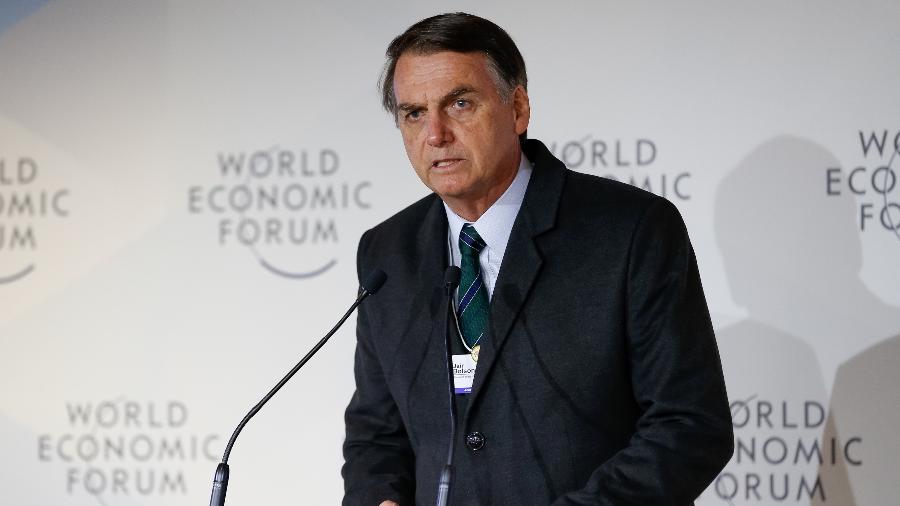
The picture did not improve with the election of Bolsonaro, according to disaggregated data from the IIE-Br.

The political uncertainty had already risen in the October elections last year, Veloso recalled. “At the time of the elections, there was a great polarization. Depending on who won the elections, policies would be radically different,” he said.

The point is that the picture did not improve with the election of Bolsonaro, according to disaggregated data from the IIE-Br. “Even now, despite all the commitment of [Minister of Economy] Paulo Guedes and his team to liberalizing reforms, we see dubious signs, not of him, but of Bolsonaro and other areas of government,” Veloso said.

The style of the president, who uses social media to communicate directly with his supporters and often makes controversial statements, also contributes to raising political uncertainty.

“It is in Bolsonaro’s nature to do so. That’s his political style. It may even be convenient for his political profile, but for the economy, it contributes to raising uncertainty,” Veloso said, noting that something similar happened in the United States.

“U.S. uncertainty has increased a lot with [President Donald] Trump, with the use of Twitter, statements, and back and forths in the trade dispute with China.

According to Veloso, the political turbulence fuelled by the government itself and by President Bolsonaro has an additional effect on uncertainty in the economy.

Source: O Estado de S. Paulo

This article was produced by The Rio Times’ automated newsroom system. How we use AI · Report an error

Read More from The Rio Times

The Rio Times · Power Map
See who really holds power in Latin America
Click to open the Power Map

Rotate for Best Experience

This report is optimized for landscape viewing. Rotate your phone for the full experience.