Brazil’s Nine Northeastern States Control Their Public Accounts, Invest More
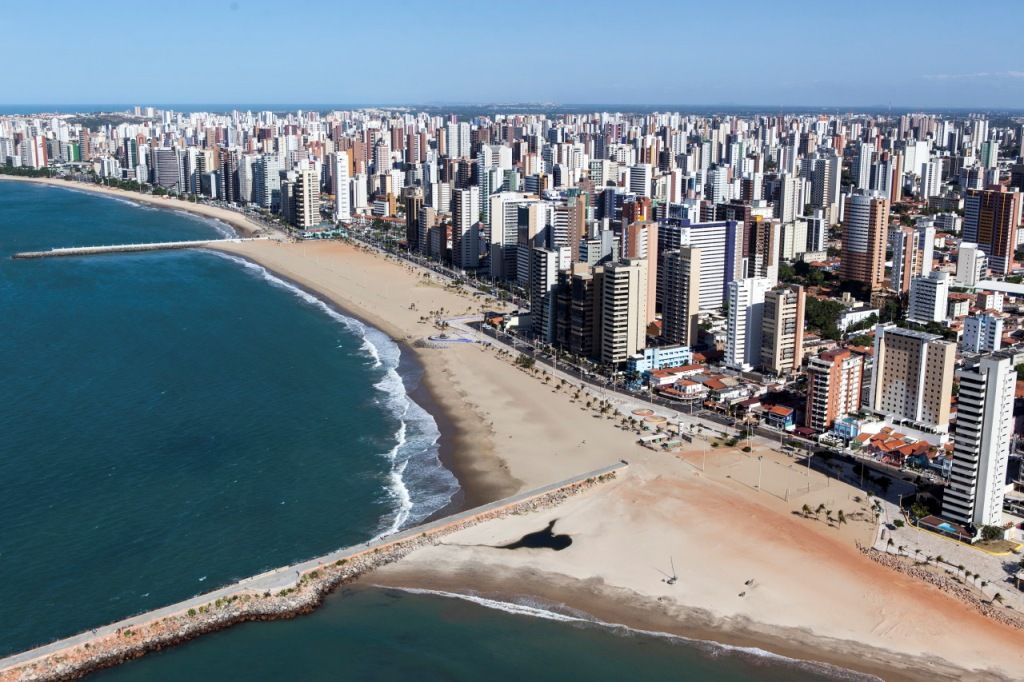
RIO DE JANEIRO, BRAZIL – A less developed region of the country, Brazil’s Northeast has stood out in the national scenario with a rare situation: good fiscal position, rapid advance of social indicators and attraction of private investments.

As a result of actions that began years ago, the states and capital cities of the region, despite being run by different parties, are experiencing a similar moment and operating more and more in coordination.
They are succeeding in investing, an enviable feat when most states, particularly in Brazil’s South and Southeast, struggle to keep their accounts on track. The Northeastern states are in a better fiscal position and are speeding up the pace to reduce the backlog in the social area, mainly in education.
Despite the progress it has made, the region continues to suffer from poverty and higher unemployment rates than the remainder of the country. And public safety is a challenge, despite positive results in Pernambuco and Paraíba.
Among the ten states that currently invest the most, five are in the Northeast, according to Claudio Hamilton Santos, Macroeconomic Policies Coordinator at IPEA, who has been monitoring state finances. Ceará and Alagoas top the list, allocating 8.8 and 8.5 percent of their revenues to public investment.
According to Santos, seven of the nine states in the region have already reformed their welfare systems and two are in the process of carrying out projects. Alagoas, Bahia, Ceará, Piauí, and Sergipe, in addition to increasing their contribution rates to 14 percent (an obligation enforced by the federal welfare reform), have also set a minimum age, moving forward in the reforms. In the Southeast, only Espírito Santo has achieved this so far.
“In general, the Northeastern states are doing better than the Central-South and Southeastern states in particular (in public accounts). Bahia, Ceará, and Alagoas are better managed. As they rely more on agricultural activity, they have been less affected by the recession (compared to industrialized states), and revenue has suffered less. There are states in which revenue is now ten percent higher than in 2014 (onset of the crisis),” Santos says.
More public works
Fábio Klein, economist of Tendências Consultancy, states that Alagoas, Piauí, Paraíba, Ceará, and Rio Grande do Norte have net revenue (which combine indebtedness, savings, liquidity, primary result, and personnel expenses) above the national average. The region’s low indebtedness helps in other factors.
In the consultancy’s calculations, the country’s star is Espírito Santo. Immediately after that is a state in the northeast, Ceará. “According to our calculations, the Northeastern star is Ceará.”
ACM Neto, mayor of Salvador and national president of the political party DEM (Democrats), believes that politicians in the region have understood that without fiscal responsibility, no one is reelected:
“The politicians of the Northeast, regardless of which party, have learned that fiscal responsibility is something serious. Even out of electoral interests. The voters punish irresponsible and populist politicians.”
Manoel Vitório, Finance Secretary of Bahia, controlled by the Workers’ Party (PT), agrees: “There was a growing awareness during the crisis that one must be fiscally responsible.”
Adopting an initiative to rationalize public spending, the Bahia Finance Secretary managed to save R$4 billion (US$1 billion) between 2015 and 2019, which represents eight percent of the state budget in 2019.
None of the nine Northeastern states has a low fiscal rating in the National Treasury. Three of the seven states in the South and Southeast score “D”. Only Espírito Santo is rated “A”.
Alagoas, which has a “B” rating, is an example of this progress. George André Santoro, the state’s secretary of finance, says funding is on par with 2014, except for education, health, and public safety:
“In the other secretariats, there is almost a ceiling on spending. We went from a D to a B in the Treasury. We are not A because of our debt, which is still high. A more comfortable situation allowed us to expand public investments. Last year, it was R$600 million. This year, the government of Alagoas, under (political party) MDB, is expecting to allocate R$700 million for works such as the widening of roads and the construction of five hospitals.”
“We have the worst ratio between beds and population in the country,” says Santoro.
Bahia is also succeeding in making investments such as the Ilhéus-Pontal Bridge, which helps integrate the southern part of the state and should be inaugurated in March. The state is now starting what is considered the largest public work in the country today: the Salvador-Itaparica Bridge. The R$6 billion, 12.3-kilometer project – comparable to the Rio-Niterói Bridge, 14 kilometers long – is a partnership with Chinese companies.
Flávio Dino (PCdoB), governor of Maranhão, says the challenge was great during the crisis, but his state never failed to comply with the Fiscal Adjustment Plan (PAF), signed five years ago with the Treasury, nor has it delayed salaries: “We reduced the cost of our administration (R$300 million less in 2019), acted fairly, fighting corruption, and we increased revenue.”
Data from the National Association of Rail Passenger Carriers show that in 2019 the Northeast had the same number of projects in the sector as the Southeast: three. But while the VLT tram and the Fortaleza subway were under construction and the Salvador monorail relied only on environmental permits to operate, two of the three São Paulo subway extensions were stopped, waiting for legal issues and bids to be solved, and the third was in its final stages of completion.
Another point favoring the progress of the region is the articulation between governors, regardless of the party color. More than a political forum, the Northeast Consortium, which includes the nine states, yields economic results. As a whole, the states offer bids for transportation, sanitation, and public services abroad, which can generate R$33 billion in contracts.
In 2019, companies invested R$15 billion in Pernambuco, from automakers to Amazon’s distribution center. For the governor of Pernambuco, Paulo Câmara (PSB), responsible management attracts private investment: “Companies invest more in fiscally responsible states.”
Cláudio Frishtak, a partner at Inter.B Consultancy, believes that historical poverty has led the region to have a stronger fiscal commitment. The economist also emphasizes the end of oligarchies that ruled the states:
“The Northeast lives the antithesis of the ‘Dutch disease’ (when there is dependence on a single economic activity). It is the opposite of Rio. The Northeast is now experiencing an energy boom, with wind and solar power.”
Clean energy
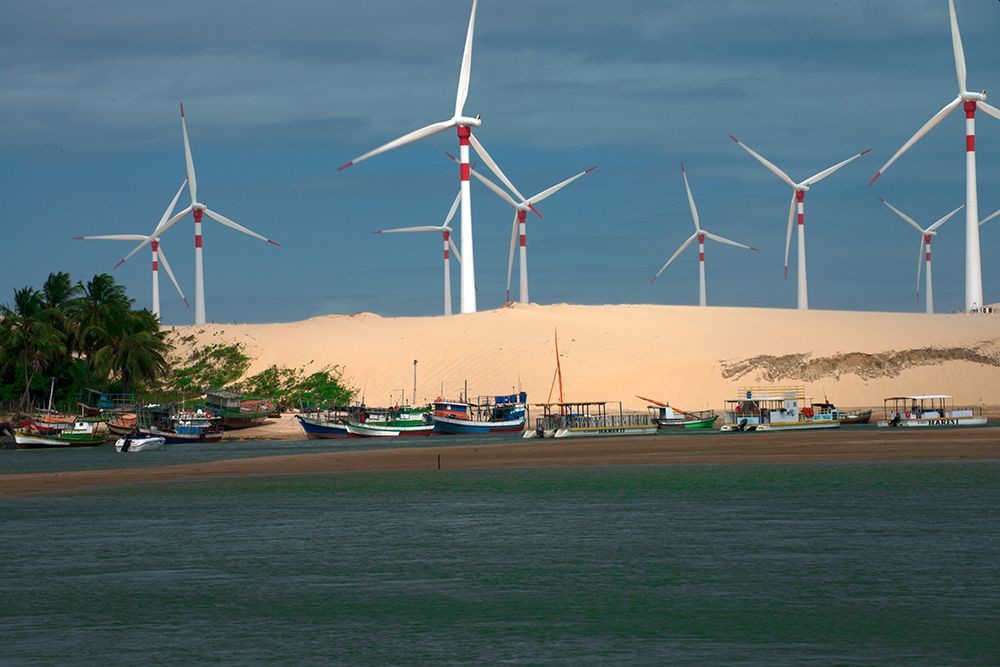
While the Southeast explores the pre-salt oil, the Northeast relies on clean energy. Wind generation already accounts for 49.5 percent of the region’s demand and produces income.
“If in the Southeast they talk about the pre-salt, in the Northeast we can say that we are experiencing the ‘pre-wind’. Small rural producers sometimes lived on R$150 from Bolsa Família (Family Grant). Now, they earn R$1,500 per month for each wind turbine on their property, and they still have room for planting their crops,” says Elbia Gannoum, president of the Brazilian Wind Energy Association.
According to the National System Operator (ONS), on September 6th, 2019, the energy sector broke a production record, supplying 88.8 percent of the demand in the region, which is home to 80 percent of the country’s wind farms. Rio Grande do Norte, Bahia and Ceará lead the way, with 66 percent of the installed power. In terms of solar energy, 70 percent of the capacity is in the Northeast.
“The Northeast is the major star of solar energy in Brazil. If we put the same equipment in Japan or in the Northeast, the generation in the Northeast will be twice that of Japan,” compares Rodrigo Sauaia, executive president of the Brazilian Association of Photovoltaic Solar Energy (ABSOLAR).
Source: O Globo
More: Brazil news in English, every day from The Rio Times.
This article was produced by The Rio Times’ automated newsroom system. How we use AI · Report an error · Editorial responsibility: Matthias Camenzind, Editor-in-Chief