Central Bank Cuts SELIC by 0.75 Points, Basic Annual Interest Rate Now 2.25 Percent
RIO DE JANEIRO, BRAZIL – As was widely expected among market analysts, the Central Bank’s Monetary Policy Committee (COPOM) announced on Wednesday, June 17th, another 0.75 percentage point (p.p.) cut in the SELIC, the economy’s basic interest rate, which decreased from three to 2.25 percent per annum, a new historical low.

This is the eighth consecutive cut in the SELIC, the current decline cycle of which began in July last year.
In the announcement, the committee says that the magnitude of the monetary stimulus so far implemented seems compatible with the economic impacts of the pandemic. But it does not rule out further cuts:
“For the upcoming meetings, the committee sees it as appropriate to assess the impacts of the pandemic and the set of measures to encourage credit and income recomposition, and anticipates that a potential future adjustment in the current level of monetary stimulus will be residual,” it says.
Alberto Ramos, of Goldman Sachs, considers the collegiate’s signals rather ambiguous, but bets on another cut, given the repeated references in the announcement on controlled inflation on the relevant horizon for monetary policy:
“In general, the guideline is for the Central Bank to leave the door open for a potential further smaller cut at the next meeting (-0.25 p.p. or even -0.50p.p.), depending on data regarding the economic pace,” says the institution’s Latin American analyst.
This signal was the major event in the meeting, for Étore Sanchez, chief economist of Ativa Investments. However, he said that although the Central Bank does not rule out future corrections, it conditions new cuts to a potential worsening of the scenario, which, in his projetions, should not occur:
“We have already started to observe in the high-frequency data indications that the bottom of the pit has passed,” said Étore Sanchez.
“It is clear that the signals still need to be monitored, but our scenario contemplates the prospect of a gradual rebound over June and the second half of the year,” he said.
The economist therefore still expects the SELIC to be maintained at 2.25 percent per year until the end of 2020, in line with what is expected throughout the market, according to Focus. For next year, the median projections dropped to three percent in the last survey.
This week the IBGE (Brazilian Institute of Geography and Statistics ) reported that retail sales fell by 16 percent in April and the service sector by 11.7 percent, record declines that add to the 18 percent contraction in industry in the month. With the reopening of trade in several Brazilian regions, some improvement is expected in May and June.
In the last meeting in May, when the Central Bank announced a cut of 0.75 (p.p.), leading the rate to three percent, it had signaled that it would make another such cut in the SELIC now, which would complement the needed stimulus as a reaction to the economic impact of Covid-19.
Since then, there has been a significant worsening of the viral outbreak in the country, deteriorated growth prospects, and lower short and medium term inflation projections.
Inflation at historically low levels also favors the downward trend in interest rates. In May, the IPCA (Extended National Consumer Price Index) came in negative for the second consecutive month. In the 12-month period ended in March, the IPCA climbed 1.88 percent from 2.40 percent earlier, below the government’s four percent inflation target for 2020, which has a tolerance of 1.5 percentage points plus or minus.
Low efficiency
By reducing interest rates, the Central Bank provides conditions for more resources in the market. Amid the exceptional pandemic scenario, however, traditional stimuli may not produce the expected impact, which has caused monetary policy here and abroad to lose power.
Despite the available resources, banks are cautious and decrease lending, due to the greater risk of default in a scenario of rising unemployment, declining income, and the risk of bankruptcies. This has been one of the main complaints of small entrepreneurs trying to finance themselves to overcome this more acute period: money does not reach the tip of the scale.
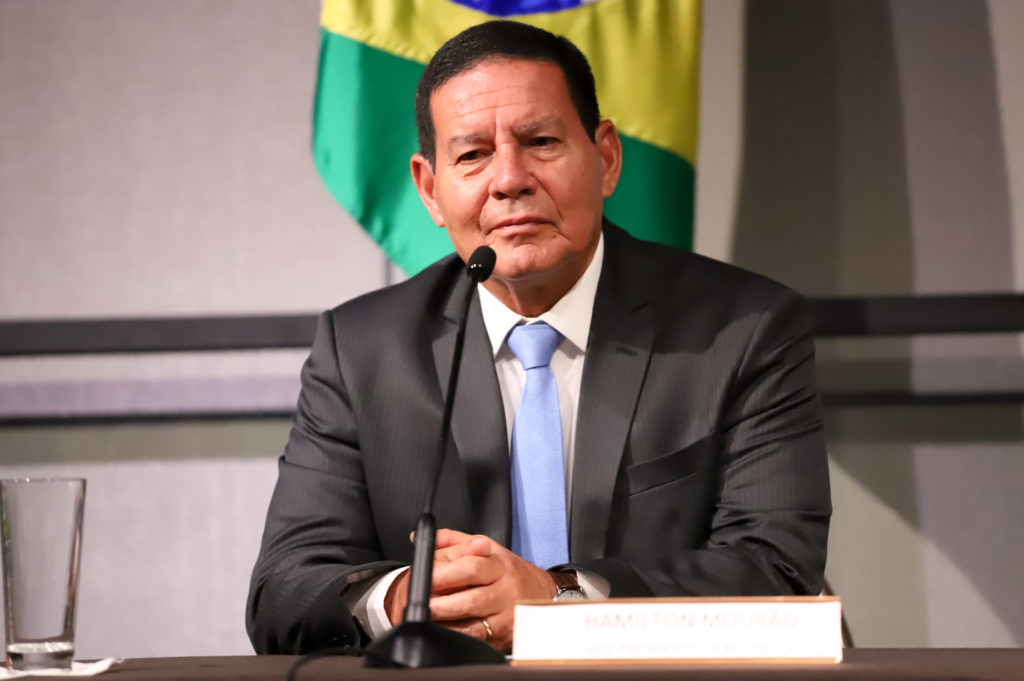
The Ministry of Economy has been provided with data showing that the release of credit has “stopped halfway” by the regulation of the banking sector, said Brazil’s Vice President Hamiton Mourão on Tuesday June 16th.
Copom’s full press release:
In its 231st meeting, the Monetary Policy Committee (COPOM ) unanimously decided to cut the SELIC rate to 2.25 percent per annum.
The COPOM’s basic scenario update can be described with the following observations:
In the external scenario, the Covid-19 pandemic continues to cause a pronounced deceleration of global growth. In this context, despite the significant provision of fiscal and monetary stimulus by the major economies and some moderation in the volatility of financial assets, the environment for emerging economies remains challenging;
Regarding economic activity, the published figures for GDP in the first quarter confirmed its largest decline since 2015, reflecting the initial impacts of the pandemic. Recent indicators suggest that the contraction in business activity in the second quarter will be even greater. Prospectively, uncertainty about the pace of economic rebound over the second half of this year remains higher than normal;
The Committee considers that several measures of underlying inflation are below levels consistent with meeting the inflation target over the relevant horizon for monetary policy;
Inflation projections for 2020, 2021 and 2022 as measured by the Focus survey stand at around 1.6, 3.0 and 3.5 percent, respectively;
In a hybrid scenario, with a trajectory for the interest rate extracted from the Focus survey and a constant exchange rate at R$4.95/US$*, the COPOM projections are at around 2.0 percent for 2020 and 3.2 percent for 2021. This scenario assumes an interest rate trajectory that ends 2020 at 2.25 percent per annum and rises to 3.00 percent per annum in 2021; and
In a scenario with a constant interest rate of 3.00 percent per annum and a constant exchange rate of R$4.95/US$*, projections stand at around 1.9 percent for 2020 and 3.0 percent for 2021.
The Committee points out that in its basic inflation scenario, risk factors remain in both directions.
On the one hand, the level of idleness may produce a lower-than-expected inflation trajectory. This risk is intensified if the pandemic is prolonged and causes increased uncertainty and precautionary savings and, consequently, a reduction in aggregate demand with even greater magnitude or duration than projected.
On the other hand, fiscal policies in reaction to the pandemic that worsen the country’s fiscal trajectory over a prolonged period, or frustrations with the continuity of reforms, may increase risk premiums.
In addition, the various credit stimulus and income recomposition programs implemented to counter the pandemic may result in a lower-than-expected reduction in aggregate demand, thereby increasing the asymmetry of the risk balance. This set of factors potentially implies an inflation trajectory above that projected for the monetary policy relevant horizon.
COPOM considers that persevering in the process of reforms and adjustments needed in the Brazilian economy is vital to enable the economy’s sustainable rebound. The Committee also points out that concerns regarding the continuity of reforms and permanent changes in the process of adjusting public accounts may raise the economy’s structural interest rate.
Considering the basic scenario, the balance of risks, and the wide range of information available, the COPOM unanimously decided to reduce the basic interest rate by 0.75 percentage points, to 2.25 percent per annum. The Committee understands that this decision reflects its basic scenario and a higher than usual balance of variance risks for prospective inflation, and is compatible with the convergence of inflation towards the target for the relevant horizon, which includes the 2021 calendar year.
COPOM believes that, at this point in time, the economic environment continues to prescribe extraordinarily high monetary stimulus, but recognizes that the remaining space for monetary policy use is uncertain and should be narrow. The Committee feels that the fiscal trajectory over the next year, as well as the perception of its sustainability, are decisive in determining the extension of the stimulus.
At this point, the Committee considers that the magnitude of the monetary stimulus already implemented seems compatible with the economic impacts of the Covid-19 pandemic. For upcoming meetings, the Committee sees it as appropriate to consider the impacts of the pandemic and of the set of credit and income incentive measures, and anticipates that any future adjustment to the current degree of monetary stimulus will be residual.
However, COPOM remains vigilant to revisions of the economic scenario and inflation projections for the relevant monetary policy horizon. The Committee recognizes that, given the basic scenario and its risk balance, new data on the development of the pandemic, as well as a decrease in fiscal uncertainties, will be crucial in defining its next steps.
The following Committee members voted for this decision: Roberto Oliveira Campos Neto (president), Bruno Serra Fernandes, Carolina de Assis Barros, Fernanda Feitosa Nechio, João Manoel Pinho de Mello, Maurício Costa de Moura, Otávio Ribeiro Damaso and Paulo Sérgio Neves de Souza.
*US$ Value obtained by the usual procedure of rounding the average quotation of the R$/US$ exchange rate observed in the five working days ended in the last day of the week before the COPOM meeting.
Source: Exame
More: Brazil news in English, every day from The Rio Times.
This article was produced by The Rio Times’ automated newsroom system. How we use AI · Report an error · Editorial responsibility: Matthias Camenzind, Editor-in-Chief