Companies Face Dilemma Between Respecting Lives and Economic Rebound
RIO DE JANEIRO, BRAZIL – With the development of tougher measures to halt the spread of the coronavirus in Brazil, a number of entrepreneurs are starting to speak out against the quarantine and social isolation measures enforced in some cities and states in the country.

The group criticizes the shutdown of trade and the paralysis of activity, arguing that the damage to the Brazilian economy will be much greater than that caused to public health, and part of it has even minimized the human losses caused by the disease. Many encourage government-supporting motorcades with the motto, ‘Brazil can’t stop’.
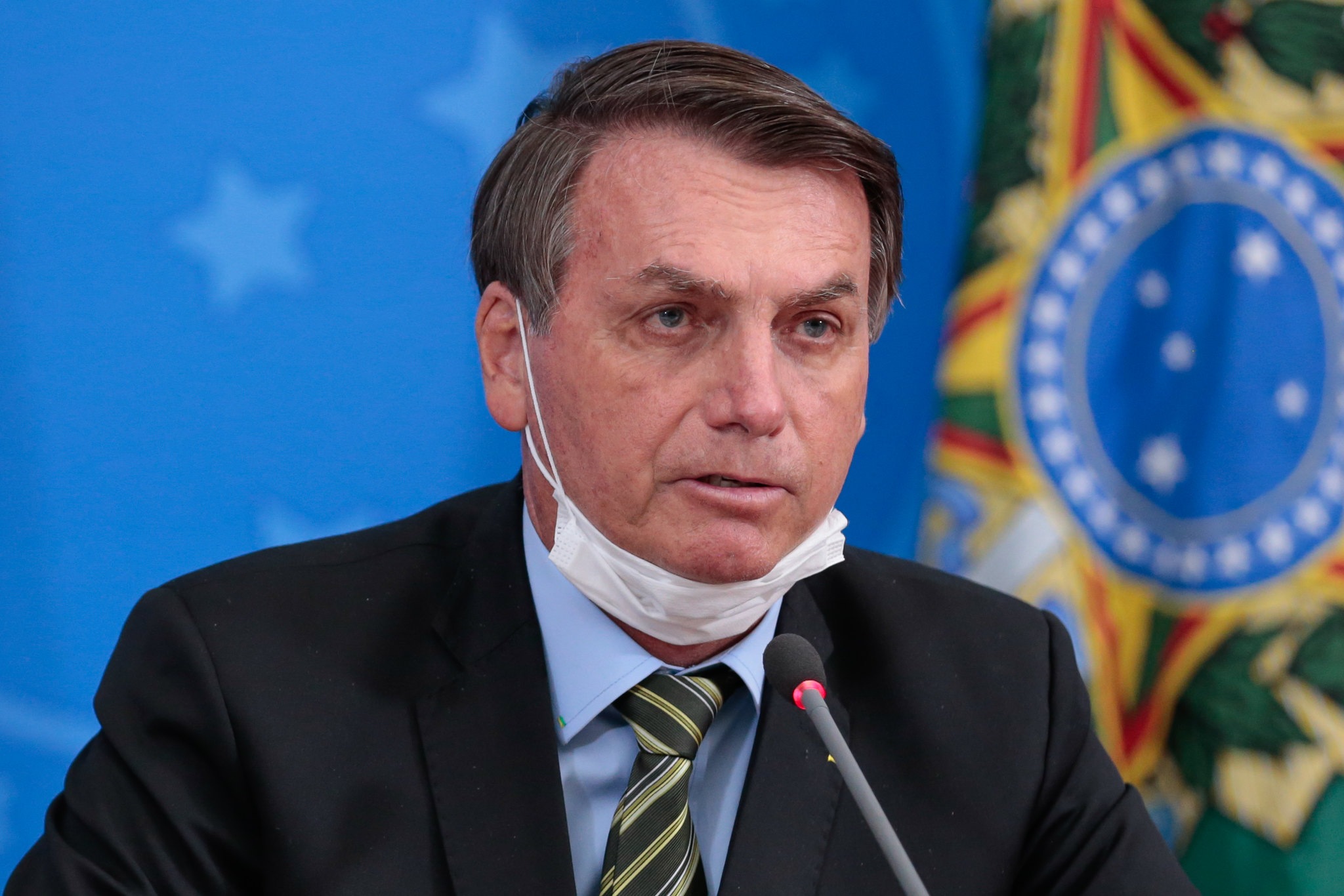
These entrepreneurs garnered even more support after President Jair Bolsonaro himself spoke on national television last Tuesday to criticize the shutdown of commercial spaces and schools, to blame the press for what he describes as a climate of “hysteria” and to urge the population to return to normality so that jobs can be maintained.
Junior Durski, owner of the Madero hamburger chain, was one of the first to take this stance when he posted a video on social media complaining about the work restrictions placed on restaurants.
According to the entrepreneur, the country could never stop because of “5,000 or 7,000 people who are going to die”. “The economic consequences we will have in the future will be much greater than the people who will die now from coronavirus,” he said.
After the strong repercussion of the video, with consumers promising to boycott the Madero network, Durski recanted and apologized if he had been “misinterpreted”, but insisted that the measures to contain the virus cannot be disproportionate.
In the same vein, Alexandre Guerra, one of the partners of the Giraffas restaurant chain, said in a video: “You who are an employee, who may be at home comfortably, in a nice, quiet place, enjoying your home office for a while, this forced rest, have you ever realized that instead of being afraid of contracting this virus, you should also be afraid of losing your job?”
The video sparked strong negative repercussions and also displeased Carlos Guerra, his father and the group’s CEO, who removed Alexandre from his position.
Although a corporate wing tries to advocate a return of activities for its own survival, so the economy will not collapse much if it disregards recommendations of the health authorities, another large group from the private sector is trying to introduce initiatives to reduce the curve of the spread of Covid-19 in the country and help those infected.
Ambev, for one, announced it will use its production lines in Piraí (RJ) to manufacture 500,000 units of hand sanitizer, which will be donated to public hospitals in São Paulo, Rio de Janeiro, and Brasília, cities that have emerged as major coronavirus hotspots.
The first lots are already being distributed this week. The brewery, together with Gerdau, the São Paulo City Hall and Einstein Hospital, will also build 100 hospital beds for the National Health System (SUS).
The new treatment center will be adjacent to the M’Boi Mirim Hospital, in the southern area of São Paulo, and will have its first 40 beds delivered in 20 days. JBS, the world’s largest meat company, has started producing two million soaps for distribution in nursing homes and favelas in Rio and São Paulo.
Itaú, the largest private bank in Brazil, announced it will donate R$150 million (US$30 million) to hospital infrastructure, purchase of equipment, food baskets and hygiene kits to help more vulnerable communities contain the disease and treat patients.
Marfrig Global Foods, the world’s largest producer of hamburgers, donated R$7.5 million to the Ministry of Health to purchase rapid tests to diagnose the Covid-19.
Mining company Vale, which is paying a high price for the Brumadinho and Mariana tragedy, also completed the purchase of five million rapid test kits for the coronavirus to help the Brazilian government fight the spread of the disease.
They still need to be assessed to determine if they are compatible with Brazil. Burger King Brazil, on the other hand, has pledged to donate part of its net income between March 16th and 31st to the SUS. For now, these are announcements that embed a message of solidarity, and the effectiveness of these actions will be measured as needs grow.
Nonetheless, the coronavirus crisis has a practical effect that has begun to be felt, with layoffs announced, particularly in small businesses.
But if there is no consensus on how to combine respect for the rising deaths – there were 77 on Friday – and the economic rebound, there will be mass cuts. A study commissioned by the National Services Confederation (CNS) pointed out that the impact of the coronavirus pandemic and restrictions on the operation of various business activities, could lead to a loss of more than R$320 billion to the Brazilian economy and cause 6.5 million workers to lose their jobs.
In an interview, CNS President Luigi Nese said that figures should not be used to raise alarm or to oppose strategies to halt the spread of the disease, but rather to debate a post-crisis solution.

What will be the contribution of the elite?
The debate is also growing about who will finance this extra expense for health in the face of the crisis. The base of the pyramid, or the elite of Brazilian society.
The issue has grown after the proposal placed on the agenda, and later withdrawn, by the government to suspend workers’ salaries for four months. The National Federation of State and District Revenue (FENAFISCO) aims to encourage this discussion and has projected what the contribution of the Brazilian elite would mean in one of the most unequal countries in the world with a regressive tax system.
According to the federation, by taxing high incomes, it would be possible to raise more than R$272 billion. In an open letter published this week, the body is proposing a set of tax measures targeting the wealthiest in order to expand the state’s financial capacity.
One of them would be the establishment of a Social Contribution on High Income Individuals (CSPF), with immediate incidence on income of any kind exceeding R$80,000 (US$16,000) per month. According to FENAFISCO, with a 20 percent tax rate, this contribution is capable of yielding approximately R$72 billion in revenues per year and would be levied only on 194,268 taxpayers.
Another front is the introduction of an additional extraordinary tax rate of 30 percent, with temporary effect, of the Social Contribution on Net Profits (CSLL) for financial institutions. The text recalls that this sector has recorded record profits in recent years, despite the economic recession. In 2019 alone, the banks’ total profit reached close to R$120 billion.
A further proposal is to amend the Personal Income Tax (IRPF) scale to include the rates of 35 and 40 percent that will be levied on income above the equivalent of 60 and 80 minimum wages, respectively, and a marginal, temporary rate of 60 percent on income above 300 minimum wages per month (0.09 percent of taxpayers). The current minimum wage is R$1,045, roughly US$200.
Considering the data in the 2017 Individual Income Tax Return, these amendments would raise the collection of this tax by approximately R$120 billion in a context of normalization of economic activity.
According to the president of FENAFISCO, Charles Alcântara, the federation points out where the money is today to help the country at this time.
“We call this package a tax shock package for high incomes and great wealth. This very critical moment is about saving the population so that as many people as possible do not die from this virus. And to do so we need resources for the states that will lose a great deal of money due to the downturn in economic activity,” he says.
Alcântara believes that fresh money is needed since so far the government’s measures have focused on advance payments and tax deferrals.
“We are trying to engage in a dialogue with the Governors because we believe they are at the forefront of this struggle, taking on this battle and taking major decisions. They need help now and then, so we’re also proposing an emergency fund for states,” Alcântara adds.
Source: El País
More: Brazil news in English, every day from The Rio Times.
This article was produced by The Rio Times’ automated AI newsroom. Editorial responsibility: Matthias Camenzind, Publisher and Editor-in-Chief. How we use AI · Report an error
Brazil runoff, Sunday, October 25: Brazil runoff date. Latest: Brazil runoff polls, Flávio 51%, Lula 49%.