Treasury Sources US$3 Billion Abroad with Lowest Interest Rates in Seven Years
RIO DE JANEIRO, BRAZIL – The National Treasury raised US$3 billion (R$12 billion) from international investors with the lowest interest rates in seven years. The money came from yesterday’s, November 4th, issue of US$2.5 billion in foreign debt securities maturing in January 2050 and US$500 million in foreign debt securities maturing in May 2029.
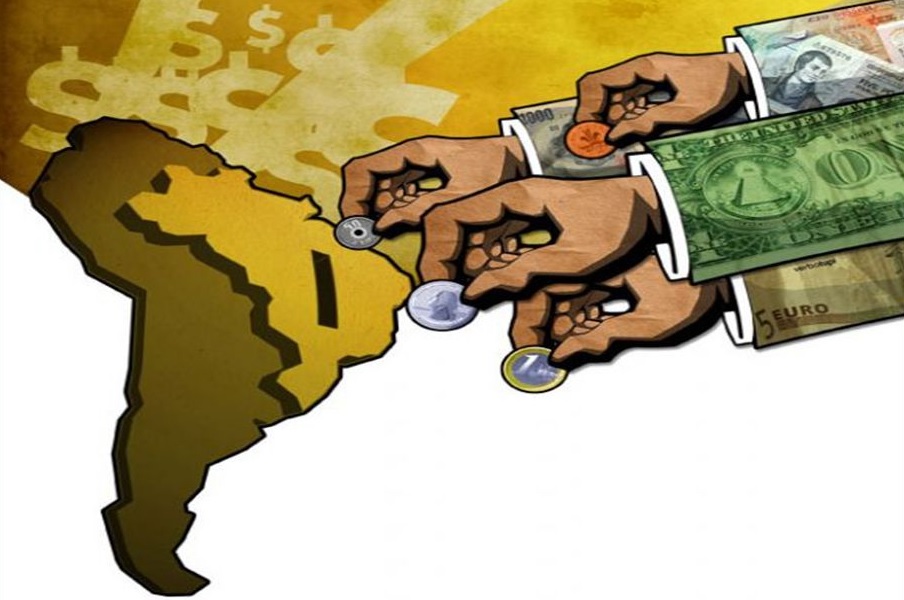
The rate obtained in the issuance of 30-year securities, maturing in 2050, totaled 4.914 percent per year. This was the second-lowest interest rate in history for this type of security, higher only than the rate obtained in the November 2011 issue (4.694 percent). For 10-year securities, maturing in 2029, the rate totaled 3.809 percent per year, also the second-lowest in history, higher only than the interest of 3.449 percent per year obtained in the January 2012 issue.
Through the release of external debt securities, the government borrows money from international investors with a commitment to return the funds with interest. This means that Brazil will return the money within several years with the agreed interest rate adjustment of 3.809 percent per year for securities that mature in ten years’ time, and 4.914 percent per year for securities that mature in 31 years’ time.
Lower interest rates suggest a reduction in investors’ distrust that Brazil will not be able to pay the debt. With the successive downgrades suffered by the country, foreigners began to charge higher interest rates to buy Brazilian securities.
The National Treasury used approximately US$1 billion of the funds obtained from the issue of a bond maturing in 2050 to repurchase Brazilian public foreign debt securities in circulation in the market. The removal of these securities, explained the National Treasury, reduces the cost of Brazil’s indebtedness abroad.
History
In the last issue of 10-year securities, in March this year, Brazil had raised US$1.5 billion abroad with an interest of 4.7 percent per year. Interest rates are lower than those recorded in March 2016, when the Treasury had raised US$1.5 billion abroad at rates of 6.125 percent per year.

In the last 30-year securities issue, in January 2018, Brazil had raised US$1.5 billion abroad at interest rates of 5.6 percent per year. At the time, the rates had been the lowest in four years.
The Brazilian bond rate was 265 basis points higher than that of 30-year US Treasury bonds and 203 basis points higher than that of 10-year US bonds. This means that the National Treasury will pay interest at 2.65 percentage points above the 30-year US government bonds and at 2.03 points above the 10-year US bonds. US bonds are deemed to be the safest securities in the world.
Investment-grade rating
According to the National Treasury, both interest and spread – the difference between interest on Brazilian government bonds and those of the United States government – are very close to the period in which Brazil had an investment-grade rating (a good payer’s stamp granted by international risk rating agencies). Brazil lost the investment-grade rating of risk rating agencies between September 2015 and February 2016.
Yesterday’s operation attracted the interest of investors. According to the Treasury, demand exceeded supply three-fold for securities maturing in 2050 and five-fold for securities maturing in 2029.
Funds raised abroad will be incorporated into the country’s international reserves on November 14th. According to the National Treasury, the main goal of issuing securities abroad is not to bolster the country’s foreign exchange, but rather to provide a benchmark for Brazilian companies seeking to raise funds in the international financial market.
Source: Agência Brasil
More: Brazil news in English, every day from The Rio Times.
This article was produced by The Rio Times’ automated newsroom system. How we use AI · Report an error · Editorial responsibility: Matthias Camenzind, Editor-in-Chief