SÃO PAULO, BRAZIL – The latest comment by Brazil’s president Jair Bolsonaro on child labor regulations in the country has stirred up controversy among those who fight to keep children in school and away from dangerous and arduous work during their formative years.

“This demonstration (by Bolsonaro) trivializes the problems created due to child labor. It is unacceptable to ignore official data on serious occupational accidents, including deaths of children and adolescents and the growth of poverty and social exclusion,” says Isa Oliveira, executive secretary of the National Prevention Eradication of Child Labor Forum (FNPETI), an entity created with the help of the United Nations and the International Labor Organization (ILO) to combat child labor.
FNPETI along with several entities, including the National Bar Association (OAB), the Labor Department, and the National Association of Labor Lawyers, issued a joint statement condemning any work for children between five to fourteen years old and many other jobs for children fourteen to seventeen years old. According to these entities, the president’s stance may even hinder Mercosul-European Union agreements on trade.
“Combating child labor is a priority goal of the Brazilian State, a commitment made not only to all its citizens but also to the international community. The international community echoes these findings, so much that the recent agreement signed between the European Union and Mercosul expressly foresees a commitment to combat child labor,” says the statement.
According to the United Nation Children’s Fund (UNICEF), contrary to what president Bolsonaro stated, child labor “brings consequences for the physical and emotional development of girls and boys.”
According to data from the latest (2015) PNAD (Brazil’s National Household Survey), 2.5 million girls and boys between the ages of five and seventeen years old in Brazil are exploited for child labor. Of these, 400,000 are children aged five to nine years old, 915,000 are between ten and thirteen years old, and the other 1.18 million are between fourteen and seventeen years old and work outside the rules allowed by law.
UNICEF says that children who work are less likely to go to school. “What happens with child labor is that the priority is to work. These children do not finish their studies, they are destined for poverty,” notes the entity.
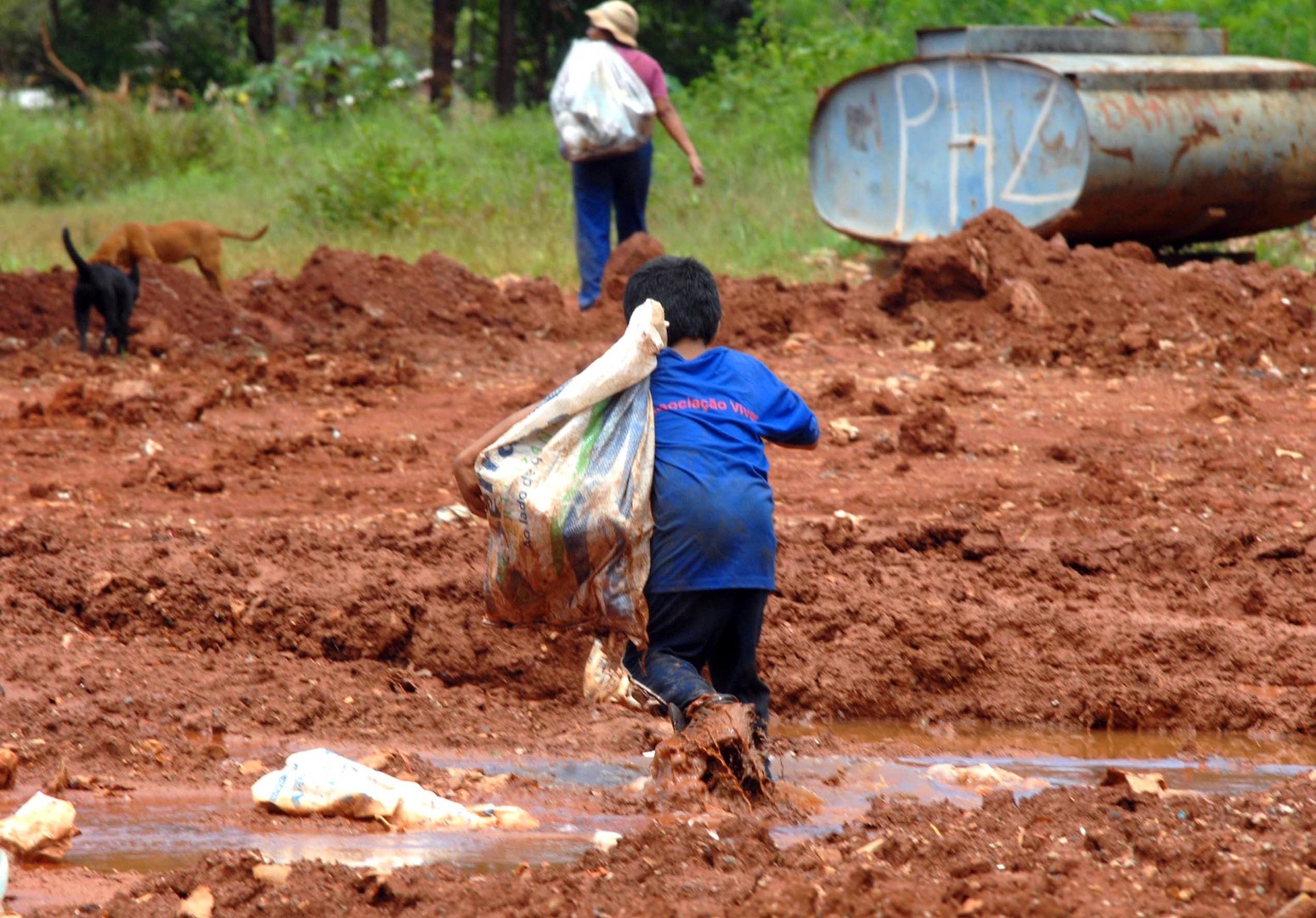
“This compromises the future of children and adolescents and contributes to reproducing situations of poverty. Also, girls and boys working illegally are subject to various forms of violence and exploitation that can put their health at risk,” adds the United Nations agency.
Since 1990 the Child and Adolescent Statute (ECA in Portuguese) assures children up to seventeen years old the right to have school, education, health as well as the right to freedom, respect, and dignity.
Historically, Brazil has stood out in facing child labor.
In 2008, Brazil was one of the countries that signed the ILO Convention to eradicate the worst forms of child labor by 2016, among them activities in mangroves, distilleries, at sea, in stables, sewers, basements, cemeteries, slaughterhouses, in weaving factories, tobacco production and processing, porcelain, rubber, and the construction sector.
“These actions, combined with the public policies adopted by the country (Brazil), have reduced child labor by more than seventy percent in the last twenty years,” says UNICEF.
But according to FNPETI’s Oliveira, one can still find children working in these activities for very little money.
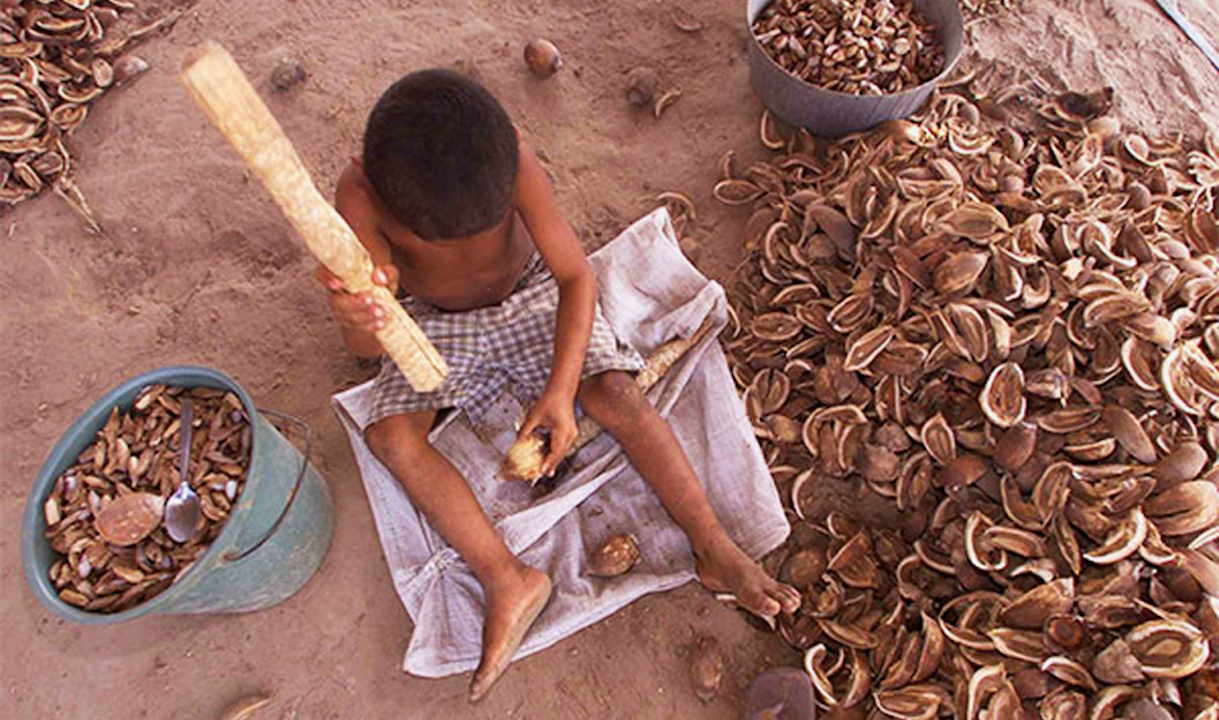
“The 2016 commitment was not met,” says Oliveira. “Now, there is another deadline: to eradicate all types of child labor by 2025. This target is also not likely to be met,” concluded the FNPETI executive.
According to the Child and Adolescent Observatory, an entity that monitors child welfare in Brazil, almost 6.4 percent of Brazilian children between the ages of five and seventeen worked in 2016. The scenario is gloomier when one looks at the IBGE (Brazil’s Statistics Bureau) data for that year, which indicate that, among those aged five to seventeen who work, about 21 percent were out of school.
Oliveira notes, however, that president Bolsonaro’s stance is not a surprise or unique. “For decades, bills for both hardening and easing rules about child labor have been presented in Brazil’s Congress. Most of these have been put into a bottom drawer because there has been no real interest in deciding,” she says. In Brazil, child labor is illegal, but not a crime.
A bill to criminalize child labor was unanimously approved by the Senate’s Constitution and Justice Committee (CCJ) in 2017 and is in the Chamber of Deputies’ CCJ, awaiting a vote. The rapporteur of the bill hopes to put it on the Committee’s agenda for a vote during the second semester of this year.
The bill stipulates that anyone who exploits the labor of a child under the age of fourteen may be jailed for up to four years and be given a fine. If the work is at night, dangerous or risky to the child’s health, the penalty goes from three to eight years’ imprisonment.
If it passes without modifications, it will go to president Bolsonaro to be sanctioned. Brazil’s president will then have to choose between what has been agreed in international forums — child labor must be eliminated — or his belief that starting to work early in life, while still a child, does not hinder one’s development or chances for a better future.
More: Brazil news in English, every day from The Rio Times.
This article was produced by The Rio Times’ automated AI newsroom. Editorial responsibility: Matthias Camenzind, Publisher and Editor-in-Chief. The Rio Times also runs Ask Rio Times, which answers from 100,000+ of our own articles, the daily Latin America Power Map, and prediction-market odds on elections and markets.. How we use AI · Report an error
Brazil runoff, Sunday, October 25: Brazil runoff date. Latest: Brazil runoff polls, Flávio 51%, Lula 49%.