Climate Change Will Further Increase Amazon Rainforest Fires, Says Study
RIO DE JANEIRO, BRAZIL – In 30 years, the burned surface of the Amazon forest will have doubled. A study that examines the evolution of fires this century shows that the negative interaction between deforestation and climate change will result in even more devastating fires.
As a consequence, much of the Amazon region will become a defined emitter of greenhouse gases that, in turn, will feed back the process. Some experts are beginning to talk about a point of no return and the savannization of the Amazon.

Brazilian and North American researchers have created a model for the evolution of fires in almost 200 million hectares of the southern and southeastern portions of the Legal Amazon.
In the model, they integrated the number of fires and their main characteristics (ignition moment, duration, burned area) with the evolution of deforestation and climate change between 2000 and 2050. The two processes are independent but, combined, they affect the number and severity of fires, as shown in the work, published in ‘Science Advances’.
In the worst-case scenario of emissions and maintaining the current rate of deforestation, relatively low (in relation to 2000), the severity of fires will intensify.
In an expected context of higher temperatures and lower humidity, the dry season will increase, exacerbating conditions for ignition. By 2050, according to the study and in this scenario, up to 15 million hectares of forest will have burned.
But it is through the combined effect with deforestation that climate change will increase fires until it threatens what has been the Amazon for the past 55 million years.
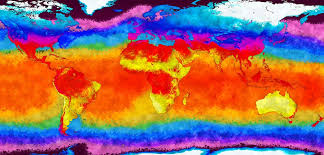
In a context of high greenhouse gas emissions and increased regional warming, increased logging will expose the remainder of the forest. The study estimates that, in this scenario, the hectares burned by 2050 will rise to 22 million.
The combination of climate change and logging explaining this increase in the burnt area involves a general increase in the forest’s combustibility. The borders and boundaries of the forest, more exposed, would have increased.
In cleared forests, the greater solar radiation reduces humidity, the main natural firefighter. And a less humid environment makes it easier to start and spread fire and hinders their being extinguished. In addition, what is left of the forest will find it more difficult to recover.
“Our projections show an acceleration of fire activity in the southern Amazon,” the authors conclude, adding: “We have shown that up to 16 percent of the region’s forests could burn as the climate becomes drier and warmer in a few decades”.
A paradoxical effect of these projections is linked to greenhouse gas emissions. The Amazon rainforest is the main CO2 outlet on the earth’s surface. Fires can alter its balance.
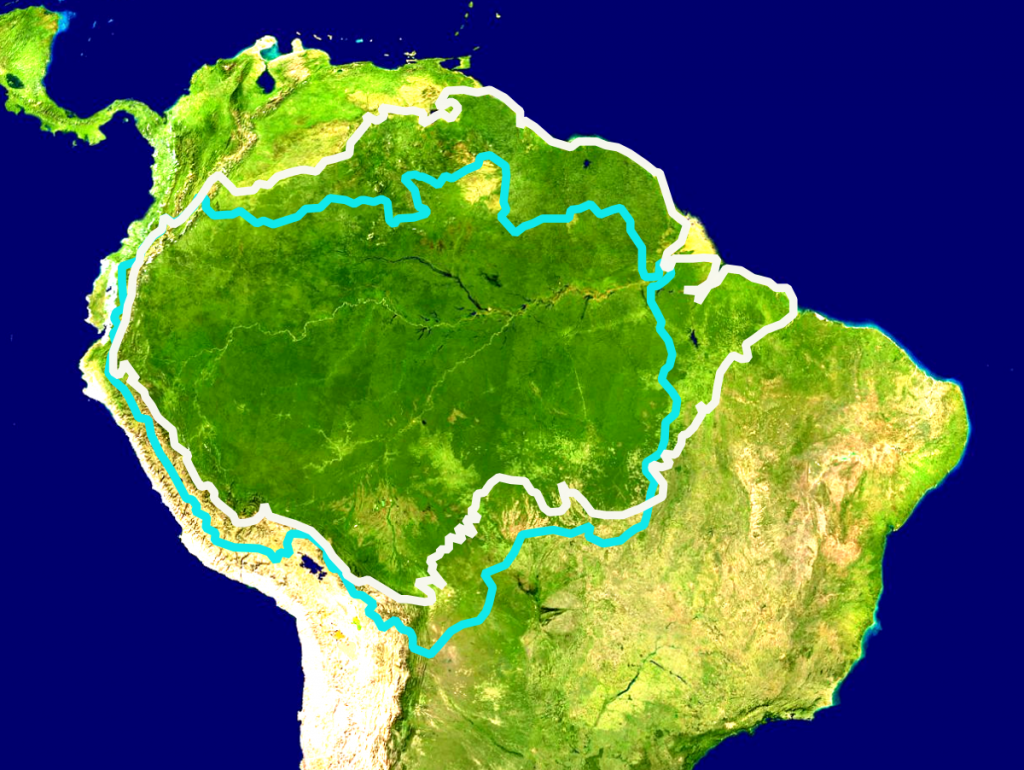
According to this study, and in the worst-case scenario of climate and deforestation, the burning of one-sixth of the Amazon will release over 17 billion tons of CO2 into the atmosphere by 2050, turning much of the southern and southeastern Amazon into emitters of such gases.
“Under normal conditions, rainforests like the Amazon are very humid, with a short dry season and very resistant to fire,” says the researcher at the Institute for Advanced Studies of the University of São Paulo Carlos Nobre.
“Climate change, however, has generalized higher temperatures and more extreme droughts everywhere, also in the Amazon. Along with human-induced rainforest degradation and the intensive use of fire in tropical agriculture to clear new areas of pasture and cropland, all of this makes today’s Amazon jungle exponentially more vulnerable to fire than in the past,” adds Nobre.
The fire thus joins the cocktail that threatens to change forever what the Amazon is. “We are very close to reaching the point of no return in the savannization of large portions of the Amazon jungle,” says Nobre, who wrote an editorial on this risk in ‘Science Advances’ last month.
“If we exceed this point of no return, over 60 percent of the Amazon forests will turn into a tropical dry savannah. What will remain of the jungle would be limited to the western part of the Amazon basin, at the foot of the Andes. The south, east, and northeast of the Amazon forest could disappear,” he alerts.
More: Brazil news in English, every day from The Rio Times.
This article was produced by The Rio Times’ automated newsroom system. How we use AI · Report an error · Editorial responsibility: Matthias Camenzind, Editor-in-Chief