Brazil’s Coronavirus Aid: Who Is Entitled to R$600 Payment and When Will It Be Paid?
RIO DE JANEIRO, BRAZIL – President Jair Bolsonaro has today sanctioned the monthly emergency aid of R$600 (US$120) for low-income casual workers, which will be granted during the crisis generated by the coronavirus pandemic.
The measure, passed on Monday by the Senate, will at first run for three months but may be extended.

According to Citizenship Minister Onyx Lorenzoni, the benefit should start to be paid as of the second week of April. Economists are calling for celerity in the process, as the crisis is now impacting the income of millions of vulnerable Brazilians.
Who will be entitled to the aid?
In addition to casual workers, those with intermittent inactive contracts, freelancers and individual micro-entrepreneurs will also be entitled to payment. To be eligible for the aid it is required to be of legal age, have a monthly family income of less than half a minimum wage per capita or three minimum wages in total.
In order to receive the aid, workers cannot have a retirement pension, unemployment insurance or be beneficiaries of other government aid. In addition, they cannot be part of a cash transfer program except for the Family Grant. Workers who have earned taxable income above R$28,559.70 in 2018 are also excluded.
The aid would also have included the elderly and disabled people not yet included in the Continuous Cash Benefit (BPC) from the INSS (National Social Security Institute), but the President vetoed this measure.
How many people in the same family may claim the benefit?
For each beneficiary family, the aid will be limited to two members, i.e. each household may receive up to R$1,200. Single mothers will automatically receive double the benefit.
When and how will the payment be made?
Payment is still subject to executive regulation, but on Tuesday, in an interview with TV Globo’s Jornal Hoje, the Minister of Citizenship, Onyx Lorenzoni, said the aid money should start to be transferred on April 16th to those who are in the Unified Register (database where the federal government registers the names of low-income individuals eligible for social benefits).
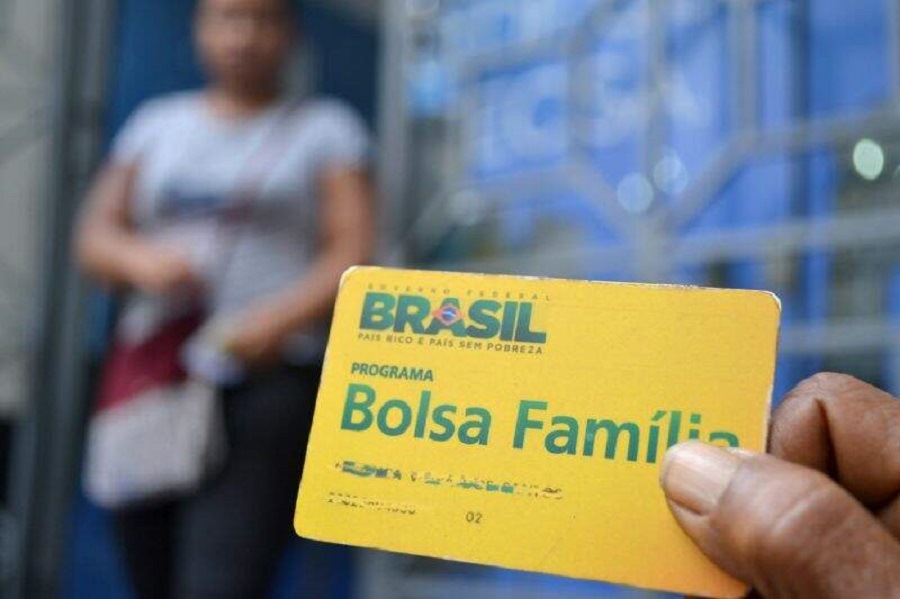
According to the Minister, the first to receive it will be the Family Grant beneficiaries who are eligible for the R$600 aid, because the register and the payment system for them is already in place. Beneficiaries will receive only the higher aid. Currently, the program counts over 14 million families.
According to the Minister, the payment order should be:
1st: casual workers who benefit from the Family Grant;
2nd: casual workers in the Unified Register;
3rd: individual microentrepreneurs and individual taxpayers;
4th: casual workers who are not in any register.
Payments will be made by federal-owned banks (Banco do Brasil and Caixa Econômica Federal) in at least three monthly installments. Beneficiaries will receive the amount in accounts specifically set up for this purpose, which will not require the submission of documents and will have no maintenance fees.
A free monthly transfer to any other bank account will be permitted. It has not yet been detailed how payments will be processed for people with no bank accounts.
What should people who are not yet in the Unified Register do?
The income check to grant the aid will be conducted through the Unified Register of the Ministry of Citizenship, but casual workers who were not registered before March 20th will be able to enter by self-declaration.
The economic team is still studying how this self-declaration would be achieved and the options of doing it via cell phone App or in person, are being discussed, which raises concerns since the health authorities recommend isolation.
The Minister urged people not to rush to bank branches, lottery houses or the Social Reference Center (CRAS) at this time, since the government has not yet defined the terms of the register.
He further stated that casual workers who are outside any government data cross-checking will be provided with a “technological solution” to collect the R$600 in aid to the self-employed. This is the biggest hindrance in the operationalization of the aid payment.
The Senate’s Independent Fiscal Institution (IFI) estimates the emergency aid will directly benefit 30.5 million citizens – about 14 percent of the country’s population, according to the latest data from the Brazilian Institute of Geography and Statistics (IBGE).
The cost of the emergency impact payments is estimated to be R$59.9 billion in 2020 – the equivalent of 0.8 percent of the country’s Gross Domestic Product (GDP) last year.
Source: El Pais
More: Brazil news in English, every day from The Rio Times.
This article was drafted with automated assistance and reviewed before publication. How we use AI · Report an error · Editorial responsibility: Matthias Camenzind, Editor-in-Chief