Brazilian Cinema “Made in the Northeast” Gains Ground in International Festivals
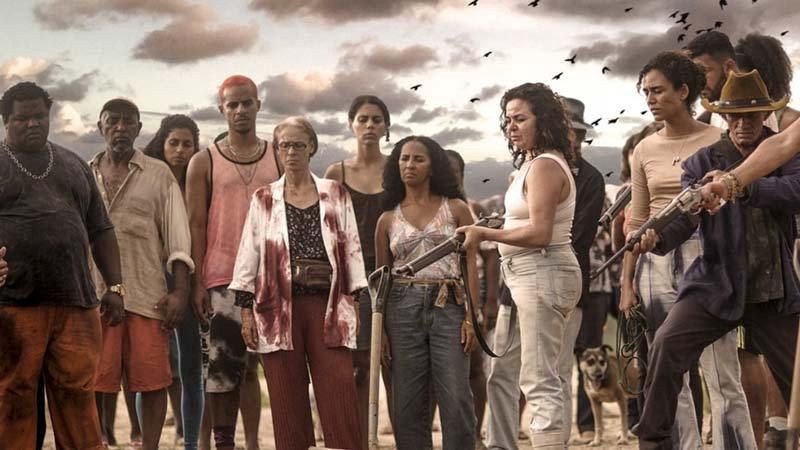
RIO DE JANEIRO, BRAZIL – Consider: ‘Divine Love’ at Sundance and the Berlin Festival in February this year, which also featured ‘Waiting for the Carnival’. Consider also: ‘In the heart of the world’, shown in Rotterdam, as well as ‘Bacurau‘ and ‘The Invisible Life of Euridice Gusmão‘ in Cannes.

The list shows that 2019 has been the year of international acknowledgment of Brazilian cinema excellence, with films that have at least one thing in common: all awardees are works produced in the Northeast or by Northeastern filmmakers.
In the Brazilian film world, it’s no different. ‘Pacarrete’, by Ceará’s Allan Deberton, took eight ‘kikitos’ (prize), including the best film, at the Gramado Festival, in August, where the short film ‘Marie’, by Leo Tabosa from Pernambuco, was also a winner.
“If we look back over the last 15 years at the leading Brazilian cinema, the one that has been winning awards and national and international acclaim is the Northeastern cinema,” says Wolney Oliveira, filmmaker, and curator of the Iberoamerican Film Festival Cine-Ceará.
For Karim Aïnouz, from Ceará, director of ‘The Invisible Life of Euridice Gusmão’ to represent Brazil in an attempt to qualify for the Oscar for best film in a foreign language, the success of “Made in the Northeast” cinema is an “ironic coincidence,” since Jair Bolsonaro’s government has slashed budgets for cultural projects, and the president has aired the prospect of discontinuing the National Cinema Agency (ANCINE).
More information
For Armando Praça, also from Ceará and director of ‘Greta’, a film starring Marco Nanini, who lives with a homosexual nurse in his old age, this is a “symbolic moment to show the public” how much northeastern cinema is producing.
His first feature film, which includes frontal male nudes and love scenes between men, premiered on October 10th, at a time when the federal government was canceling ANCINE’s edicts for LGBT-themed works (a decision suspended by Justice) and shortly after a graphic novel, in which two male heroes kiss each other, was censored at the Rio de Janeiro Book Biennale.
“Our cinema has always been very resilient, because it was always a little lagging behind what was being done in Rio and São Paulo, in terms of resources and production opportunities. We’re used, in a way, to producing under pressure, so now, when artists are asked to take a more confrontational stance, it’s only natural that we get ahead. We’ve always been on the sidelines, the northeastern stories have never been the most told,” says Praça.
There is no research or other types of scientific report that explains the creative zeal of Northeastern audiovisuals, from the coast to the outback. What is well known is that cinema reached those regions a few months after the first projections of the Lumière brothers in Paris. On September 13th, 1896, Francisco Pereira de Lyra, a producer of popular shows, used a device called kinetograph, a copy of the Cinématographe, in the lobby of the Caruaru Railway Station (Pernambuco State). Almost century later, the dance began.
In 1985, the Vanretrô group was created at the Arts and Communication Center of the Federal University of Pernambuco (UFPE), joining then students Paulo Caldas, Lírio Ferreira, Cláudio Assis, Adelina Pontual, among others. In 1996, all of them got together to make the 35-millimeter feature film ‘Perfumed Ball’, directed by Lírio Ferreira and Paulo Caldas, which became a milestone in Brazilian cinema.
But if for decades Pernambuco cinema has been acclaimed as a unique phenomenon, films are also made in other regions of the Northeast. The main highlights are Ceará, as one of the great centers of Brazilian experimental cinema, and Paraíba, one of the states producing the most horror films.
All filmmakers interviewed by newspaper El País mention the lower cost of equipment, starting in the 2000s, and the digital revolution – with the substitution of analog – as measures that allowed the resources of the Rio-São Paulo axis to be decentralized and the audiovisual production to be democratized.
“As such, one could edit films at home, for instance. What, to me, is inexplicable is how we manage to have such a diverse and eclectic range of extremely authorial filmmakers. These films are very different from each other, but they increasingly draw the attention of the public and critics,” says Juliano Dornelles, co-director of the acclaimed Bacurau.
His fellow director, Kléber Mendonça Filho, agrees: “We have a film about werewolves and social tragedies, comedies, adventure films, dystopia, of all kinds”.
An example of this diversity is ‘The Cannibal Club’, the most recent product of the Northeastern harvest, directed by Guto Parente, from Ceará, which was released on October 4th and blends sex and cannibalism in a horror production that reflects the many dilemmas of contemporary Brazil.

Incentive policies
“Brazilian cinema has never seen such a diverse and happy moment, something that can be seen in an organizational way, by the audience itself, but also by the official observation agencies, such as international festivals,” continues Mendonça Filho, highlighting, without citing specific governments, that “this is the result of 15 years of federal public policies” to promote cinema and the decentralization of resources.
“When I graduated in 1992, cinema in Pernambuco was completely non-existent, both for technical reasons and for lack of public support. All the laboratories, cameras and sound equipment were in Rio de Janeiro or São Paulo, there really was no solid notion of Pernambuco cinema, only a desire for this cinema”, recalls the director of works such as ‘Aquarius’ and ‘Neighboring Sounds’.
Pernambuco was the first state to have its own audiovisual law (Law 15,307, of 2014), which led the sector to have a policy that would be immune to changes in management. Before that, other initiatives helped establish the so-called new Pernambuco cinema, such as the Culture Incentive System (SIC), created by the Recife City government in 2012, and the state project Funcultura Audiovisual, in 2007.
In Ceará, in addition to the Casa Amarela (founded 50 years ago by filmmaker Eusélio de Oliveira and linked to the Federal University of Ceará), which offers training in photography, cinema and animation, the Audiovisual Narratives Center of the Porto Iracema School of Arts (CENA 15) was also formed, a script and dramaturgy laboratory with tutoring by Karim Aïnouz, and the Ceará Filmes program (a partnership between the state government and ANCINE), created two years ago, which offers support edicts in the areas of production, distribution, exhibition, preservation, training, institutional network and legislation for young filmmakers.
“We are living a very happy moment that needs to be maintained and stimulated with complete creative freedom and initiative,” says Kleber Mendonça Filho. “The trend, when the industry is strengthened, is to increase the quality of the product. The investment is directly related to quality and democratization, particularly in a country with 200 million inhabitants and one of the greatest creative potential in the world”, supports Juliano Dornelles.
Source: El País
More: Brazil news in English, every day from The Rio Times.
This article was produced by The Rio Times’ automated newsroom system. How we use AI · Report an error · Editorial responsibility: Matthias Camenzind, Editor-in-Chief