Film: “The Irishman” is Scorsese’s Most Compelling Storytelling in Gangster Realm
RIO DE JANEIRO, BRAZIL – Master moviemaker Martin Scorsese has shown his mettle in many a genre, but his most compelling storytelling is in the gangster realm, tracking the personal stories of fictional or real-life tough guys who’ve controlled the lives of their immediate colleagues and society at large with muscle.
In “The Irishmen”, Scorsese mixes mob action with politics in a fictionalized speculation about what happened to Jimmy Hoffa, the Mafia-connected union leader whose disappearance remains one of the 20th century’s most intriguing unsolved missing persons cases.
The titular Irishman is the notorious Frank Sheeran (Robert De Niro), who starts out as a truck driver and house painter in Pennsylvania post World War II.
He begins his career in organized crime with a chance encounter with Philadelphia Cosa Nostra boss Russell Bufalino (Joe Pesci), who recruits Frank as mob muscle and introduces him to Jimmy Hoffa (Al Pacino), the infamous mob-affiliated head of the International Brotherhood of Teamsters.

Soon Frank rises in the ranks to become the entrusted enforcer for both kingpins, and a quiet force in his own right.
Tracing the history of the friendship between this history-influencing trio, and their associates, Scorsese takes a look at America’s political history from the 1950s to the 1980s, covering seminal events such as the Bay of Pigs, JFK’s assassination and Watergate.
The cinema saga begins with a Scorsese signature tracking shot that walks the audience through the corridors of a nursing home to eventually meet an aged Frank Sheeran. As the senior Frank begins to narrate his story, the scene shifts back in time.
Sheeran is now a young man and he’s meeting Bufalino in a chance encounter that will change the course of his life, and of American history.
De Niro’s stunning visual age change is accomplished with digital technology that reimages/de-ages Frank’s face and the faces of all of the characters as they grow older – or are presented in flashback – throughout the film.
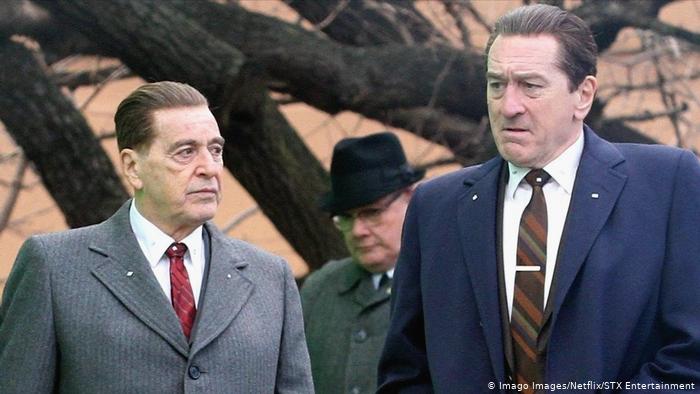
The effect is quite astonishing and actually allows Scorsese to deliver the narrative in nonlinear sequencing that details developments in the compellingly complex relationships between Sheeran, Bufalino, and Hoffa, as well as their family dynamics, their struggle for mob dominance and their behind-the-scenes mutual or oppositional orchestration of historic events.
Clocking at three and a half hours, “The Irishman” is a film with a lot of story. Exceptionally strong and engaging performances by DeNiro, Pesce, and Pacino propel the narrative by revealing the inner working, the true gut of tough guys who live and die by an unwritten code that honors personal power and self-esteem more than commitment to any principles of morality.
Their extraordinary longevity as surviving power players in their kill-or-be-killed world is powerfully underscored as contemporary mobsters – the likes of Joey Gallo, Angelo Bruno, Anthony Provenzano, and others — are introduced and eliminated, with title cards indicating the date and location of their death and how they were ‘offed.’
“The Irishman” doesn’t pass judgment on Sheeran, Bufalino, and Hoffa. It remains neutral but does incorporate somewhat indicate emotional comeuppance, especially in Sheeran painful estrangement from his daughter (Anna Paquin) who mistrusted his behavior from early childhood and later suspects him of betraying Hoffa, whom she adored.
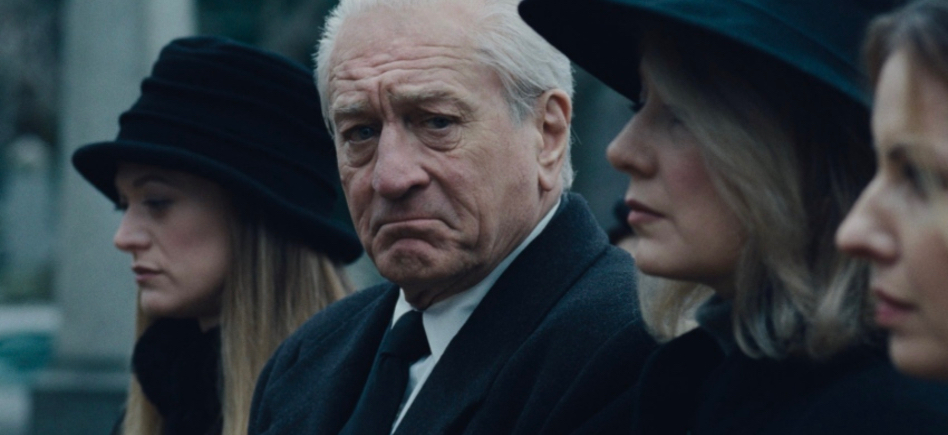
Scorsese fans and followers will see “The Irishman” as another expression of the master moviemaker’s fascination with mobsters and their stories, and they will certainly enjoy looking for the numerous shots and sequences that reference Scorsese’s previous films.
In fact, “The Irishman” may be taken as a master class in Scorsese filmmaking and in the Scorsese style set by his ongoing collaboration with film editor Thelma Schoonmaker.
But, in “The Irishman,” Scorsese ventures further into the realm of political commentary than in previous mob narratives by thoroughly contextualizing the character-driven story.
His pivotal use of archival news footage and vintage commentary about current events such as the Bay of Pigs, JFK’s assassination and Watergate strongly supports his characters’ dialogue and commentary on those history-making events.
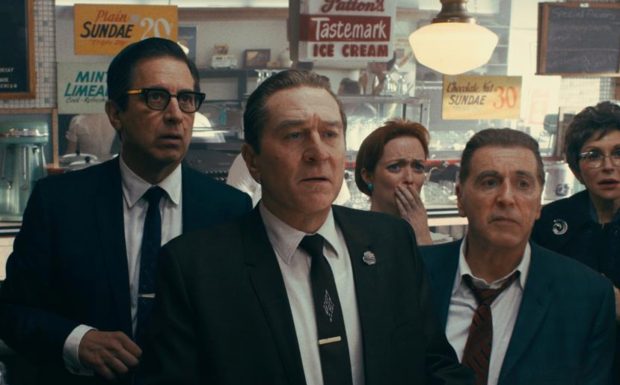
With Steve Zaillian’s superbly crafted script, adapted from Charles Brandt’s book “I Heard You Paint Houses, “ Scorsese presents “The Irishman” as a fascinating and epic American history lesson that is told from the perspective of organized crime.
And that perspective is quite a revelation, one that certainly sheds light on current social and political issues.
“The Irishman” adds a distinctively different dimension to recent cinema’s presentation of narratives that reveal behind-the-scenes truths (or speculated truths based on extensive research) about historic events and policies that have brought us to where we are today.
Last year’s “Vice” comes immediately to mind as an example, as well as the soon-to-be-released (in November) truth-based “The Report,” in which a Diane Feinstein-appointed Senate staffer (Adam Driver) investigates and uncovers truly shocking secrets about the CIA’s post 9/11 Detention and Interrogation Program.
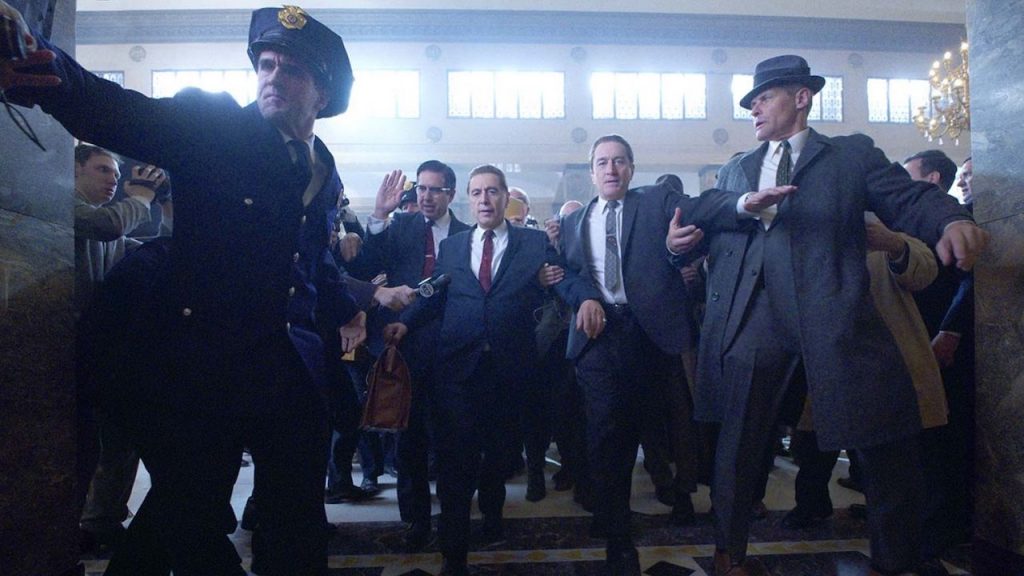
Until the unlikely event that the actual cause of Jimmy Hoffa’s disappearance is discovered and proven, “The Irishman” is likely to be considered ‘of record,’ influencing public perception and creating a public debate in the same way that “Vice,” for example, has done. Do movies have a social impact? Indeed they do.
“The Irishman” is bound to become another Scorsese classic. The film premiered at the New York Film festival on September 28, 2019. It is due to release in movie houses in November and will be accessible on Netflix thereafter.
My advice is to see it on the big screen, but you may well want to watch it for a second or third time online.
More: Brazil news in English, every day from The Rio Times.
Editorial responsibility: Matthias Camenzind, Editor-in-Chief · Editorial standards · Report an error
Brazil runoff, Sunday, October 25: When is the Brazil runoff election. Latest: Brazil runoff polls, Flávio 51%, Lula 49%.