Finding Ways in São Paulo to Transform Organic Waste Into Revenue
By Lise Alves, Senior Contributing Reporter
SÃO PAULO, BRAZIL – During Environment Week, experts discuss deforestation, pollution, and waste residues. In São Paulo, South America’s largest city, discussions around what to do with the thousands of tons of waste produced every day by residents and visitors are constantly on the agenda of environmentalists and city officials.

Creative solutions have been found, including Latin America’s most extensive underground spice garden, maintained with the organic residues collected by building administrators at the Patio Victor Malzoni building, located on one of São Paulo city’s busiest avenues.
“When we first arrived to look at the building, the first thing we saw were dozens of traditional black trash bags being carried out. This was a daily thing,” says Andre Mantovani, managing partner at Arueira Ambiental and one of the creators of the underground garden.
“The awareness that we should do something about the trash we produce exists in cities like São Paulo,” says Mantovani, whose company is one of the few in the city designing projects for commercial buildings, shopping centers, and schools that seek better disposal methods for their residues.
According to São Paulo city officials, the metropolis generates, on average, twenty thousand tons of trash per day in terms of domestic garbage, without counting commercial and industrial waste.
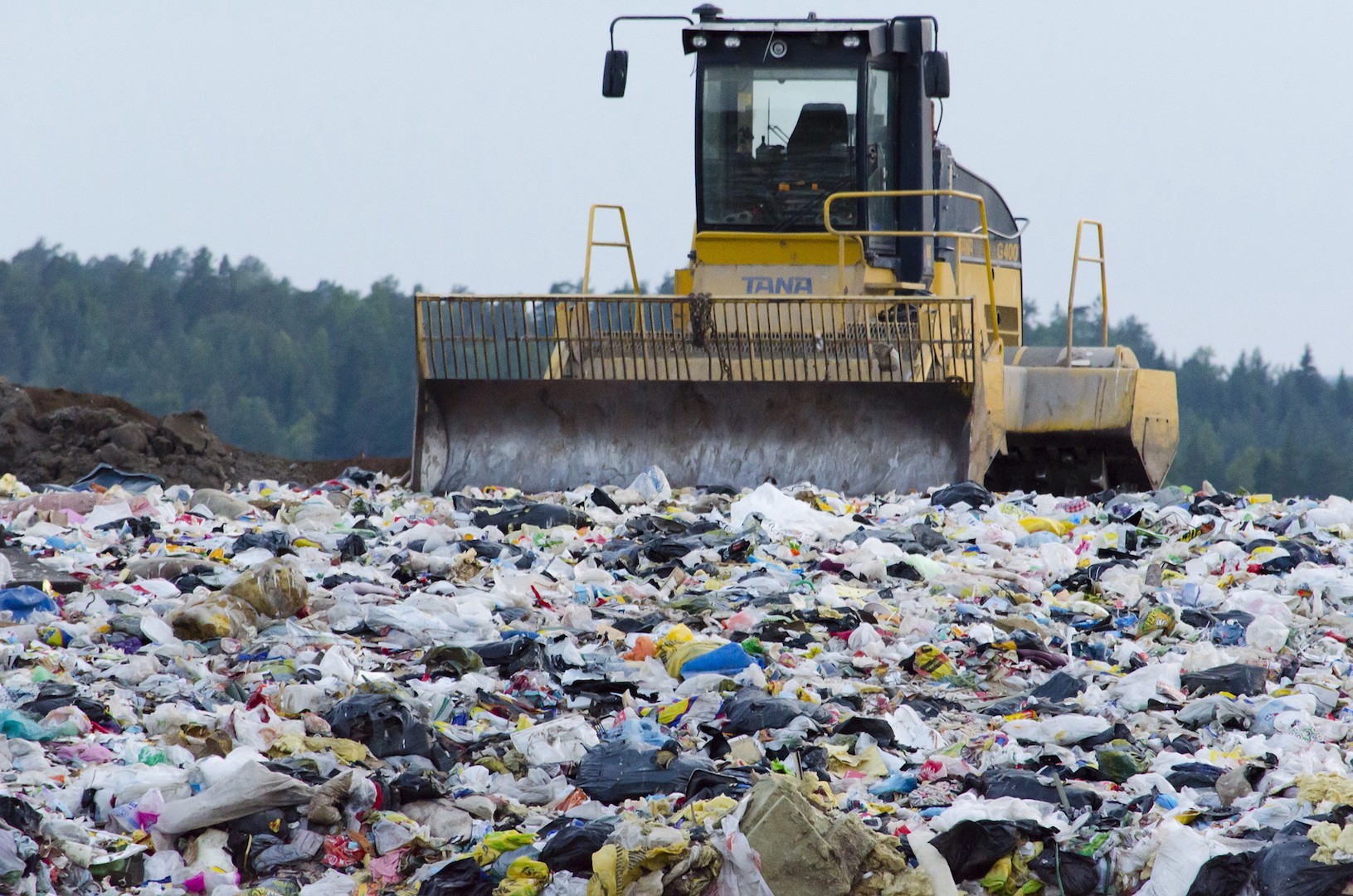
To transport all that debris to the city’s two landfills requires at least 2,200 trips by large garbage trucks every day.
“In 2015, Mr. Mazoni, the building’s owner, wanted a solution to the organic residue produced by the three restaurants in the building,” Mantovani told The Rio Times.
According to the economist-turned-eco-businessman, the restaurants — along with several large corporations whose headquarters are in the building, including Google — ended up generating hundreds of kilos of organic waste per day.
Composting was the solution found to take advantage of this waste residue and putting it to good use. “Today, you see hardly any trash bags, and people are more aware of not using things like plastic coffee cups once and then throwing them away. They think twice now,” says Mantovani.
Nonetheless, says the owner of Arueira, the implementation of these types of projects are fewer than needed for a city the size of São Paulo. “It is much cheaper to bury the residues than it is to compost it or recycle it.”
Arueira Ambiental has created projects for many of the city’s shopping malls, installing green gardens on their rooftops, not only to produce spices and vegetables but also to keep the temperature inside the structure cooler during the hot summer months.
In addition to the Malzoni building, their projects have been implemented in the Infinity building, which houses mega-corporations like Facebook and Apple, the Eldorado Business Tower, headquarters to LinkedIn, as well as dozens of shopping malls and schools.
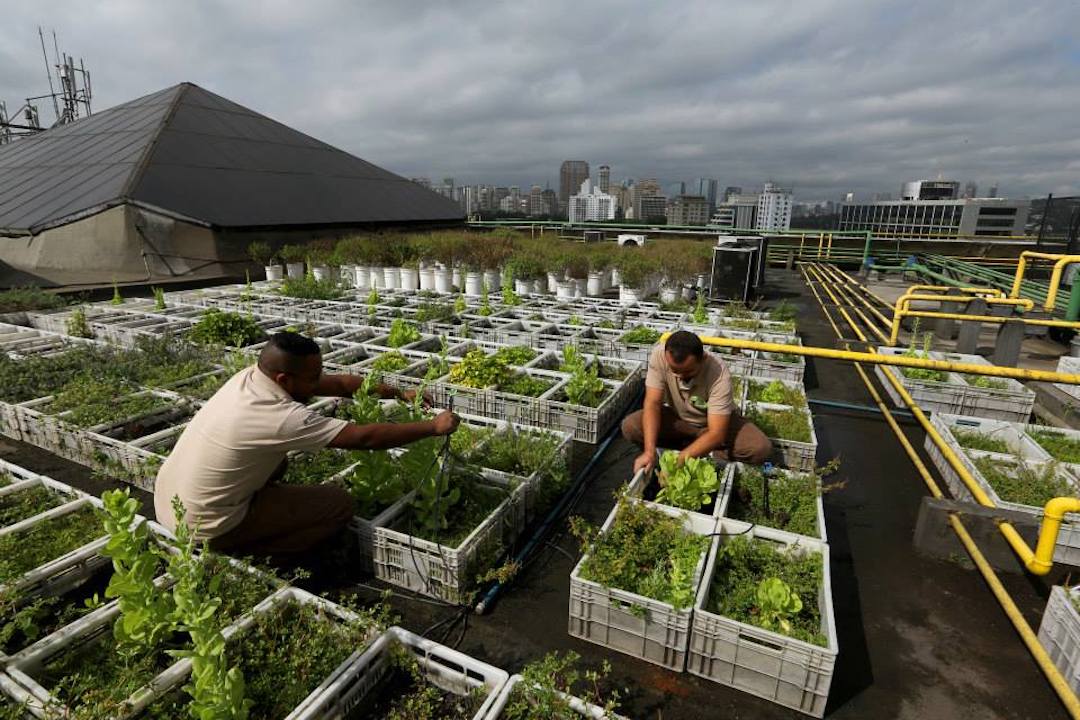
“In Shopping Eldorado, they can recycle about 45 percent of the total residue generated, and in the Infinity building, there is a complete recycling process, with sorting, separation, composting, and vegetable garden; we transform 82 percent of all waste,” says Mantovani.
By investing in projects to transform organic waste into mulch and properly disposing of recyclable waste, what was an expense becomes a source of income, saves money on energy bills and creates a positive image for the establishment. But according to Mantovani, revenue is not the primary objective of these projects.
“The idea with these green rooftops, underground spice gardens, etc. is to call attention to the amount of trash we produce every day, every week. It’s more than anything else, an educational project for the employees of these buildings, shopping malls, and industries, ” says Mantovani.
But unlike his other projects, which are done with the help of natural light and the sun, the subterranean garden uses special, blue-colored LED lamps that do not emit heat, but help in photosynthesis and have a similar effect to sunlight.
The irrigation is done by an automated system installed in each box of the spice garden.
“Harvesting of the spices is done on a weekly schedule and distributed to people who work in the offices in the building, including Google employees,” says Arueira’s managing partner.
In 2002, the São Paulo city legislation established that large corporate condos, schools, shopping malls, and other commercial businesses must hire private companies to collect the rubbish generated by their establishments.
“There is now a wave of awareness that we must reduce the amount of trash we produce and find a way to get rid of the rest of the residues we produce in an environmentally friendly way,” says Mantovani. “My company was born from the urgent need for society to find effective solutions to the problems caused by the lack of proper management of the waste generated by it,” he concludes.
More: Brazil news in English, every day from The Rio Times.
This article was produced by The Rio Times’ automated AI newsroom. Editorial responsibility: Matthias Camenzind, Publisher and Editor-in-Chief. The Rio Times also runs Ask Rio Times, which answers from 100,000+ of our own articles, the daily Latin America Power Map, and prediction-market odds on elections and markets.. How we use AI · Report an error
Living in or visiting São Paulo? See this month's events and our São Paulo city guide with rents, safety and upcoming concerts.
Brazil runoff, Sunday, October 25: Brazil runoff: date, poll closing times and when results start. Latest: Brazil runoff polls, Flávio 51%, Lula 49%.