Firefighters battle flames in Brazil’s Chapada dos Veadeiros UNESCO World Heritage Site for 3rd day
RIO DE JANEIRO, BRAZIL – The fight against the flames in Chapada dos Veadeiros National Park continued for the third consecutive day on Tuesday (14). More than 100 people were deployed, including the Goiás Fire Department, the Chico Mendes Institute for the Conservation of Biodiversity (ICM-Bio) employees, and volunteer firefighters who live in the area.
Three aircraft assist in fighting the flames, which are being hampered by the wind and high temperatures. On Tuesday morning, the military also sent a firefighting helicopter to drop water to help in the operation; according to the company, air support is essential in the difficult-to-reach region.

Goiás Civil Police are investigating the cause of the fire. Brazil’s Cerrado is one of the oldest and most diverse tropical ecosystems globally and is ravaged by fires every year, many of which are criminal in nature.
The flames began to spread in the Valley of the Moon last Sunday (12); at that time, about 100 tourists visiting the site, one of the most sought-after in the region of the village of São Jorge, were trapped and had to be hastily rescued.
On social networks, volunteer firefighters from local organizations such as Rede Contra o Fogo, Brigada São Jorge, and Trip Veadeiros – who fully support the firefighters and ICM-Bio – are asking for donations to continue their work.
CHAPADA DOS VEADEIROS
Chapada dos Veadeiros National Park is a national park of Brazil located in Goiás, on the top of an ancient plateau with an estimated geological age of 1.8 billion years.
On January 11, 1961, the park was created by President Juscelino Kubitschek and listed as a World Heritage Site by Unesco in 2001. It occupies an area of 655 square kilometres (253 sq miles) in the municipalities of Alto Paraíso de Goiás, Cavalcante and Colinas do Sul. The park is maintained by the Chico Mendes Institute for Biodiversity Conservation.
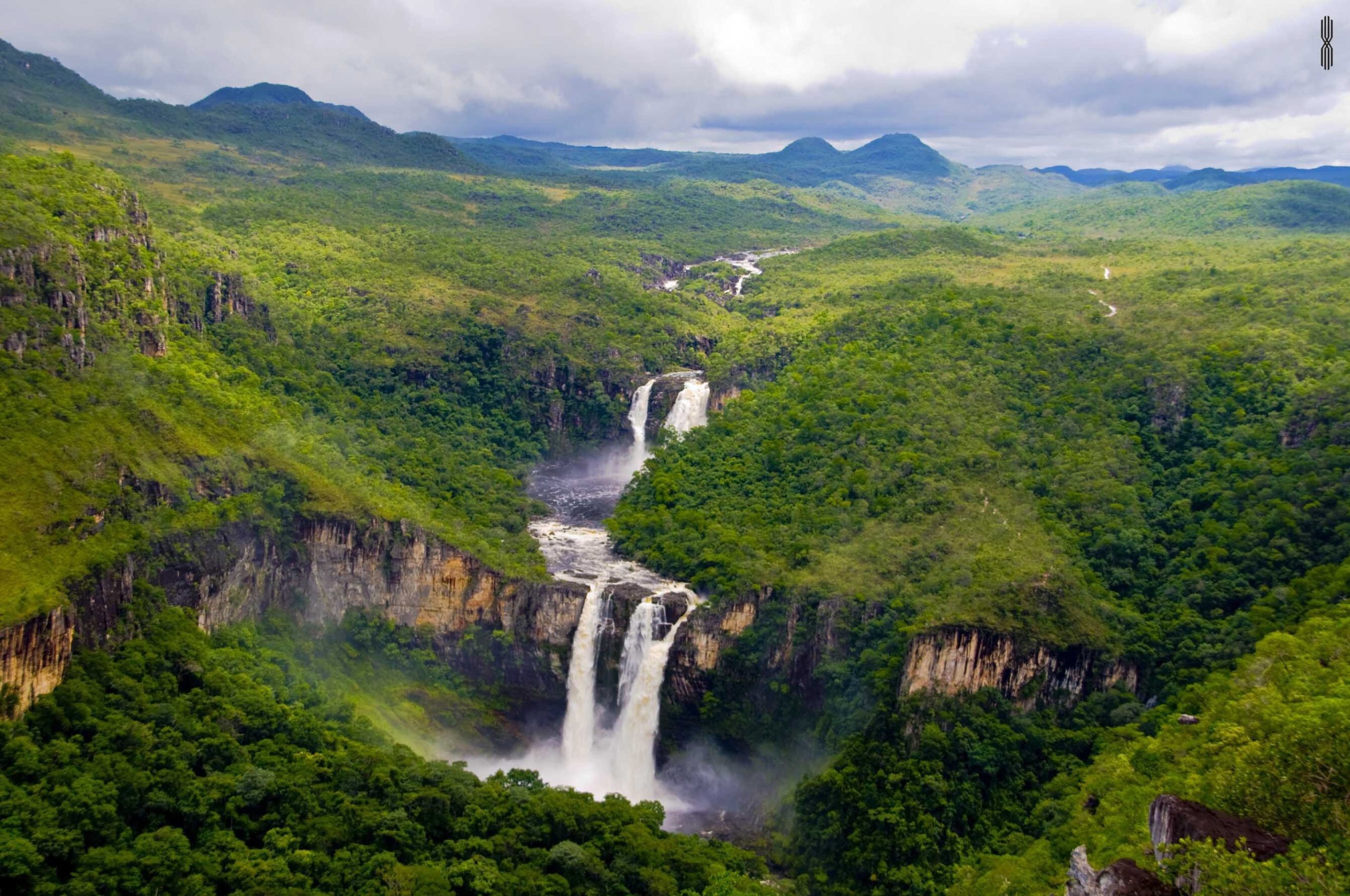
The Chapada dos Veadeiros region was first developed around the gold mining rush in the 18th Century. Cavalcante was one of the first villages founded in the region, and at one point, became one of Brazil’s major gold extractors.
Some reports say that Isabel, Princess Imperial of Brazil, visited Cavalcante, making it the capital of the Empire for a day. The necessity of slave labor to work the mines in the Chapada dos Veadeiros was so great that the region is now home to some of the biggest Quilombo communities in Brazil.
More: Brazil news in English, every day from The Rio Times.
This article was produced by The Rio Times’ automated newsroom system. How we use AI · Report an error
Read More from The Rio Times