Florida Scientist Says Parts of Amazon Rainforest will Collapse, Become Arid by 2064

RIO DE JANEIRO, BRAZIL – Caught between rapidly expanding resource use and climate change-fuelled fires, the future of the Amazon rainforest and the stunning array of life teeming within it just keeps growing bleaker.
In a new report for Environment: Science and Policy for Sustainable Development geologist Robert Toovey Walker from University of Florida reviews recent research on the Amazon rainforest to reach a grim conclusion.
Lengthening dry seasons will soon no longer allow the rainforest canopies the five years they need in between dry seasons to recover from fires, allowing flammable grasses and shrubs to take over.
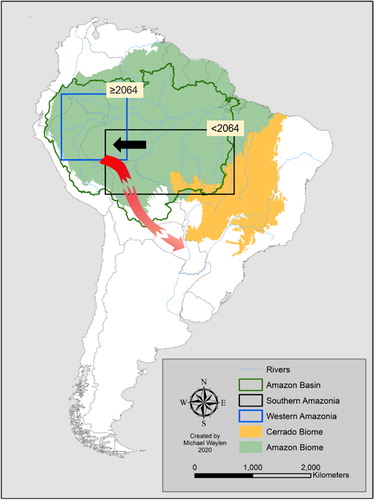
“Southern Amazonia can expect to reach a tipping point sometime before 2064 at the current rate of dry-season lengthening,” Walker wrote.
The number of fires this year in the Amazon had exceeded last year’s horror fire season by October. And we humans destroyed another 1,202 square km (464 square miles) of forest in Brazil during the first four months of 2020 – 55 percent more than during the same time last year.
Like falling dominos, models predict once 30-50 percent deforestation is reached in the south part of the forest, this will decrease the amount of rain by up to 40 percent in the west, thus also changing the environment there from tropical forest to open forest and savanna, the report concludes.
“The best way to think of the forest ecosystem is that it’s a pump,” Walker told UPI. “The forest recycles moisture, which supports regional rainfall. If you continue to destroy the forest, the rainfall amount drops… and eventually, you wreck the pump.”
If this dire scenario plays out, water security will evaporate for over 35 million people who call this region home. “The people there, they don’t worry so much about biodiversity, the environment, when they have to worry about eating their next meal,” Walker said.
Moreover, many more plants and animals will be driven to extinction.
Earlier this year a report in Nature Communications found that the Amazon, one of the most biodiverse and carbon rich places on Earth, is on track to reach the point of no return within our lifetimes and its ability to absorb the world’s excess carbon is fast diminishing, with predictions it’ll flip from sink to source around 2035.
In the past the Amazon rainforest has survived periods of much warmer climates, but this was without the other extreme damage our activities are inflicting.
As with the climate crisis, large corporations and government policies (or lack thereof) are the biggest drivers of these problems.
Trade deals with countries like the US and potentially the European Union, create irresistible incentives for large-scale agriculture in Brazil, where many people were already struggling with day-to-day living, even before becoming one of the countries worst hit by the coronavirus pandemic.
“This is a government that wants to hand over our territories to large-scale agriculture. Not only do they have a policy of not granting us rights to our land, it is worse – they are trying to take away land we already have the rights to,” Sônia Guajajara, a former Vice-presidential candidate and a representative of 300 Brazlillian Indigenous Peoples groups, told Fern.
“Whereas before there were violent land conflicts, now it is incited by the hate speech coming from the federal government. Every day they incite violence. People think they have the right to kill with impunity.”
Walker explains that the Brazilian government’s current infrastructure projects and dismantled environmental policies all but ensure 25 percent of the rainforest will be lost in the near future, a level researchers have previously cautioned could be a tipping point towards wider collapse.
“Other Amazonian countries, notably Ecuador with its vast hydrocarbon stores, are following President Bolsonaro’s lead in opening Amazonia to resource extraction,” he wrote.
This problem is by no means unique to South America. We’re all surrounded by struggling ecosystems – with one out of five countries headed for ecosystem collapse. Even wealthy countries, like Australia, are refusing to take the necessary measures to protect our environment.
As well as losing so many amazing creatures and further messing up our climate systems, pushing our ecosystems to their limits also heightens other global threats.
Stressed and weakened communities of animals become fertile breeding grounds for the next virulent pathogen. A growing body of evidence now links human encroachment onto stressed environments to emerging diseases like the coronavirus.
More: Brazil news in English, every day from The Rio Times.
This article was produced by The Rio Times’ automated AI newsroom. Editorial responsibility: Matthias Camenzind, Publisher and Editor-in-Chief. The Rio Times also runs Ask Rio Times, which answers from 100,000+ of our own articles, the daily Latin America Power Map, and prediction-market odds on elections and markets.. How we use AI · Report an error
Brazil runoff, Sunday, October 25: When is the Brazil runoff election. Latest: Brazil runoff polls, Flávio 51%, Lula 49%.