Following Saraiva Crisis, “Leitura” to Become Brazil’s Largest Bookstore Chain
RIO DE JANEIRO, BRAZIL – The bookstore market is expected to have a new leader in the country after decades. And it is a relatively unknown network on the Rio-São Paulo axis: the ‘Leitura’, a bookstore in Minas Gerais created by the Teles family 52 years ago.
The chain currently operates 72 stores, compared to 74 of the Saraiva chain, which is under judicial reorganization and has closed about a quarter of its units over the past two years.

At its peak, the company counted 114 points of sale throughout the country. Leitura should achieve leadership in 2020.
Unlike Saraiva, the Minas Gerais chain already plans to expand next year.
By May, according to the president of Leitura, Marcus Teles, the company will operate 76 units with the opening of four stores in São Paulo, Campinas (SP), Serra (ES) and Juiz de Fora (MG).
The executive is working on contracts for three more points of sale and should end 2020 with 79 stores in operation. At the end of this expansion cycle, he expects to have annual revenues of R$500 million.
Part of the inaugurations that Leitura accomplished in the years 2018 and 2019 covered areas Saraiva relinquished. The company took over the points that belonged to its rival in Vila Velha (ES) and the West Plaza Mall, in São Paulo. In January it will do likewise at Galleria Shopping, in Campinas.
Teles said that he is closely monitoring the competition’s numbers. He said that, although it will become the largest network in the country in terms of total points of sale, it is still lagging behind in e-commerce. “From what I see in the numbers, we will overtake Saraiva in physical retail outlets, excluding the Internet”.
While the traditional leader in bookstores has relevant sales on the web, Leitura has been out of e-commerce for a long time. It returned in August, discreetly. “You can’t sacrifice the margin, sell books below cost price.”
History
Founded in 1967 by Marcus Teles’ brother Elídio, Leitura has been “acting stealthily” throughout its history. It is only now beginning to emerge in sales points in the capital of São Paulo, such as the Ibirapuera Mall (where it opened a store early in the month) and the Santana Parque Mall.
At the time when Saraiva ruled the country entirely, controlling about 30 percent of book sales, this option for smaller markets was a survival strategy. “I’m stronger in Minas and in the North and Northeast,” says Teles.
To this day Leitura is controlled by the Teles family.
However, to finance the expansion, the company selects the best store managers every year. These professionals are invited to become minority partners in a sales outlet to be opened the following year. It is the secret the family has found for the success of its expansion and to ensure that the store managers have “ownership thinking”.
In times of difficulties in the book market – data from the National Book Publishers Union, collected by Nielsen, show a 7.6 percent drop in sales in the year 2019 – Leitura keeps a strong focus on teaching and school materials. Thus, the sale of market titles accounts for about 55 percent of the stores’ revenues, on average.
“In some stores, I can have 400 notebook models and 300 backpacks. The ‘back to school’ is a big stake,” Teles says.
According to consultant Alexandre Machado, managing partner of GS & Consult, in addition to the crisis in the management of some chains, the bookstore market suffers from an issue that has also affected other segments: the decay of large formats, or megastores.
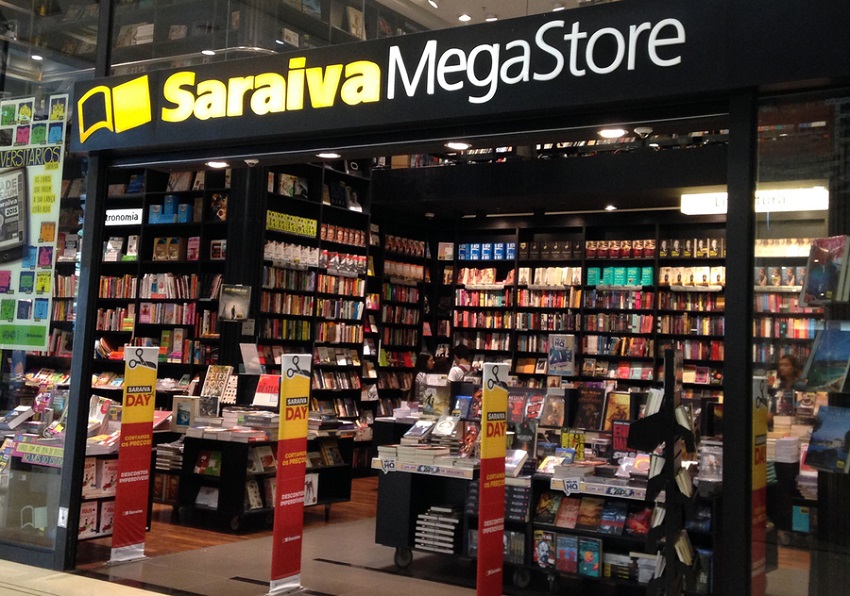
Large bookstores, with costly rents and a larger number of employees, began to suffer in order to reach the breakeven point. “Because, like other sectors, the book business was also hit hard by online competition,” Machado says.
Saraiva did not grant an interview. However, it stated that it is a reference in the bookstore segment. Citing data from GfK consultancy, it said it has a market share of over 25 percent.
“For every four books sold in Brazil, one is sold by Saraiva in one of its stores or through e-commerce”.
Source: Infomoney
More: Brazil news in English, every day from The Rio Times.
This article was produced by The Rio Times’ automated newsroom system. How we use AI · Report an error · Editorial responsibility: Matthias Camenzind, Editor-in-Chief
Brazil runoff, Sunday, October 25: Brazil runoff date. Latest: Brazil runoff polls, Flávio 51%, Lula 49%.