Food or Safety: The Dilemma of 1.6 Billion Casual Workers Worldwide
RIO DE JANEIRO, BRAZIL – A dilemma as great as it is terrible, is currently affecting millions of workers in the informal economy in the main cities of the emerging world, from Jakarta to Mexico City, from New Delhi to São Paulo: staying at home so as not to get sick, or going out to ensure enough income to eat.
The International Labor Organization (ILO) alerted on Thursday that the confinement and containment measures required during the Coronavirus pandemic threaten to dramatically increase the already high levels of poverty that plague people who are forced to be part of the invisible economy. And it proposed as a solution the universalization of social support schemes and the increase of the formalization of those working today.

“Economic rebound, albeit necessary, will not reduce it by itself; public policies are crucial,” alerts the UN body.
Up to 1.6 billion casual workers are being impacted worldwide by restrictions on movement to curb the virus. The authors of the study estimate that, without income alternatives, the poverty rate among these workers will rise 21 percentage points in middle-income countries, 52 in high-income countries, and 56 in low-income countries, by far the hardest hit.
“As those who are in the informality trap need to work, the constraints and other containment measures [of the epidemic] are a source of social tension and transgressive practices that jeopardize the authorities’ efforts to protect the population,” stresses the Geneva-based organization. “Not working means losing your jobs and your livelihood: dying of hunger or of the virus is a very real dilemma that many are facing”.
It is the snake that bites its own tail: in many countries, if workers in the informal sector fall ill, they do not have access to health services or to income protection networks; if they cannot have access to medical care, the virus spreads faster; and if they do -in many rural areas health services are not even available-, they are forced to disburse a huge amount for their economic capacity if they are forced to run into debt or sell what little they have.
This is a spiral that leads to increased poverty, a closed cycle with catastrophic consequences for millions of families, particularly in the middle or low-income countries.
Informality is, in turn, the only possible way out in times of economic hardship, like those of today -and will remain so.
“Economic collapse and the permanent closure of small and medium-sized companies will trigger an unprecedented increase in unemployment and underemployment, and the informal economy will expand,” economists warn.
“In the absence of income replacement, mainly in middle and lower-middle-income countries with poor social protection systems and low coverage, many people will turn to earn a living as owners of microenterprises, self-employed and casual workers. Some formalized micro and small-scale businesses may also be pushed into informality”.
The UN agency’s response to worker advocacy is twofold: universalizing social protection schemes and increasing the formalization of workers.
“The last decade has been marked by a growing awareness that a large informal economy is a major obstacle to poverty reduction, decent work, and sustainable development,” point out the authors of the study.
And the economic crisis unleashed by the coronavirus, which will lead the emerging bloc as a whole to its first economic downturn in at least six decades, also represents a very serious call to attention on an unresolved issue. A warning of the crucial need for the transition from informality to formality, ought to be a priority area on Governments’ agendas.
Domestic servants, particularly vulnerable
Referring to casual workers means referring to over two billion people worldwide – 62 percent of all employees, a proportion that grows to 90 percent in low-income countries and up to 67 percent in middle-income nations – who are active in virtually every sector of the economy: from hospitality to street food or manufacturing, to trade or 500 million farmers who provide food to major cities in the emerging world.
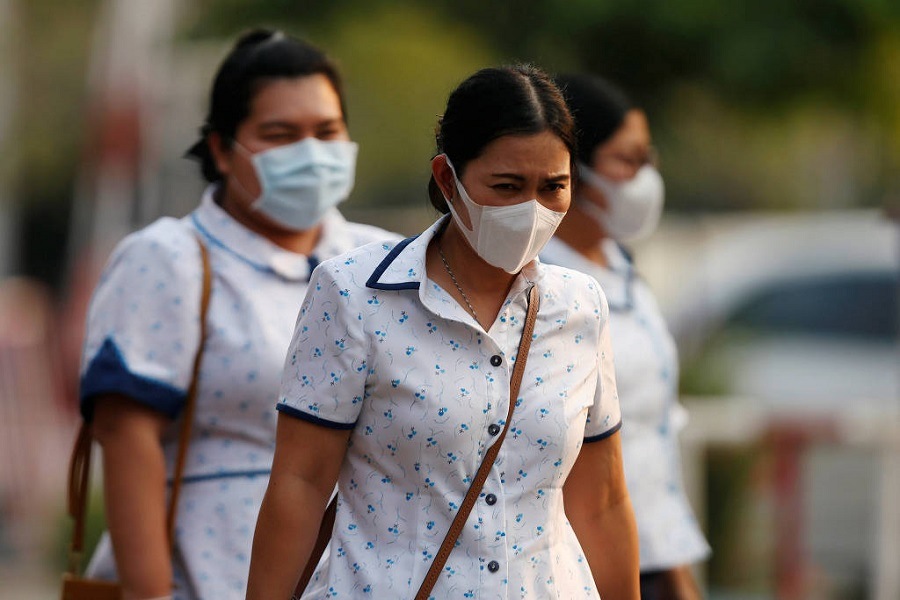
Women are significantly more exposed to this phenomenon than men, partly because of domestic work, and they are an “even more vulnerable” link, according to the United Nations agency.
For the 67 million domestic workers in the world – the vast majority are women and three-quarters of them are informal – “unemployment has become as threatening a factor as the virus itself,” according to the ILO.
Many of them, the agency points out, have been unable to go to work for weeks because of confinement. And those who continue to go to the homes where they clean and care for do so despite the “high risk” of contagion. “The covid-19 crisis is exacerbating already existing situations of vulnerability and inequality, and the political response must ensure that support reaches the workers and companies that need it most,” says Philippe Marcadent, head of the ILO’s labor inclusion division.
Informal businesses, the other warhorse of the crisis
As in the case of workers, businesses operating under the mantle of the underground economy -80 percent of those in the world – are the hardest hit by the health crisis.
“Their productivity and their savings and investment levels are low, which makes them particularly vulnerable to economic shocks. In addition, they are “usually excluded from official business assistance programs,” point out ILO experts. They are, in other words, invisible in official records. And also, as is evident in the timid response that many emerging countries are providing to the issue, in the eyes of some governments.
In Brazil, the Bolsonaro government insists on restarting the economy and maintaining jobs during the growth of contagion in the country, which has recorded more than 600 deaths for the third consecutive day, and the total number of deaths already exceeds 9,000. On Thursday, the President tried to pressure the Federal Supreme Court (STF) to ease the quarantine measures, taking a group of entrepreneurs in a surprise visit to Presiding Justice Dias Toffoli, with the argument that “the industry is in the ICU” and there is a risk of “CNPJ death”. [CNPJ is the federal tax registration for legal entities.]
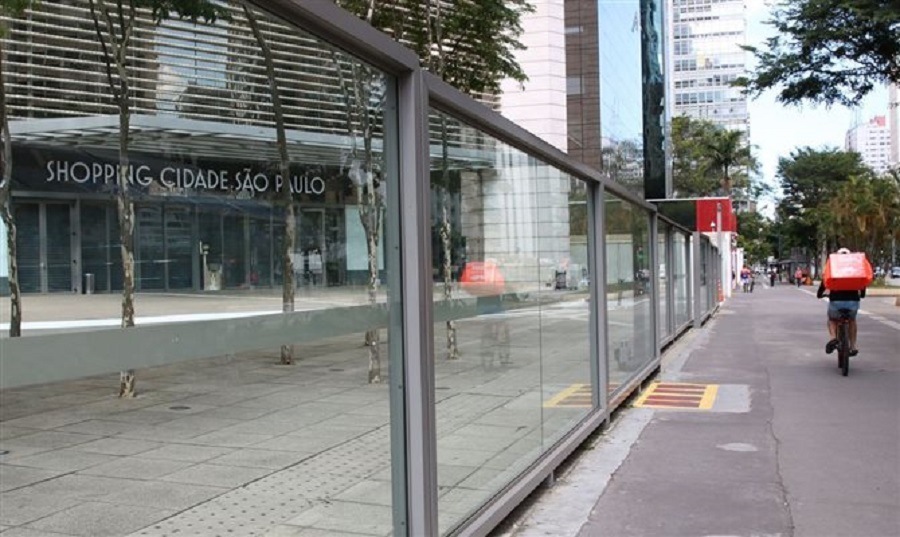
The government has implemented the R$600 (US$150) emergency aid to the most vulnerable citizens, but a large part of the population eligible for aid is waiting for their application to be analyzed or has not yet seen the money credited to their accounts, generating crowds and lines outside the Caixa Econômica Federal’s (Federal Savings Bank) branches which are making the payments.
In addition, workers who have been laid off report difficulties in securing unemployment benefits. With the National Employment System (SINE) offices closed in states and municipalities, the application for the benefit needs to be conducted remotely, through the Government website or the Digital Worker’s Record Book App, which has been an obstacle for citizens.
Source: El País
More: Brazil news in English, every day from The Rio Times.
This article was produced by The Rio Times’ automated newsroom system. How we use AI · Report an error
Read More from The Rio Times