How the Pandemic Turned Argentina´s Mercado Libre Into Regional Titan
RIO DE JANEIRO, BRAZIL – The pandemic, which forced the world’s population to shop more online as a result of isolation measures, has turned the e-commerce firm, already one of Latin America’s most valuable companies, into a regional titan.
From the onset of the Covid-19 crisis, in March, to date, the market value of the company, listed since 2007 on the U.S. Nasdaq stock exchange, soared from US$27 billion to almost US$77 billion, an increase of 185%.

This achievement has led the marketplace to overtake traditional names in the Brazilian economy in market value, such as Petrobrás and all major banks. The company even overtook Vale and was temporarily ranked first among the most valuable in the region. Considered by market analysts as the great Latin competitor of global giants Amazon and Alibaba, the company is now preparing for a new step: to start selling fresh food and enter the disputed niche of restaurant delivery.
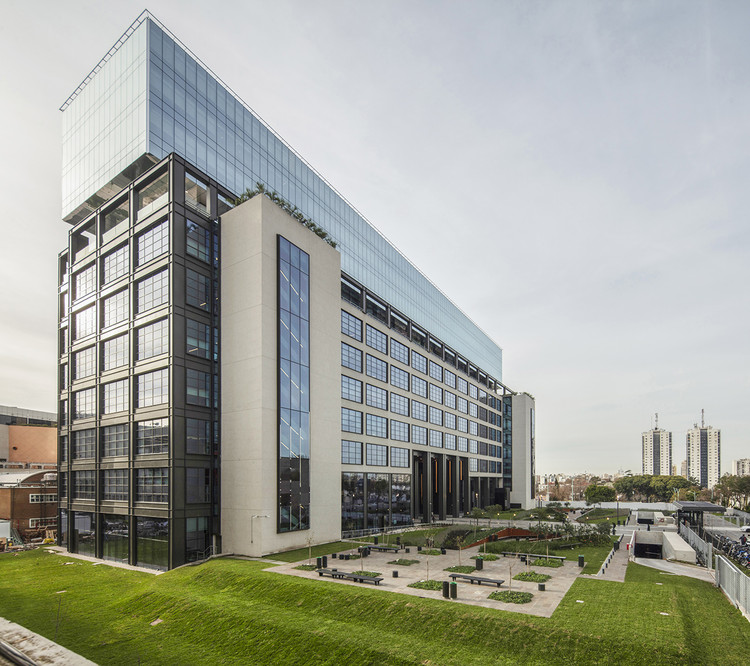
The company, which is headquartered in Argentina, has superlative numbers. Between January and September last year, the total of single active users on the platform doubled to 112.5 million. Sales volume was US$14.36 billion, an increase of 42% over the same period in 2019. The sharp growth did not go unnoticed by investors, who spent 2020 seeking investments in technology companies with high rate of expansion: throughout the year, the company’s share price rose from US$550 to US$1,700.
Early future
According to Stelleo Tolda, the company’s co-founder, the period of confinement – and the strong digitalization trend it entailed, which opened up fast growth paths for e-commerce – brought the company’s growth estimates forward by two years. “This is due to the fact that we had very aggressive projections, otherwise it would have been longer”, says Tolda, who also led the company’s entrance in Brazil in 1999.
Despite the advance, the platform still has much space for growth, particularly when analyzing other countries’ experience. In 2020, online sales in the Brazilian market rose from 5% of total retail to 10%. “This is a trend that is here to stay. Looking at other markets the number is close to 20%. In China, where e-commerce has more penetration, it is at 25%”, comments the executive.
Fresh produce
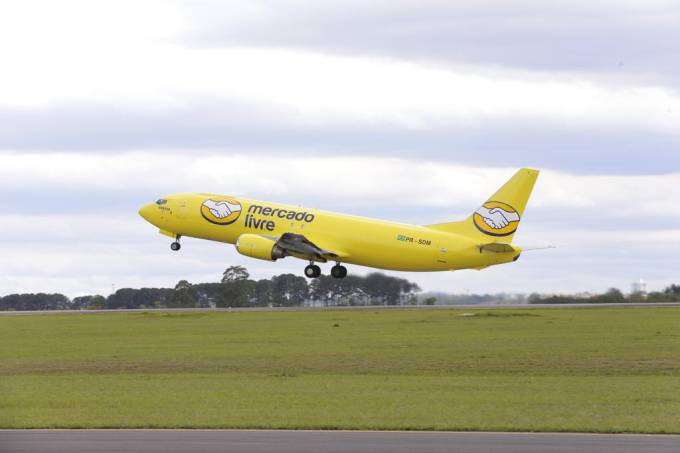
With hundreds of thousands of retailers connected to the platform, including large networks, one of Mercado Libre’s strategies to render the ecosystem more complete has been to heavily invest in logistics to ensure same-day delivery for a growing range of products. Recently, the company announced five new distribution centers in Brazil. Last year it invested around US$4 billion in this segment alone. “The online buyer is eager”, explains Tolda.
To evidence the increased efficiency of delivery, the company is planning to launch a new front at the start of this year: the sale of perishables, including restaurant delivery. Currently, cleaning products and dry foods, such as rice and beans, are already available.
The growth that came with the pandemic has also leveraged another of the company’s businesses, its fintech Mercado Pago. There were approximately seven million new accounts opened in the wake of the emergency aid, a government measure to mitigate the impact of the crisis on families who had their income most affected. The growth also occurred at a time when competition in the banking sector became more fierce. “There are many unbanked and underbanked in Brazil,” comments Túlio Oliveira, Mercado Pago’s vice-president.
“We have a long-term outlook and we have always believed in this theory that technology would change people’s lives. We extend this same logic to financial services,” says Tolda.
In a recent report, the U.S. bank Goldman Sachs said that Mercado Libre continues to be one of the main options in Latin American e-commerce. “We see the company not only successfully leveraging the changes in consumer behavior driven by the pandemic, but also consistently executing a micro agenda that covers strategic areas such as logistics, selection, pricing, user experience and financial services’ course,” reads the document.
Classroom
The concept of creating Mercado Libre emerged in classrooms at Stanford University in Silicon Valley, California, also the birthplace of Google. It was there that the project was born, in 1999, when Brazilian Stelleo Tolda and Argentinean Marcos Galperin, the company’s co-founders, heard from their colleagues that a company inspired by American Ebay, which had been launched five years earlier and had to go public, would not succeed when replicated in Latin America. “Everyone was skeptical, but we always had great confidence on the business viability,” says Tolda.
The company was born as any startup that needs, from scratch, to get its business up and running. After completing his degree, Galperin returned to Buenos Aires, where he officially launched Mercado Libre, in the underground garage of a building – a structure replicated as a celebration of the company’s 20th anniversary.
Three months later, Tolda joined the business that helped him think, bringing Mercado Libre to Brazil (currently the country represents 53% of the company’s revenues). To spur the business and thereby attract the public, the first step was to place products for sale within the website.

At first, they began to offer used articles from family and friends. Later, Tolda says that he personally began to visit storeowners. On one of these occasions, with a camera in hand – a Sony Malvica, which had a slot for a diskette, allowing a faster transfer of photos to a computer at the time – he headed to Teodoro Sampaio street, the traditional hub of São Paulo capital for the sale of musical instruments. From store to store, he talked to owners and took pictures of instruments to place on the platform. At that time it was free for storeowners, something that was maintained for a year.
The business quickly grew. As a consequence, at the very outset of the venture, Mercado Libre bought three of its direct competitors – Ibazar, Lokau and Arremate – the last one was 100% acquired in 2007. “These companies were direct competitors. It helped to increase user and client base”, says Tolda. Nowadays, Mercado Libre is not known for big mergers and acquisitions, and it is growing – and very much so – organically.
More: Brazil news in English, every day from The Rio Times.
Live Company IntelligenceMercadoLibre Inc. — the full investor dossier
Wall Street view
Valuation & profitability
Price & risk
$1,495.0052-wk high
$2,428.00
Revenue trend · 6y
Ownership
Dividend
This article was produced by The Rio Times’ automated newsroom system. How we use AI · Report an error · Editorial responsibility: Matthias Camenzind, Editor-in-Chief