In Minas Tragedy, Administrative Neglect Meets Climate Change Effects
RIO DE JANEIRO, BRAZIL – There was no shortage of announcements. Since last week, meteorologists were predicting heavy downpours for Belo Horizonte and the metropolitan area. The Civil Defense warned that people should avoid areas that typically flood, remain at home or leave their homes in case of any indication of ground movement or water rise.
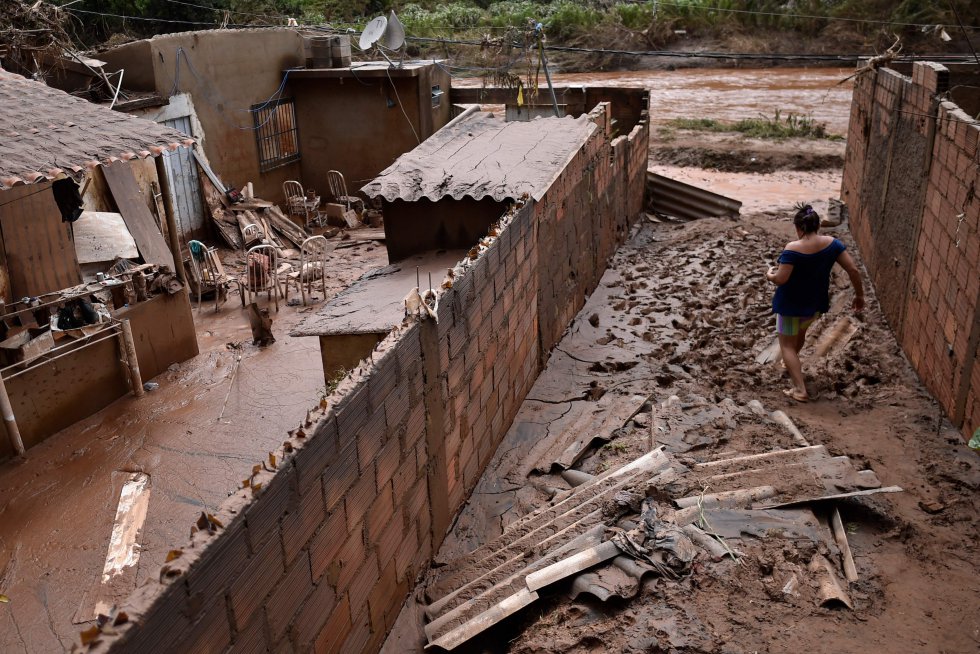
Last Friday, when the capital of Minas Gerais recorded the rainiest day in 110 years, Elisangela da Silva, 39, was among the people who had to rush out when water and mud flooded her home.

“I lost everything under that clay, I only salvaged my documents. I ran to a friend’s house, but when the rainy weather is over, I’m going to have to go back even though I’m scared it all starts again,” she says, who lives in a risk area with seven children.
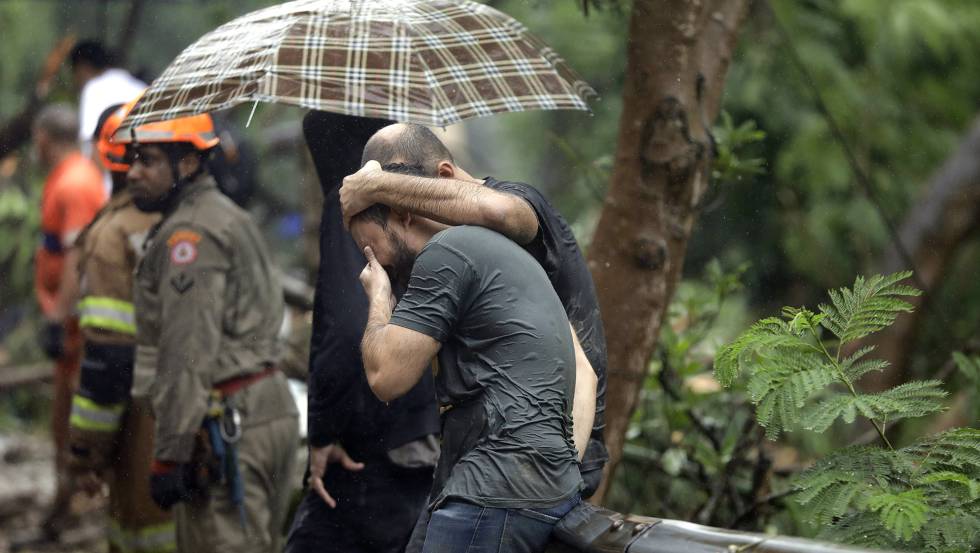
Like Elisângela and her family, more than 8,157 people were left homeless and another 38,703 were displaced in Minas Gerais. On Wednesday, 53 deaths were confirmed, the majority in the capital of Minas Gerais. One person is still missing. On Tuesday night, another storm damaged and flooded several points of the city, mainly in the South Central Zone.
The number of mining municipalities in a situation of emergency or public calamity reached 136. An announced tragedy that, in times of climate change, may become increasingly common if prevention and planning actions are not taken, according to experts heard by EL PAÍS.
According to Roberto Andrés, an urban planner and professor at UFMG, the cities currently suffering the most from the consequences of rainfall were the ones that disregarded the water course in their urban planning.
“The rivers fill up from the natural cycle. It was a design fault to believe that it would be feasible to use the areas near the streams and rivers. An area must be left, parks built, spaces left so that the rivers may rise. But this mistaken idea of planning is internalized in several Brazilian cities,” he explains.
Andrés also points out the disorderly occupation of hills and slopes, generally inhabited by the low-income population, and the state’s inaction. “In these cases, a housing policy is lacking, to remove these people from these places and take them to a safe region. We are experiencing a more intense rainy season and these events will be increasingly common. However, it is no use blaming nature, climate change only renders ill-planning situations and the absence of the State more complex”, he says.
In 2016, the study on the Analysis of vulnerability to climate change in the municipality of Belo Horizonte already pointed to alarming data on the increase of climate change impacts in the capital, such as floods, heat waves, landslides and dengue fever.
The study showed that 207, representing 42 percent of the 486 neighborhoods in the capital of Minas Gerais, are currently in a highly vulnerable situation. And it estimates that by 2030, unless nothing is done, the number of landslide and flood risk areas could increase, reaching more than half of the neighborhoods (68 percent of the current total).
This year, the state Civil Defense Coordination and the Military Fire Brigade’s budget for emergency actions, such as the cases of municipalities affected by the rains, is over R$6 million.
Architect and urban planner Sergio Myssior, a former advisor to the Belo Horizonte Municipal Environmental Council, points out that for over a decade the city has also had a flooding map, where 80 points had already been identified.
“The diagnosis has been known for more than ten years and this should already have been addressed. People in risk areas are not being relocated, living under a death threat”, he explains.
According to Myssior, the management model must be changed. “Public authorities are reproducing an exhausted model, based on great works, costly to the public coffers, to expand channels, which are not a long-term solution. They fail to tackle the issues at their root,” he explains.
According to the urban planner, the cities that have made progress on the issue worldwide are investing in ecological corridors, parks and green areas, drainage gardens to ease water runoff. “An urbanized city, in which several areas are waterproofed, can increase water runoff by up to seven times,” he says.
One step suggested by Myssior is to install rainwater retention tanks in old and new buildings that will collect rainwater and will slow the flow into the rainwater network, so that this volume may not add to the peak moment of flooding.
Andrés agrees that creating a system to prevent all rainwater from reaching the bottom of valleys is required. “We need a public policy to encourage people to make catchment projects, green roofs, reuse water so that the rain is absorbed in some way, that have retention areas. There are currently many technologies available”.
Scientist Carlos Rittl, executive secretary of the Climate Observatory, says that with climate events becoming more intense and frequent around the world, each local government needs to have its own strategy for dealing with change. “Brazil, for instance, has a national climate change plan that, in theory, the federal government should guide risk management actions and prevention of damage to people and the economy. But this one is shelved, the country has not done much”, he criticizes.The scientist further states that dealing with climate change as a second- or third-rate issue is unacceptable.
“It is crucial for Brazilian development policy. It’s the greatest challenge of the 21st century as it affects water availability, food production, energy generation and human health,” says Rittl, who believes that today we are living in a sensitive political moment in the country. “We have denialists in the government. Deputies who support climate denialists, who do not produce any science”.
Rittl points out that the people directly impacted by the rains, those who have had their homes destroyed, are not the only ones affected. “The water quality is also strongly altered in general, as we saw in Rio de Janeiro. Obviously, there are also management and treatment issues for sewage, basic sanitation. There are few municipalities using the right policies,” he says.
Tragedies like those in Minas Gerais could easily have been prevented if the issue had been a priority. ” When There are human lives lost, the responsibility lies with the negligence of public authorities who haven’t been able to hear what scientists have been warning about for a long time and take action,” concludes Rittl.
More: Brazil news in English, every day from The Rio Times.
Editorial responsibility: Matthias Camenzind, Editor-in-Chief · Editorial standards · Report an error