Three-Year-Old Child Slave Found in Flour Mill in Brazil
By Xiu Ying, Contributing Reporter
RIO DE JANEIRO, BRAZIL – Thirteen children and adolescents, age three to seventeen, were found working in three cassava flour production facilities in the municipality of Ipubi, located in the hinterland of Pernambuco, by the federal government’s mobile inspection group.

This category of work is included in the TIP “List of the Worst Forms of Child Labour”, and Brazilian federal Decree 6.481/2008 forbids those under the age of eighteen from engaging in such activity. The Decree regulates Convention 182 by the International Labor Organization, which addresses the issue.
In addition, the same operation rescued five adults from slave-like conditions in a flour mill in the neighboring municipality of Araripina.
In the operation, which began on May 21st, labor inspectors from the Ministry of Economy joined an attorney from the Labor Prosecutor’s Office, a representative from the Federal Public Defender’s Office, and twelve Pernambuco state police officers.
In Serrolândia, Ipubi district, labor inspectors did not find slave labor, but rather severe irregularities in three flour mills belonging to the same family.
In two of them, under the responsibility of the company L&J de Farias Ltda, there were 80 workers, five of whom were under 18 years of age. In the third mill, in Danilo de Farias, there were 34 workers, of whom eight were minors, among them the three-year-old child.
“Finding the three-year-old scraping cassava was quite shocking. Since the mother had no one to leave her with due to a lack of day-care centers or family members, she had to bring her to work,” explains André Dourado, labor inspector and operation coordinator.
“And, from then on, she began to help out,” he adds. The other youths were between the ages of thirteen and seventeen, some of them operating machines for shredding cassava.
Labor prosecutor Ulisses Dias Carvalho, who took part in the operation, agrees that the lack of economic alternatives regarding employment in the region, combined with insufficient social assistance structures, end up pushing children and adolescents into this type of labor.
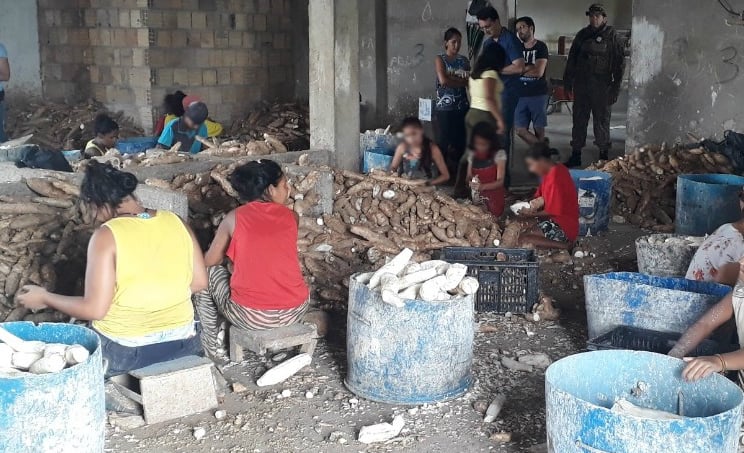
“This deeply shocked us. In that facility, eight of the 34 workers were minors. In other words, almost 25 percent of the labor force in the flour mill were children and adolescents, from three to seventeen years of age, performing a task included in the List of the Worst Forms of Child Labor,” says the prosecutor.
“The Labor Prosecutor’s Office has taken action since 2007 to regulate flour mills. We’ve always been very much on top of the issue of child labor. And frankly, we believed the situation had improved.”
According to the TIP List, the cassava flour manufacturing process involves intense physical strain, accidents with piercing and cutting instruments, repetitive motions, and high temperatures.
Probable health risks include contusions, cuts, burns, amputations and tendonitis, among others.
“We will take all appropriate legal measures, even attempting to hold buyers responsible,” says Ulisses Carvalho.
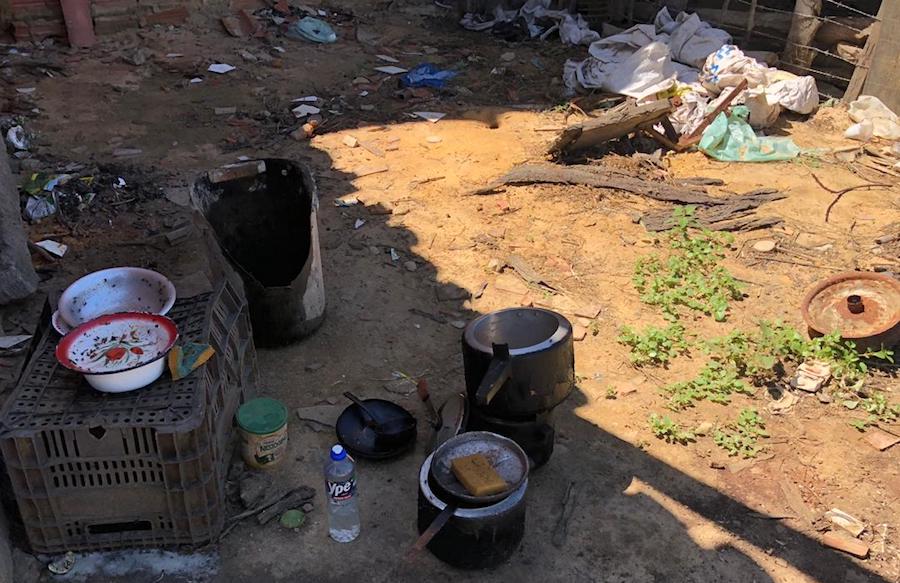
“They all worked for the owners of the flour mills, even though they had no record of employment contracts. And those wearing personal protective equipment had brought it themselves,” says André Dourado, who also refers to substandard bathrooms, lack of fresh water and long shifts.
André Dourado explains that in the Vila Serrânia district of Araripina, the employer kept workers under degrading conditions, one of the characteristics of slave labor under Article 149 of the Penal Code.
They were housed in a place close to the flour mill with no structure – there was no toilet, no water, and physical necessities were performed in the bush. With no beds, workers slept in hammocks. They bathed and ate in the flour mill, although hygiene was precarious there as well. They prepared their meals in an improvised stove next to the pig sty.
In all, the operation inspected seven flour mills in Ipubi and two in Araripina. They all had their machinery blocked due to serious risks.
More: Brazil news in English, every day from The Rio Times.
Editorial responsibility: Matthias Camenzind, Editor-in-Chief · Editorial standards · Report an error
Brazil runoff, Sunday, October 25: Brazil runoff: date, poll closing times and when results start. Latest: Brazil runoff polls, Flávio 51%, Lula 49%.