Amid Coronavirus Pandemic, Brazil Lacks Coordination Distributing Hospital Beds
RIO DE JANEIRO, BRAZIL – About to reach the peak of coronavirus contagion, projected by the Ministry of Health to occur between April and May, Brazil still lacks coordination between the SUS (public health care system) and the private network to expand assistance capacity and the number of hospital beds, mainly ICUs (intensive care units).

The country, which on Friday had recorded 941 deaths by Covid-19 and 17,857 cases, may see the collapse of both public and private health systems this month. A technical note from UFMG (Federal University of Minas Gerais) and the IPEA (Institute of Applied Economic Research) showed that if 0.1 percent of Brazilians are contaminated by the end of April there will be a shortage of beds. And this is the optimistic scenario.
In the most pessimistic projection, with one percent of the population infected by the end of the month, 53 percent of the micro-regions (groupings of municipalities) would collapse. In parallel, health plans face an “uncertainty” with the exponential increase in their spending and confirm, between the lines, that this can be passed on to the consumer’s pocket.
“The costs incurred in one fiscal year serve as a parameter for defining the monthly fees in the following fiscal year. Therefore, the variations in volumes of use and costs of medical procedures during the pandemic will be considered in the calculations to come,” explains Vera Valente, executive director of FenaSaúde (National Federation of Supplementary Health), which includes companies in the sector.
However, she points out that it is not yet possible to assess the magnitude of these expenses and their impact on the cost of plans. Every year, the operators, which serve approximately 47 million people, are authorized to increase the monthly fees above inflation.
“The need to increase investment in the installation of new clinical beds and ICUs, in the purchase of new equipment, as well as in outpatient care is evident. On the other hand, it is necessary to ensure these financial resources, necessary for adequate care. The increase in demand for medical services as a result of the spread of the novel coronavirus has also increased associated expenses, which requires a reinforcement of cash to operators,” says the ABRAMGE (Brazilian Association of Health Plans) in a statement.
The 32,000 adult ICU beds in the country, virtually divided in half between the public (about 163 million people depend on it) and private systems, and existing in only 500 municipalities, were operating with over 80 percent occupancy before the pandemic – in the SUS, however, this rate is higher: it is usually between 90 and 95 percent, according to the Brazilian Intensive Care Medicine Association (AMIB).
Last week, the Ministry of Health stated, through its executive secretary João Gabbardo, that it is monitoring both public and private beds. “If the SUS needs private beds, it will use them,” said Luiz Henrique Mandetta, the Minister of Health, but this request has not yet been made.
In Ceará, one of the country’s main hot spots for the disease, the state government seized the Leonardo da Vinci Hospital, a private hospital with 230 beds and an ICU for emergency use. The facility, however, had been closed for 13 years.
On March 13th, the Ministry of Health published guidelines to defer elective surgeries and other non-urgent procedures, aiming to release more beds for Covid-19 patients.
The ABRAMGE emphasizes that they “will be performed at some point”, and that there is the risk of an “avalanche” of procedures. “This will require resources that would be spent in months, to be spent in a few days,” the note says. A week later, the ANS, considered to be under the strong influence of the sector that it should regulate, announced the release of some R$15 billion from a guarantee fund to health plans, to ensure their solvency during the crisis.
This amount corresponds to 20 percent of a fund created for emergencies with money from the private operators themselves, which for years have been demanding its release by the Government. On Wednesday, April 8th, the ANS added that, to access this resource, the operators will have to sign a document committing themselves to attend users in default on their payments during the pandemic as long as they renegotiate their debts.
In principle, the measure will be valid until June 30th, but it is dependent on the companies’ adherence.
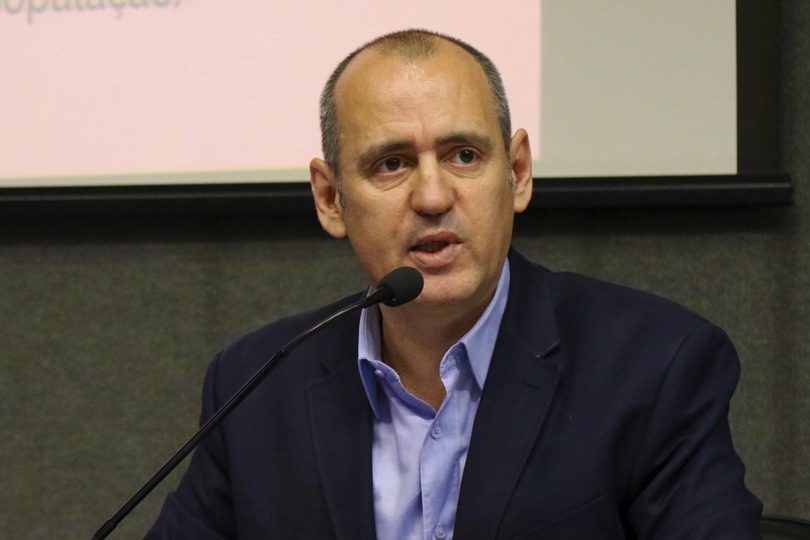
Mario Scheffer, a researcher at the USP Medical School (University of São Paulo), criticizes the decision to relax access to this capital.
“It is a blank check because the health plans have not submitted any plan for the use of this capital. This help should reduce the amount of monthly fees. This is what several private schools, for instance, are doing. Furthermore, this year’s plan adjustment has nothing to do with the coronavirus crisis”, says the expert.
Scheffer recalls that 80 percent of health plans are collective, made by unions or companies, which, due to the crisis, may become defaulters.
“Operators need to have a plan to address this default, they must create a moratorium on termination. And unilateral termination of the contract by the plans should be prohibited,” he argues.
The researcher also advocates a “unique regulation of vacancies, particularly of ICU beds,” under the command of the SUS. “At times like this, of a health emergency, the private network should be subordinated to the Government,” he says.
Attorney Frederico Barbosa, partner at BPGA strategic consulting, partly agrees with Scheffer. “The Government could link the release of the money from the guarantee fund to increasing the bed capacity for the SUS. It could be a proposal, for instance, of 70 percent of beds for the SUS and 30 percent for the private network, hypothetically speaking”.
Barbosa is one of the authors of a proposal submitted to the Ministry of Health -and yet to be answered- of a partnership between the SUS and the health plans to manage the shortage of beds.
He argues that although the Ministry of Health could requisition all private beds directly from hospitals, compensating them for potential losses, this would be “traumatic,” as it would leave plan users unattended.
“A more efficient transfer would involve only the partial disposal of existing beds to be implemented by private hospitals, through a protocol for bed equity in both systems. In practice, this would imply urgent and transitory transfer of private beds to meet the SUS needs,” he says.
Barbosa believes this protocol would encourage the increase of the total number of beds, mainly with the support of health operators, because the SUS’s responsibility to pay the private hospital network for the beds transferred the same amounts as paid by the health plans would be clear.
“Thus, operators spend less and the SUS would also pay a lower price for these beds than the one that would be compensated directly to private hospitals”, he explains.
Source: El País
More: Brazil news in English, every day from The Rio Times.
This article was produced by The Rio Times’ automated newsroom system. How we use AI · Report an error · Editorial responsibility: Matthias Camenzind, Editor-in-Chief