Brazil Has Lost More Nursing Staff to Covid-19 Than Italy and Spain Together
RIO DE JANEIRO, BRAZIL – Veteran nurse Carla Mileni Siqueira dos Santos collected the material for testing the first person suspected of Covid-19 in the small town of Rondon do Pará (Pará State) in mid-March.

The situation was daunting: an incurable disease, of which little was known, in a modest hospital of a 52,000 inhabitants town. With over 20 years in health care, Carla did what she had always done throughout her career: she reassured the patient, an elderly woman, and calmly carried out the protocol for testing the disease.
Despite taking all precautions, days later she herself became ill. She spent a few days in isolation at home, but the situation worsened and she required hospitalization in late April.
“On Sunday morning, May 3rd, she worsened and asked to be intubated. But she had cardiac arrest and didn’t make it,” says Nathalia Roberta Siqueira dos Santos, 25, Carla’s daughter. “It was 21 years devoted to nursing with much love. She was passionate about the profession, a leader who in addition to working in the front line taught courses and helped train health professionals, nurses, technicians, and auxiliaries,” she says.
These women -almost 85 percent of nurses are female-and men who are on the front line every day fighting the coronavirus in Brazilian hospitals are dying at an alarming rate, one of the highest in the world. According to the Federal Nursing Council (COFEN), by Wednesday 73 deaths of health care workers by Covid-19 had been recorded in the country. They are young victims: most (41) were under 60 years of age, one of them only 29.
The city of São Paulo, the major epicenter of the health crisis in the country, leads the ranking with 18 deaths, followed by Rio de Janeiro, with 14 cases. COFEN launched a platform to monitor nurses’ deaths throughout Brazil, with the help of the Regional Councils. In addition to these victims, another 16 deaths involving workers in the area are still under investigation, awaiting test results.
For purposes of comparison, the United States, the country with the highest number of victims of the pandemic (more than 71,000), has lost only 46 nursing professionals, according to class organizations.
Italy, the second-most affected nation by the disease with more than 29,000 victims, reported 35 deaths, according to the ‘Federazione Nazionale degli Ordini delle Professioni Infermieristiche’ (National Federation of the Council of Nursing Professions), an organization equivalent to COFEN in the European country.
Spain, just behind Italy with over 25,000 deaths, has reported only four deaths among healthcare professionals, according to the ‘Consejo General de Enfermería’ (General Council of Nursing). The two European countries experienced the outbreak of the crisis before Brazil and have already passed the peak of cases.
China’s data, despite having its reliability questioned, total 23 nursing fatalities by the end of April.
The International Nursing Council estimates that “more than 100 nurses and technicians have lost their lives to Covid-19 while working on the front line”. In other words, Brazil accounts for the largest share of the global total of deaths in the profession. However, the organization concedes that this number is only the tip of the iceberg.
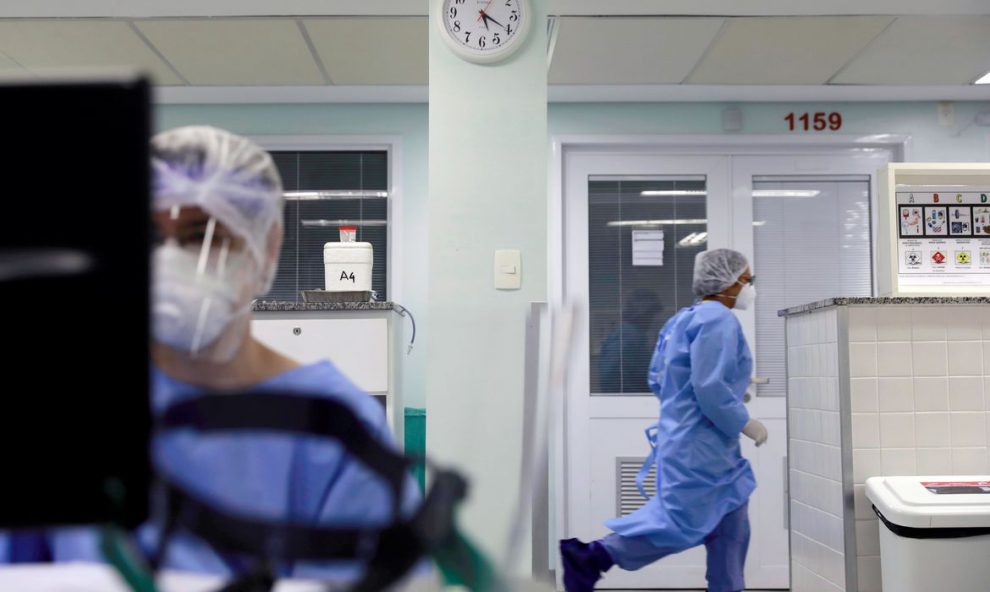
“One of the factors [behind high mortality] is that a good portion of health services have not removed professionals over 60 years of age and with comorbidities. They continue to work on the front lines of the pandemic when they should be in the back office or away,” said Manoel Neri, chairman of the COFEN.
This was the case of nurse Maria Aparecida Duarte, 63, known by her colleagues as Cidinha. She continued working virtually at the door of an emergency room in Carapicuiba, in the Metropolitan Region of São Paulo, despite being part of the risk group. She contracted the disease and died on April 3rd.
One day after her death a federal court determined that nursing professionals in the public system who are part of the risk group (due to age or illness) should be reallocated to duties that do not involve contact with patients with any influenza syndrome.
The decision came too late for Maria and dozens of other professionals. Another similar action calls for this measure to be extended to workers in the private health care network.
A further issue faced by nursing professionals is the lack of personal protective equipment, PPEs. “Not only is there a quantitative shortage of these products, but the quality of the material is questionable. Another issue is training the teams on how to wear them: many professionals become infected either by the inappropriate use of PPEs or at the time of undressing [removal of masks, gloves, and aprons],” Neri says.
Nurse Luís Cláudio Bernarda, 43, was a direct witness to the tragedies that the absence of minimum safety conditions at work can cause.
“He had alerted me of irregularities that were occurring at the hospital where he worked, in Itapevi [São Paulo Metropolitan Region]. He specifically complained about the lack of PPEs,” says Jefferson Caproni, 35.
Days later, Luís’ test came back positive for Covid-19. Within two weeks he died of respiratory failure. In addition to being a fellow health professional, he was also Jefferson’s friend and colleague in social preventive actions in the outskirts of São Paulo: “We worked together as volunteers in health prevention in Osasco and Carapicuíba, in the most impoverished neighborhoods”.
The situation faced by health professionals is critical in all cities where the health system is nearing (or has already reached) collapse, such as Manaus, Belém, Fortaleza, Recife, São Paulo, and Rio de Janeiro.
With their intensive care units almost full, city and state governments are trying to find ways to provide more places for the population with covid-19; however, this may have a negative result: “Many ICU beds are being created without nurses and doctors specialized in ICUs. So professionals find themselves in this extremely specialized service without proper training,” says Neri.
“All these factors leading to the death of health professionals are present both in public and private hospitals”.
Source: El País
More: Brazil news in English, every day from The Rio Times.
This article was produced by The Rio Times’ automated newsroom system. How we use AI · Report an error · Editorial responsibility: Matthias Camenzind, Editor-in-Chief