PISA: Brazilian Students Report High Rates of Bullying, Loneliness, Indiscipline
RIO DE JANEIRO, BRAZIL – Brazilian schools encourage competition. However, students report bullying and have less ease in solving problems, but agree that their teachers are enthusiastic about teaching. This is reflected in a survey by the 2018 Programme for International Student Assessment (PISA), conducted by the Organization for Economic Cooperation and Development (OECD).

The survey, released every three years, assesses the reading, science and math skills of 15-year-olds in many countries. In this edition, it also measured aspects of students’ well-being, which directly influence their learning.
PISA perceives well-being as a dynamic state, related to the psychological, cognitive, material, social and physical functioning of students, but also to youths’ ability to lead a happy and gratifying life. According to the program, “without adequate investment in skills development at present, students are less likely to enjoy well-being as adults”.
Issues such as well-being are becoming increasingly important in education debates. And they relate to the OECD’s Global Skills project, which plans to launch a new test to measure the quality of education.
Expected by the end of 2020, the exam will measure students’ social skills and their ability to find solutions to problems, which is one of the key attributes for a good National High School Exam (ENEM) essay, for instance.
The most recent PISA result measured several environment-related variables in schools that affect student well-being. Here are the main data reported by Brazilian students:
One in nearly three students is bullied. Twenty-nine percent of Brazilian students interviewed said they were bullied at least a few times a month, a score higher than the average for OECD countries (23 percent).
Brazilian students are less pleased with life. Sixty-five percent of Brazilian students reported being pleased with life, against 67 percent of the average of countries surveyed. Approximately 90 percent of Brazilian students, however, reported feeling happy occasionally or always; while some 13 percent of students said they always felt sad.
“In most countries and economies, students were more likely to report positive feelings when they reported a strong sense of belonging to the school and greater cooperation among their peers. Those most frequently bullied voiced greater sadness,” the PISA 2018 report states.
Students are supportive, but not that much. Eighty-five percent of Brazilians surveyed strongly agreed that helping students who are unable to defend themselves is a good thing. In the OECD, the average is 88 percent.
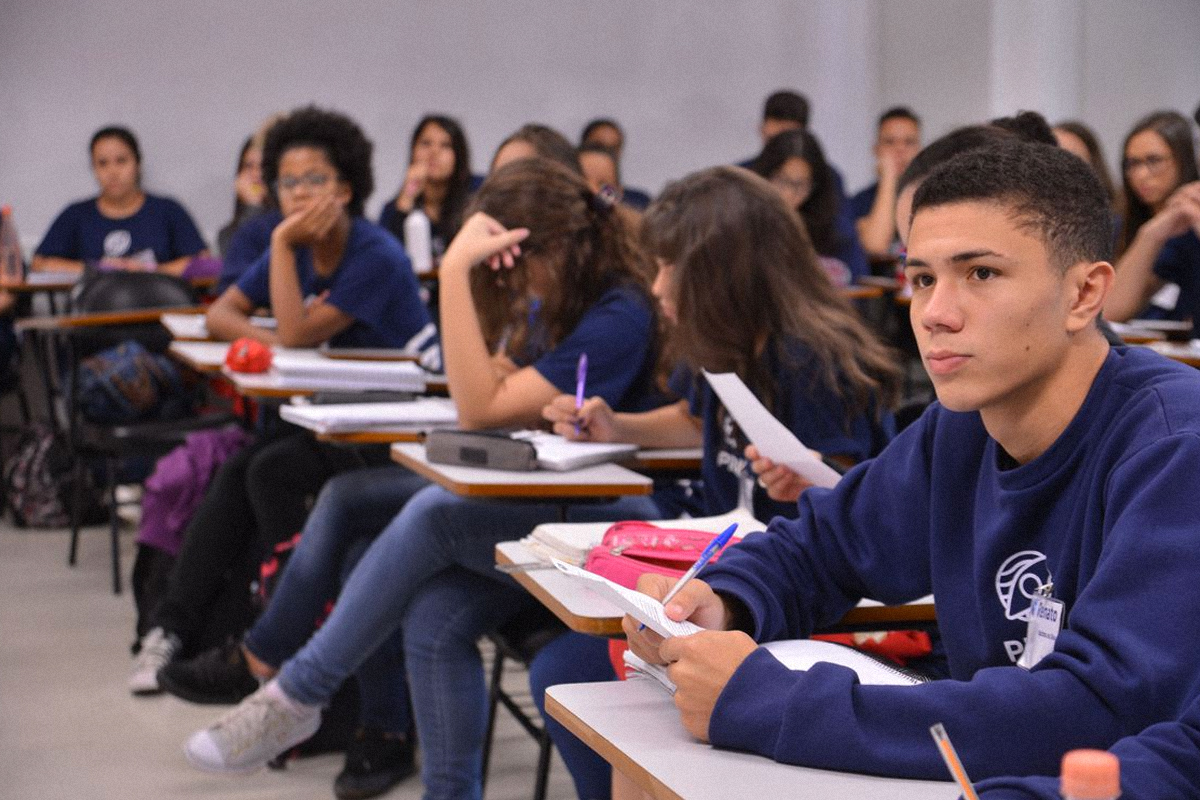
Competition is more common than cooperation in schools. In Brazil, 48 percent of students reported that their schoolmates cooperate with each other and 57 percent reported that the competition environment prevails. In other countries, the opposite happens: cooperation (62 percent) is greater than competition (50 percent).
Loneliness is greater among Brazilian teenagers. About 23 percent of students in Brazil agree or strongly agree that they feel alone in school. The OECD average is 16 percent of lonely students.
Indiscipline is a major issue in the classroom. Some 41 percent of students said that virtually all language teachers have to wait a long time for students to calm down before starting classes. The inconvenience of indiscipline in Brazil is much higher than the OECD average (26 percent).
And this seems to influence the performance of adolescents. Students who reported this issue scored 19 points less in reading than students who either did not identify the issue or minimized it.
Brazilian adolescents miss more school time. In Brazil, 50 percent of students missed a school day and 44 percent of students were late for school in the two weeks prior to the PISA test. The average for the countries surveyed was 21 percent for skipping a day of school and 48 percent for being late in the same period.
Teachers’ enthusiasm is prominent. Some 83 percent of students in Brazil agreed or strongly agreed that teachers display pleasure in teaching. In the OECD average, this number was 74 percent. The data show that enthusiastic teachers directly influence the reading scores of their students.
Brazilians solve problems worse than the average. Seventy-seven percent of students agree or strongly agree that they can generally find a way out of difficult situations and 55 percent agree or strongly agree that, when they fail, they care what others think.
In the OECD average, 84 percent of students say they are able to solve difficult problems. In contrast, 56 percent worry about what others think when they fail. Data show that in all education systems, including Brazil, girls are more fearful of failure than boys.
Students believe in meritocracy. Most students in Brazil and the OECD countries understand that their talents and skills can be developed through effort, the so-called “growth mentality”.
Source: El País
More: Brazil news in English, every day from The Rio Times.
This article was produced by The Rio Times’ automated newsroom system. How we use AI · Report an error · Editorial responsibility: Matthias Camenzind, Editor-in-Chief