IBOV 166,934.20 ▼ 0.10% IPSA 11,042.67 ▲ 0.39% IPC MEX 64,397.45 ▼ 0.66% MERVAL 2,947,349 ▼ 1.77% COLCAP 2,452.46 ▲ 0.84% BVL PERÚ 58,104.31 ▲ 0.40% USD/BRL5.21▼ 0.01% USD/MXN17.02▼ 0.01% USD/CLP914.45▼ 0.02% USD/COP3,141▲ 0.56% USD/PEN3.37▼ 0.01% USD/ARS1,488— 0.00% USD/UYU40.33▲ 1.98% USD/PYG5,984▲ 2.11% USD/BOB11.54▼ 0.18% USD/DOP58.45▲ 0.55% USD/CRC446.12▲ 0.91% USD/GTQ7.62▲ 2.25% USD/HNL26.79▲ 1.50% USD/NIO36.62▲ 0.63% USD/VES769.14▼ 0.32% USD/PAB1.00— 0.00% USD/BZD2.00— 0.00% USD/JMD 157.28 — 0.00% USD/TTD6.70▲ 0.74% EUR/BRL6.05▲ 1.03% BRENT 88.88 ▼ 0.03% WTI 83.11 ▼ 0.11% IRON ORE 161.91 — — COPPER 6.61 ▲ 0.03% GOLD 4,461 ▲ 1.78% SILVER 65.59 ▲ 1.26% SOY 1,184 ▲ 3.20% CORN 480.50 ▲ 10.02% WHEAT 655.00 ▲ 3.93% COFFEE 317.25 ▼ 5.51% SUGAR 16.43 ▼ 1.79% ORANGE JUICE 138.55 ▼ 0.47% COTTON 85.03 ▲ 2.33% COCOA 5,719 ▲ 3.18% BEEF 223.60 ▼ 3.93% CATTLE 339.10 ▼ 3.16% LITHIUM 75.20 ▲ 1.47% PETR4 41.64 ▼ 0.05% VALE3 72.97 ▲ 0.83% ITUB4 38.60 ▼ 1.03% BBDC4 16.85 ▲ 0.36% ABEV3 14.89 ▼ 0.80% BBAS3 19.37 ▲ 0.47% B3SA3 14.26 ▼ 0.21% WEGE3 47.59 ▲ 0.49% PRIO3 59.14 ▼ 0.19% SUZB3 41.33 ▲ 2.35% RENT3 34.68 ▼ 0.09% AZZA3 15.89 ▼ 2.63% CSAN3 3.22 ▼ 1.83% RAIZ4 0.25 — 0.00% PCAR3 2.75 ▼ 0.36% GMAT3 3.65 ▼ 1.08% PSSA3 48.13 ▼ 0.54% CVCB3 1.33 ▼ 2.92% POSI3 3.36 ▲ 2.44% SLCE3 13.34 ▲ 0.30% NATU3 8.14 ▼ 0.73% IBOV 166,934.20 ▼ 0.10% IPSA 11,042.67 ▲ 0.39% IPC MEX 64,397.45 ▼ 0.66% MERVAL 2,947,349 ▼ 1.77% COLCAP 2,452.46 ▲ 0.84% BVL PERÚ 58,104.31 ▲ 0.40% USD/BRL 5.16 ▲ 0.01% USD/MXN 17.06 ▼ 0.24% USD/CLP 913.98 ▲ 0.04% USD/COP 3,140 ▲ 0.03% USD/PEN 3.36 ▼ 0.66% USD/ARS 1,493 ▲ 0.10% USD/UYU 40.27 ▲ 1.24% USD/PYG 5,939 ▲ 1.68% USD/BOB 11.64 ▼ 0.76% USD/DOP 58.34 ▲ 1.25% USD/CRC 445.92 ▲ 0.89% USD/GTQ 7.62 ▲ 2.21% USD/HNL 26.79 ▲ 1.57% USD/NIO 36.62 ▲ 0.69% USD/VES 762.44 ▼ 0.13% USD/PAB 1.00 — 0.00% USD/BZD 2.00 — 0.00% USD/JMD 157.28 — 0.00% USD/TTD 6.70 ▲ 0.61% EUR/BRL 5.95 ▲ 1.01% BRENT 88.88 ▼ 0.03% WTI 83.11 ▼ 0.11% IRON ORE 161.91 — — COPPER 6.61 ▲ 0.03% GOLD 4,461 ▲ 1.78% SILVER 65.59 ▲ 1.26% SOY 1,184 ▲ 3.20% CORN 480.50 ▲ 10.02% WHEAT 655.00 ▲ 3.93% COFFEE 317.25 ▼ 5.51% SUGAR 16.43 ▼ 1.79% ORANGE JUICE 138.55 ▼ 0.47% COTTON 85.03 ▲ 2.33% COCOA 5,719 ▲ 3.18% BEEF 223.60 ▼ 3.93% CATTLE 339.10 ▼ 3.16% LITHIUM 75.20 ▲ 1.47% PETR4 41.64 ▼ 0.05% VALE3 72.97 ▲ 0.83% ITUB4 38.60 ▼ 1.03% BBDC4 16.85 ▲ 0.36% ABEV3 14.89 ▼ 0.80% BBAS3 19.37 ▲ 0.47% B3SA3 14.26 ▼ 0.21% WEGE3 47.59 ▲ 0.49% PRIO3 59.14 ▼ 0.19% SUZB3 41.33 ▲ 2.35% RENT3 34.68 ▼ 0.09% AZZA3 15.89 ▼ 2.63% CSAN3 3.22 ▼ 1.83% RAIZ4 0.25 — 0.00% PCAR3 2.75 ▼ 0.36% GMAT3 3.65 ▼ 1.08% PSSA3 48.13 ▼ 0.54% CVCB3 1.33 ▼ 2.92% POSI3 3.36 ▲ 2.44% SLCE3 13.34 ▲ 0.30% NATU3 8.14 ▼ 0.73%
since 2009
Sunday, August 16, 2026

Community Gardens Spreading Across Brazil

By · December 9, 2019 · 2 min read

Daily Brief

The morning intel from across Latin America. Free.

By subscribing you agree to our privacy policy. We never share your email.

RIO DE JANEIRO, BRAZIL – A project is changing the landscape of several Brazilian cities. Wasteland – which during this rainy season has become a public health problem – is gaining another utility throughout the country.

There are cabbage, lettuce, scallions, pumpkin. Fresh, organic food, planted jointly for the whole community. “We needed it, now we

The residents embraced the idea and in these 40 years and began to look after these areas with great affection.
The town residents embraced the idea and in these 40 years have continued to look after these areas with great affection. (Photo: Jornal Nacional)
One-stop reference
Company Intelligence
Every listed company in Latin America — financials, ownership and structure for 1,450+ companies across 26 exchanges, in one place.
Browse the directory →
RT
Ask Rio Times
This story and the bigger picture.
Open the full Ask Rio Times →

All this abundance comes from the 62 community gardens scattered throughout Birigui, a city of 123,000 inhabitants in the northwest of the state of São Paulo.

The first community gardens emerged in Birigui in the 1980s as an alternative to a major problem: abandoned spaces. Wastelands that accumulated garbage. “When they talked about planting a vegetable garden, I said: ‘but everything here used to be a garbage dump,’ recalls housewife Ruth Camargo.

The first vegetable gardens were strategically set up in places with a lot of filth. A simple and effective solution to a problem that seemed endless. But the residents embraced the idea and in these 40 years, they began to look after these areas with great affection.

Everything is very well organized. The municipality donates what they need for cultivation and each family has its own designated flowerbed. The surplus cannot be sold, it must be donated. “I love donating, I love seeing happy people,” says housewife Suney Cristina Almeida Pelegrine.

An idea that proliferates throughout the country. In Mogi das Cruzes, in the metropolitan region of São Paulo, residents converted a piece of land that was being used as a dumping ground for garbage into a huge orchard.
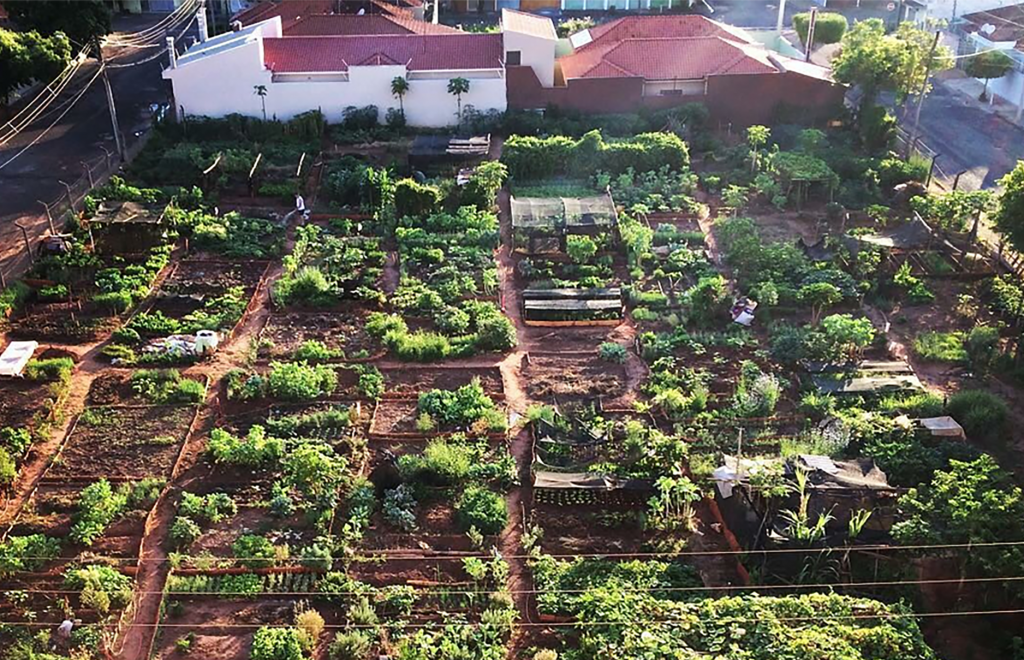
All this abundance comes from the 62 community gardens scattered throughout Birigui, a city of 123,000 inhabitants in the northwest of the state of São Paulo.
All this abundance comes from the 62 community gardens scattered throughout Birigui, a city of 123,000 inhabitants in the northwest of the state of São Paulo. (Photo: internet reproduction)

In Rondonópolis, south of Mato Grosso State, the residents planted vegetables and greens on land that was abandoned and very polluted.

In Palmas, an elderly couple took over a vacant lot in front of their house almost a decade ago. The experience worked and today the whole community benefits.

In greater Goiânia, a garden is part of the project, developed by an NGO which selected ten schools for the purpose of developing a healthy diet. There are more than 20 kinds of vegetables and even fruit. Everything is used to feed the students.

“Surely their food is much better and has a different taste. Think about it, students have snacks and think: ‘Wow… I was there the day I planted it,'” says Carla Oliveira, a volunteer with the NGO Ecomamor.

In Birigui, the vegetable garden project also reached the schools. Students of all ages are taught how to grow vegetables. “In addition to producing food, they eat at school and take it home too,” says Meiriane Aparecida Beltran, Secretary of Education.

Source: G1

This article was produced by The Rio Times’ automated newsroom system. How we use AI · Report an error

Read More from The Rio Times

The Rio Times · Power Map
See who really holds power in Latin America
Click to open the Power Map

Rotate for Best Experience

This report is optimized for landscape viewing. Rotate your phone for the full experience.