Isolated Indigenous Peoples Are Also in Voluntary Isolation
RIO DE JANEIRO, BRAZIL – “We were in the village and everyone started dying. Some moved into the forest and died there. We were all sick and weak, and we couldn’t even bury the dead. The bodies were rotting in the ground. The vultures ate everything.”

Epidemics can plague indigenous communities in a matter of days. Picture the sheer effort to keep going while your loved ones are dying around you for no apparent reason and with overwhelming speed.
The devastating effects of new diseases are painfully familiar to the indigenous peoples of the Americas, up to 90 percent of whom have been killed by diseases introduced by settlers over the past 500 years.
The above quote is from Ake, a Panará man. The Panará are an indigenous people who desperately avoided outside contact until the early 1970s, when invaders opened a road in the middle of their home in the forest. Between 1973 and 1975, more than a third of the Panará population died from diseases and 80 percent died within eight years.
The catastrophic impact of new diseases is one of the reasons why today there are more than 100 indigenous peoples in the world who deliberately avoid contact with outsiders. They are known as isolated indigenous peoples, and most live in the Amazon. Their previous encounters with outsiders have probably led to many deaths from the violence and diseases brought by those invading their lands.
Many isolated Indians fled and some are descendants of the rubber boom survivors of the early 20th century. Some suffered genocidal attacks decades ago, others more recently.
There is nothing romantic about avoiding contact. It is probably very difficult – imagine being the “last of your people”, the only survivor who witnessed the massacre of your entire community and now lives entirely alone.
This lonely man lives in a stretch of the Amazon forest, surrounded by hostile farmers. We do not know who he is, the name of his people or his language. His people were most likely massacred by cattle ranchers who invaded the region at a tremendous speed in the 1970s and 1980s, using armed men to “hunt” and murder isolated indigenous peoples, and thus occupy their lands.
Today, he fiercely refuses any contact and continues to hunt and grow food in his gardens in the forest. When he dies, all traces of his people, his language and his knowledge will be forever gone.
For some people, this quest for survival meant adjusting their ways of life: they were forced to abandon village life and stopped growing food in the forest, to become nomadic hunter-gatherers leaving as few traces as possible and moving quickly to avoid contact.
They never know when the next attack will occur, when the next wave of epidemics will strike their families. Some live in near-total silence to avoid being spotted, mimicking the sounds of birds and animals in the forest to communicate, always alert to the noise of invaders, and ready to flee when they hear the warning cry of the macaws. Many have even stopped having children.
Concern for the survival of isolated indigenous peoples in Brazil is growing, as the coronavirus seems to be sweeping the country. The indigenous health service is precarious and does not receive sufficient funding for even basic assistance. Meanwhile, President Bolsonaro rejects the pandemic as anything serious.
He and his allies want to ease access for government officials to contact isolated indigenous peoples, contrary to the policy of refraining from forcing contact that serves as a model for the whole world.
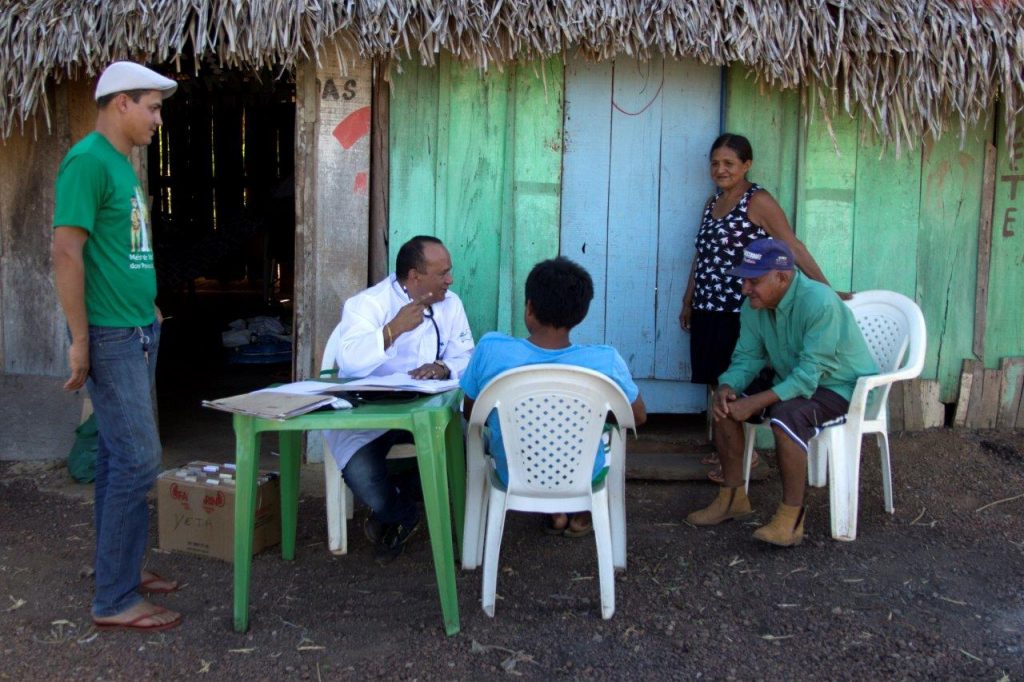
Many indigenous organizations fear that this will be used by evangelical missionaries to try to make contact with these peoples. The ‘Missão Novas Tribos’ (New Tribes Mission – MNT), now called Ethnos360 in the United States, one of the world’s most extremist mission organizations, has just bought a helicopter.
The president of the organization announced that its new acquisition “will help in the whole process of reaching villages where there is no landing strip more easily”. Indigenous leaders of Javari Valley referred to the MNT’s plans as “a genocidal attack”.
The statistics are shocking – the number of deaths that have occurred due to diseases introduced during and after contact is catastrophic. More than 50 percent of the Matis population died after the first contact in the 1970s. Almost all shamans, who had medical knowledge, perished when the flu decimated them. Bina Matis, who survived the epidemic, reported:
“The first thing I remember was the plane flying over our village. They dropped hatchets, machetes and blankets. Then FUNAI arrived. They came along our trail and left knives and pans in the trees. At first we were scared because white people always seem to want to kill us. So I ran into the forest. Later, we went to FUNAI camp, this being our first contact. They gave us hatchets, machetes and we took two dogs too”.
“We went and came back many times, and the women too. I tried to talk to the white people, but they didn’t understand me. We contracted diseases in their camp, so we fled to the forest. We got pneumonia. A lot of people died. We were affected by many diseases, and now we have no more shamans.”
If governments fail to protect indigenous territories and establish social isolation, the coronavirus could complete the genocide of the isolated indigenous peoples of the Amazon, which began 500 years ago when the first Europeans invaded the Americas.
A few weeks ago, Yanomami shaman and spokesperson Davi Kopenawa called on the UN for support for the isolated Yanomami, who could soon be exterminated by prospectors invading their territory in search of gold. He says the group, known as the Moxihatatea, is in grave danger:
“They have fled many times. But now they can no longer flee. The prospectors then began to steal the food from the fields. The Moxihatetea warriors attacked them with arrows, but the prospectors, more violent, wanted to take revenge by shooting with rifles. I’m deeply concerned. Perhaps soon they will be exterminated. That’s what I believe. The prospectors will no doubt kill them with their rifles and their diseases, their malaria, their pneumonia.”
David’s worst fear may now become a reality: the first coronavirus death among the Yanomami has been confirmed.
The way isolated indigenous peoples live is entirely self-sufficient and sustainable, and any claim that they should be contacted for their own benefit is altogether misguided. They have encyclopedic knowledge of their land, the plants and animals with which they coexist.
Their refined technologies and unique skills, perfected across generations, enable them to obtain food, clothing, medicine, tools, building materials and anything else they need independently. To do so, all they need is their land. When their land is adequately protected, isolated indigenous peoples will continue to thrive.
For over 50 years, Survival International has fought around the world to protect the lands of isolated indigenous peoples. They campaign for their choice to live without contact, for their own survival, to be respected by all.
Join them: for indigenous peoples, for nature, for all of humanity.
Source: El País
More: Brazil news in English, every day from The Rio Times.
This article was produced by The Rio Times’ automated newsroom system. How we use AI · Report an error · Editorial responsibility: Matthias Camenzind, Editor-in-Chief