Logging in Amazon in Three Months is Highest Since 2016
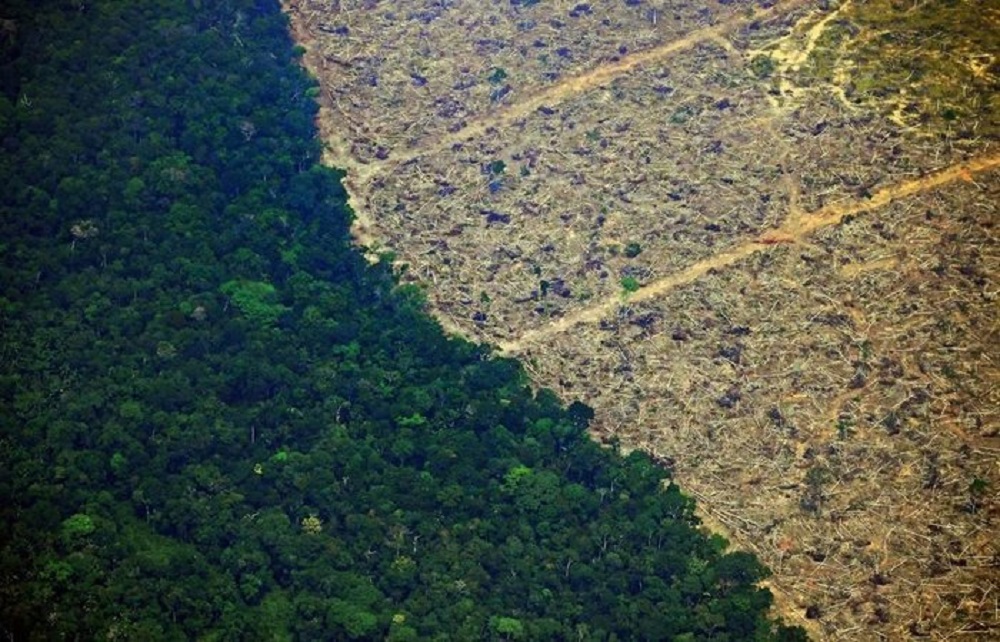
RIO DE JANEIRO, BRAZIL – In just over three months, from August 1st to November 13th, selective logging in the Amazon – when only a few trees are harvested for timber exploitation purposes – has affected an area of 2,133 km2, 35 percent more than the total extraction over the previous 12 months (August 2018 to July 2019, when there was a 1,573 km2 loss), according to O Estado de S. Paulo.

This is reported by the DETER, a rapid satellite detection system from the National Institute for Space Research (INPE), a body under the Ministry of Science and Technology.
The total of 2,133 km2 is the equivalent to the area of the Municipality of São Paulo multiplied by 1.4. This selective cut in the Amazon in just over a quarter is already higher than in each of the three previous INPE monitoring cycles, which run from August to July (2016-2017, 2017-2018 and 2018-2019).
Selective logging data refer to the first wave of forest degradation, when hardwood trees, such as ‘ipê’ (Trumpet or Roble) and ‘jatobá’ (Stinkingtoe) are removed for logging purposes. It is the initial stage of a process that depletes the forest to the point where it is burned or cut down completely – the so-called clear-cutting – for the subsequent creation of pasture, for instance.
INPE’s official deforestation balance refers only to clear-cutting and does not include selective cutting, which is part of another INPE monitoring. This month, INPE showed a 29.5 percent increase in deforestation in the Amazon. This balance, therefore, does not include these sparse losses of trees within the forest.
Last week, Estado newspaper disclosed that Jair Bolsonaro is considering the release of green timber exports – today this sale is illegal. Legally harvested native wood can only be exported after going through some kind of processing, which adds value to the exported product and offers extra protection to the forest since it provides more steps for inspection.
The timber sector expects to raise market revenues from R$600 million (US$150 million) – with processed and legal wood – to approximately R$1.2 billion per year if exports are released. Of the 2,133 km2 of selective logging since August, most of it occurred in Pará (907 km2), Mato Grosso (765 km2) and Amazonas (276 km2). When questioned, the Ministry of Environment and Environment Secretariats of Pará, Mato Grosso, and Amazonas did not wish to comment.
Cause
According to IBAMA’s experts and inspectors, the increase follows the same rationale as the hikes in deforestation (clear-cutting) and would be linked to less stringent inspections. From January to September, fines for crimes against the flora (such as illegal logging) in the Legal Amazon fell 40 percent compared to the same period in 2018.
Satellite images alone cannot differentiate between illegal and legal selective logging, but legal logging can only occur with a management plan approved by the federal or local authority – and there is no evidence that more plans have been approved in recent months.
In addition to the potential to authorize the export of green timber, the president of IBAMA, Eduardo Bim, has relaxed inspection rules and fines for sawmills purchasing illegal timber. According to O Globo, Bim sent a document to inspectors saying that companies that bought timber with fraudulent logging documents cannot be fined by IBAMA unless there is evidence that the buyer knew beforehand that the document was forged.
Forecasts
“On average, 10 to 15 percent of the timber market is being exported. We intend that this volume reaches at least 30 percent,” says Valdinei Bento dos Santos, superintendent of the National Forum on Forestry. The Forum comprises 24 institutions of the country’s timber sector.
Beto Mesquita, from BVRio, which encourages businesses to comply with environmental law, disagrees. He recalls that the international timber market, particularly the United States and the European Union, demands guarantees from buyers in their countries that the products they are importing are legal.
For Paulo Barreto, Imazon researcher, the veto on the sale of green timber is a policy of local economic development, with the processing of logs.
“Releasing log exports will reduce the opportunity for local development. And it can be an environmental issue if it increases exploitation because there is a lot of illegal extraction.”
Source: Estado de S. Paulo.
More: Brazil news in English, every day from The Rio Times.
Editorial responsibility: Matthias Camenzind, Editor-in-Chief · Editorial standards · Report an error