Marches Call for Decriminalization of Cannabis in Brazil
By Lise Alves, Senior Contributing Reporter
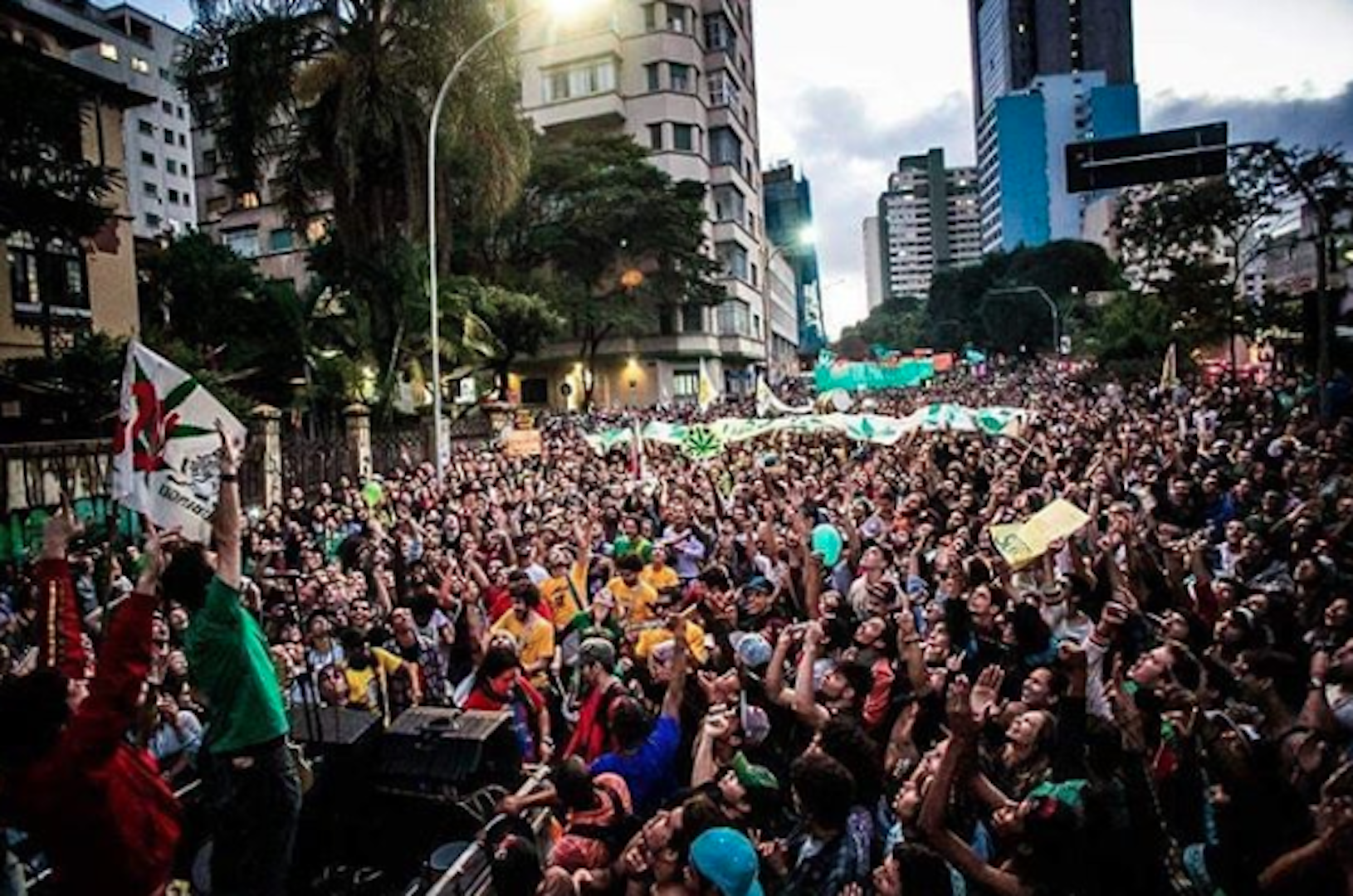
SÃO PAULO, BRAZIL – Thousands gathered on Saturday in São Paulo’s iconic Avenida Paulista to participate in the March for the Decriminalization of Marijuana. Marches such as these have been recorded around Brazil since the beginning of May, with the intent of pressuring Brazil’s Supreme Court to decide in favor of the issue.

“Prohibiting it does not work, prohibition leads to corruption, to violence,” said sociologist and Rio de Janeiro city councillor Renato Cinco during Rio’s march. “We know that marijuana does not kill, but the ban on marijuana kills every day.”
The Supreme Court had scheduled a vote on decriminalization for this coming Wednesday, June 5th, but last week, Presiding Justice Dias Toffoli, removed the case from the Court calendar.
Protesters in these marches claim that the issue is political, and that the government’s “war on drugs” actually only serves as an instrument to criminalize the weaker sectors of society.
“It is usually the poor and blacks who get caught and sent to jail,” says Katia Aparecida Souza. “You don’t see the rich kids from Jardins (an upper-class neighborhood in São Paulo) getting busted. So, criminalization becomes a weapon against the poor and blacks in this society,” she quickly adds before running off to continue shouting.
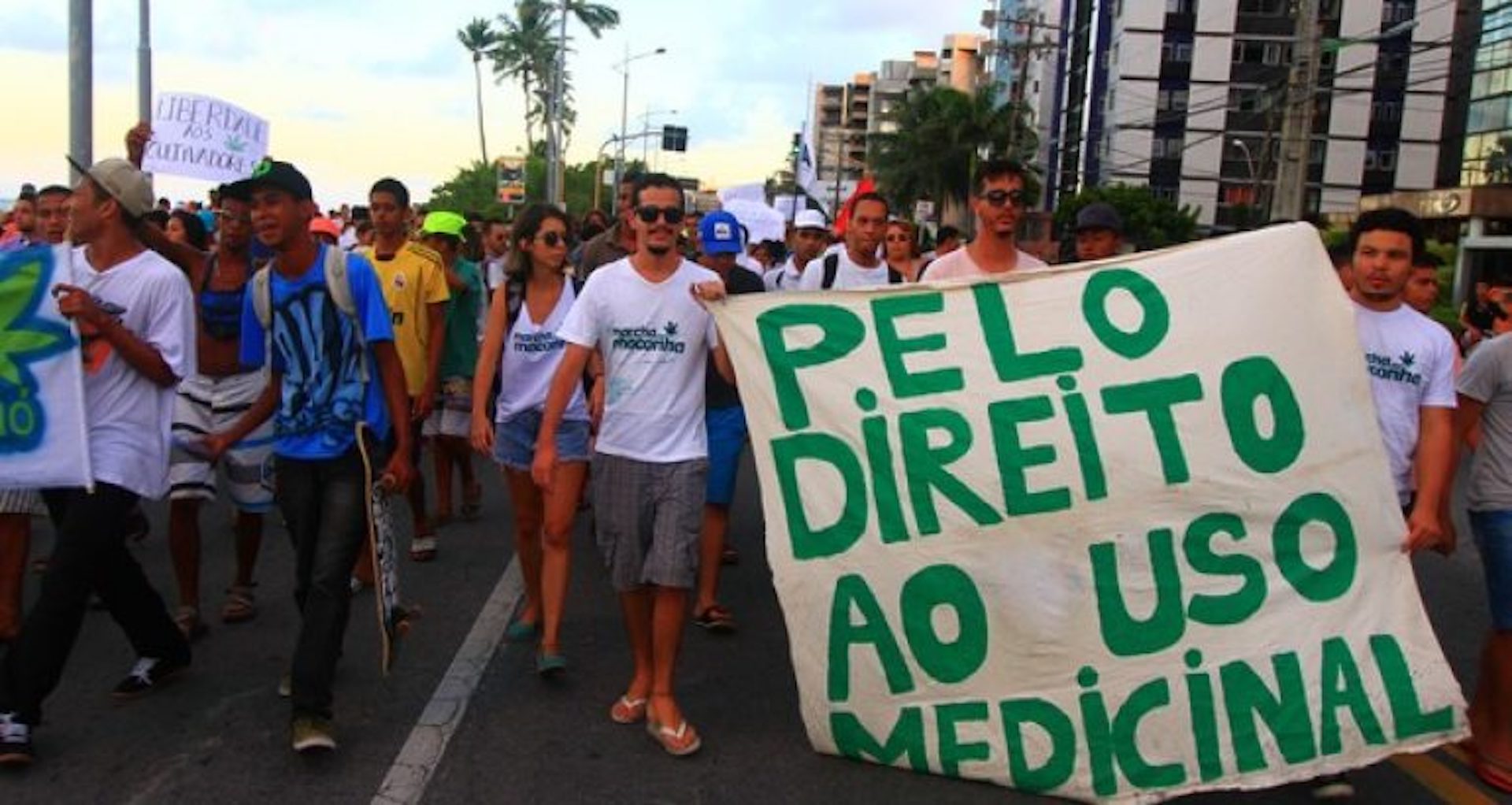
Associations of adults and parents of children with various types of illness whose lives were improved by the use of cannabis-based drugs also attended the march.
“Two years ago, we were on Avenida Paulista with Carol in a wheelchair. In April, we won our habeas corpus. Today, we return to the Paulista Marijuana March. Along with the Medicinal Block. No wheelchair… Happy!” wrote Liane Pereira, mother of nine-year-old Carol, on her social media page.
Carol has Dravet Syndrome, and Ms. Pereira says that before the cannabis-based drugs, her daughter used to have over fifty convulsive attacks per day. With the drug being used, the attacks have ceased, reports the mother.
Another mother at the march also followed behind the Medicinal Block, although she does not know anyone that uses it.
“I can just imagine what it is like to have a son or daughter with a disease whose side effects can be reduced by the drug, but not be able to get it because it’s illegal,” said the woman who asked to be identified as “just Julia”, to the Rio Times.
Although some families have won the right, in court, to either grow cannabis to produce the oil used for their ailing family members, or to receive it through Brazil’s public health system (SUS), the victories are very few.
“Imagine a mother or father from a favela community, without any resources to go to court,” concludes Julia.
For some at the march, decriminalization is just smart economics. “The government loses the revenue of a billion-dollar market, which instead of financing drug traffickers could be invested in the treatment of (chemical) dependents,” said 23-year-old student Paulo Oliveira, while holding a sign reading “Legalize Marijuana Now”.
“Regulated marijuana production also enables the creation of formal jobs,” adds the economics student.
For others, however, Brazil is not prepared to face the effects of decriminalization of marijuana.
The members of the National Forum of Criminal Judges (Fonajuc) issued a statement in December of 2018, pointing out that experiments in several countries, which have decriminalized cannabis use, had not had positive results.
“Either because of the lack of prior preparation of the public health system to receive new and different social demands, or because they were not prepared, in the face of public security, for the possibility of the emergence of the parallel state of the trade of these drugs and, also, for the drug trafficking dispute for the manufacture,” said the judges.
In 2015, when the STF began to vote on the q;uestion, the first three Justices to declare their decisions–Gilmar Mendes, Luis Roberto Barroso and Edson Fachin–voted for decriminalization. At the time, Justice Mendes argued that the use of all drugs, not just marijuana, should be decriminalized.
The voting was suspended in September of 2015 and only scheduled to be re-introduced into the Supreme Court’s calendar last December. Eight Justices still need to vote, but with last week’s decision by Presiding Justice Dias Toffoli to postpone the voting indefinitely, the situation is unclear.
For human rights group Conectas, it is imperative that the country’s Supreme Court decides soon.
“Either the court assumes its role as guardian of individual freedoms with the courage the moment requires or we will be doomed to suffer the unwanted outcomes of our drug policy, such as corruption, violence, overcrowding, and strengthening criminal factions. We must not miss the opportunity to take a step towards a fair, effective and humane drug policy,” wrote Conectas’ executive director, Juana Kweitel, in an op-ed piece in daily Folha de São Paulo.
More: Brazil news in English, every day from The Rio Times.
Editorial responsibility: Matthias Camenzind, Editor-in-Chief · Editorial standards · Report an error
Brazil runoff, Sunday, October 25: Brazil runoff start time and results schedule. Latest: Brazil runoff polls, Flávio 51%, Lula 49%.