IBOV 171,031.73 ▲ 1.85% IPSA 11,338.38 ▲ 0.89% IPC MEX 65,729.18 ▲ 2.14% MERVAL 2,913,184 ▲ 1.30% COLCAP 2,459.23 ▲ 0.61% BVL PERÚ 58,698.13 ▲ 2.60% USD/BRL5.14▼ 0.14% USD/MXN16.95▲ 0.30% USD/CLP914.28— 0.00% USD/COP3,038▼ 1.18% USD/PEN3.35▼ 0.06% USD/ARS1,499▲ 0.12% USD/UYU40.20▲ 1.58% USD/PYG5,996▲ 1.55% USD/BOB11.43▲ 0.41% USD/DOP58.82▲ 0.20% USD/CRC450.05▲ 3.34% USD/GTQ7.62▲ 2.21% USD/HNL26.81▲ 0.31% USD/NIO36.62▲ 0.61% USD/VES778.00▼ 0.13% USD/PAB1.00— 0.00% USD/BZD2.00— 0.00% USD/JMD 157.28 — 0.00% USD/TTD6.71▲ 0.79% EUR/BRL6.00▼ 0.64% BRENT 88.88 ▼ 0.03% WTI 83.11 ▼ 0.11% IRON ORE 161.91 — — COPPER 6.61 ▲ 0.03% GOLD 4,461 ▲ 1.78% SILVER 65.59 ▲ 1.26% SOY 1,184 ▲ 3.20% CORN 480.50 ▲ 10.02% WHEAT 655.00 ▲ 3.93% COFFEE 317.25 ▼ 5.51% SUGAR 16.43 ▼ 1.79% ORANGE JUICE 138.55 ▼ 0.47% COTTON 85.03 ▲ 2.33% COCOA 5,719 ▲ 3.18% BEEF 223.60 ▼ 3.93% CATTLE 339.10 ▼ 3.16% LITHIUM 75.20 ▲ 1.47% PETR4 41.64 ▼ 0.05% VALE3 72.97 ▲ 0.83% ITUB4 38.60 ▼ 1.03% BBDC4 16.85 ▲ 0.36% ABEV3 14.89 ▼ 0.80% BBAS3 19.37 ▲ 0.47% B3SA3 14.26 ▼ 0.21% WEGE3 47.59 ▲ 0.49% PRIO3 59.14 ▼ 0.19% SUZB3 41.33 ▲ 2.35% RENT3 34.68 ▼ 0.09% AZZA3 15.89 ▼ 2.63% CSAN3 3.22 ▼ 1.83% RAIZ4 0.25 — 0.00% PCAR3 2.75 ▼ 0.36% GMAT3 3.65 ▼ 1.08% PSSA3 48.13 ▼ 0.54% CVCB3 1.33 ▼ 2.92% POSI3 3.36 ▲ 2.44% SLCE3 13.34 ▲ 0.30% NATU3 8.14 ▼ 0.73% IBOV 171,031.73 ▲ 1.85% IPSA 11,338.38 ▲ 0.89% IPC MEX 65,729.18 ▲ 2.14% MERVAL 2,913,184 ▲ 1.30% COLCAP 2,459.23 ▲ 0.61% BVL PERÚ 58,698.13 ▲ 2.60% USD/BRL 5.16 ▲ 0.01% USD/MXN 17.06 ▼ 0.24% USD/CLP 913.98 ▲ 0.04% USD/COP 3,140 ▲ 0.03% USD/PEN 3.36 ▼ 0.66% USD/ARS 1,493 ▲ 0.10% USD/UYU 40.27 ▲ 1.24% USD/PYG 5,939 ▲ 1.68% USD/BOB 11.64 ▼ 0.76% USD/DOP 58.34 ▲ 1.25% USD/CRC 445.92 ▲ 0.89% USD/GTQ 7.62 ▲ 2.21% USD/HNL 26.79 ▲ 1.57% USD/NIO 36.62 ▲ 0.69% USD/VES 762.44 ▼ 0.13% USD/PAB 1.00 — 0.00% USD/BZD 2.00 — 0.00% USD/JMD 157.28 — 0.00% USD/TTD 6.70 ▲ 0.61% EUR/BRL 5.95 ▲ 1.01% BRENT 88.88 ▼ 0.03% WTI 83.11 ▼ 0.11% IRON ORE 161.91 — — COPPER 6.61 ▲ 0.03% GOLD 4,461 ▲ 1.78% SILVER 65.59 ▲ 1.26% SOY 1,184 ▲ 3.20% CORN 480.50 ▲ 10.02% WHEAT 655.00 ▲ 3.93% COFFEE 317.25 ▼ 5.51% SUGAR 16.43 ▼ 1.79% ORANGE JUICE 138.55 ▼ 0.47% COTTON 85.03 ▲ 2.33% COCOA 5,719 ▲ 3.18% BEEF 223.60 ▼ 3.93% CATTLE 339.10 ▼ 3.16% LITHIUM 75.20 ▲ 1.47% PETR4 41.64 ▼ 0.05% VALE3 72.97 ▲ 0.83% ITUB4 38.60 ▼ 1.03% BBDC4 16.85 ▲ 0.36% ABEV3 14.89 ▼ 0.80% BBAS3 19.37 ▲ 0.47% B3SA3 14.26 ▼ 0.21% WEGE3 47.59 ▲ 0.49% PRIO3 59.14 ▼ 0.19% SUZB3 41.33 ▲ 2.35% RENT3 34.68 ▼ 0.09% AZZA3 15.89 ▼ 2.63% CSAN3 3.22 ▼ 1.83% RAIZ4 0.25 — 0.00% PCAR3 2.75 ▼ 0.36% GMAT3 3.65 ▼ 1.08% PSSA3 48.13 ▼ 0.54% CVCB3 1.33 ▼ 2.92% POSI3 3.36 ▲ 2.44% SLCE3 13.34 ▲ 0.30% NATU3 8.14 ▼ 0.73%
since 2009
Sunday, August 23, 2026

Brazil Business - Brazil

Brazil’s Marine Economy Produces R$2 Trillion in Revenue per Year

By · June 25, 2019 · 3 min read

Daily Brief

The morning intel from across Latin America. Free.

By subscribing you agree to our privacy policy. We never share your email.

By Richard Mann

RIO DE JANEIRO, BRAZIL – The coastline is a significant source of Brazil’s wealth and is home to half of the country’s population. The sea yields R$2 trillion (US$500 billion) revenue per year, the equivalent to 19 percent of the national Gross Domestic Product.

he Brazilian sea is buoyant. Today we are discussing a pension reform that would save R$1 trillion in ten years. We have R$2 trillion per year in the sea
The Brazilian sea is buoyant. Today the country is discussing a pension reform that would save R$1 trillion in ten years. Brazil has R$2 trillion per year in the sea. (Photo internet reproduction)
One-stop reference
Company Intelligence
Every listed company in Latin America — financials, ownership and structure for 1,450+ companies across 26 exchanges, in one place.
Browse the directory →
RT
Ask Rio Times
Latin American markets, currencies and companies.
Open the full Ask Rio Times →

The estimate was released on Monday, June 24th, by the Interministerial Commission for the Resources of the Sea. Part of the 1st Regional Ministerial Conference of the Americas on Green Economy, the report defends the need to preserve marine resources to ensure sustainable development.

According to Navy Commander Carvalho, presenter of the commission’s report, the maritime economy, which he dubbed the “blue economy”, includes offshore oil and gas production, defense, the country’s 235 ports, maritime transport, marine industry, mineral extraction in addition to oil, tourism, fishing, festivals linked to the sea, and seafood gastronomy. “The Brazilian sea is buoyant. Today we are discussing a pension reform that would save R$1 trillion in ten years. We have R$2 trillion per year revenue in the sea,” he said.

The Blue Amazon

The government’s current main challenge, he said, is to extend the country’s marine area from 4.2 million to 5.7 million square kilometers.

He pointed out that at the end of last year, Brazil submitted to the United Nations the final part of studies showing that the area around Rio Grande, near the coast in Brazil’s South Region, is actually part of the Brazilian continental shelf. “As a result, the Brazilian maritime area will be larger than the Amazon. We have a Blue Amazon, and we need to preserve it,” he said.

Carvalho explained that the UN had not set a deadline for analyzing Brazil’s request. However, he said Brazil was the second country to submit continental shelf mapping to the UN–the first was Russia.
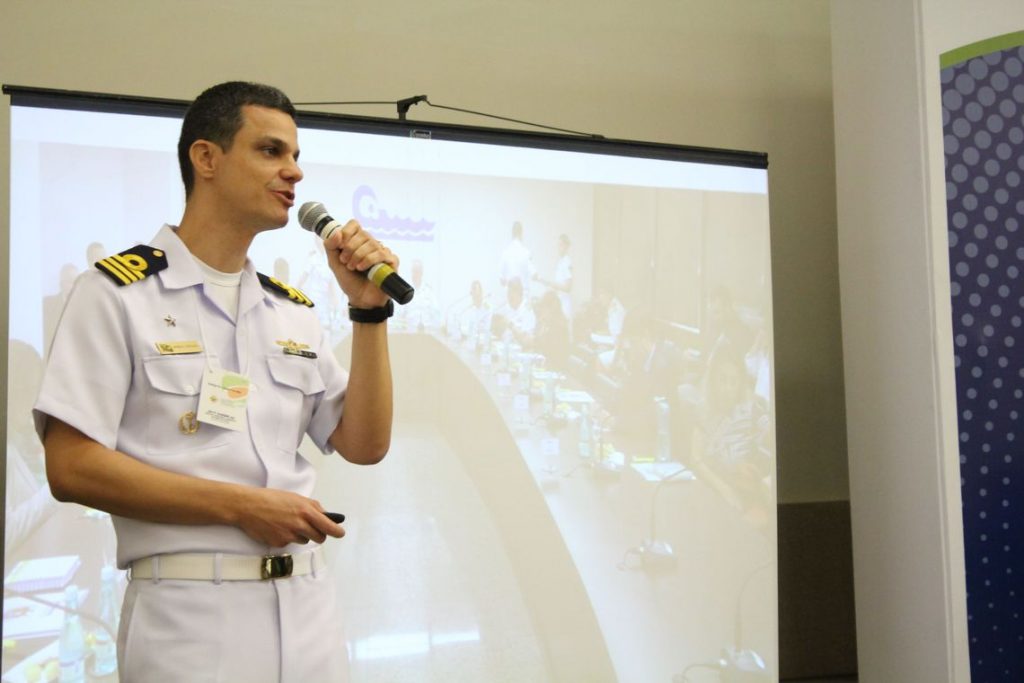
Navy Commander Rodrigo de Campos Carvalho releases estimates about Brazil’s Marine Economy. (Photo internet reproduction)

During the UN Ocean Conference in 2017, Brazil pledged to use marine resources for sustainable development. The country has committed itself to implement the Marine Spatial Planning by 2030, which will provide active management of the marine area and the enforcement of laws.

“The planning aims to guarantee the sovereignty, the shared and sustainable use of the marine environment and legal security for international investors to bring about sustainable development,” he said.

He added that the interministerial commission is engaged in combating marine pollution through the National Plan to Combat Maritime Litter. Moreover, at the end of last year, the government created environmental protection areas surrounding the islets of Trindade, São Pedro and São Paulo, increasing the Brazilian protected marine area by 23 percent.

The Interministerial Commission for the Resources of the Sea, established in 1974, comprises 15 ministries, with a plenary meeting every four months and technical meetings every month. .


This article was produced by The Rio Times’ automated newsroom system. How we use AI · Report an error

Read More from The Rio Times

The Rio Times · Power Map
See who really holds power in Latin America
Click to open the Power Map

Rotate for Best Experience

This report is optimized for landscape viewing. Rotate your phone for the full experience.