New Mato Grosso Law Permits Four-fold Increase in Logging without Tree Replacement
RIO DE JANEIRO, BRAZIL – In the Amazon state of Mato Grosso, each enterprise using wood as raw material will be allowed to extract up to 297,000 trees per year in the next few months without the need for forest replacement.
The amount is equivalent to 49,500 cubic meters of timber logs and concerns the product sold legally, not illegal deforestation. Previously, logging was limited to 12,000 cubic meters (or 72,000 trees).

Each cubic meter corresponds to about six trees. The law provides that the company using lumber as raw material must offset this extraction by planting trees. Lumber is mainly used to generate energy for small, medium and large-scale companies, from grain dryers to ethanol producers.
The increase in the amount by which extraction is allowed without replacement is part of a Complementary Law, proposed by the state government and approved by the Legislative Assembly on October 22nd. It depends solely on the approval by Governor Mauro Mendes to become effective, which should happen in coming weeks.
Mato Grosso is the only state, of the nine states in the Amazon region, to effect this change.
The project provides that only those extracting more than 49,500 cubic meters per year will be required to replace the wood harvested from nature. An informal study carried out by the Mato Grosso Prosecutor’s Office found that this year, no company extracted more than 24,000 cubic meters of wood.
“Considering the data, the conclusion reached is that a very high limit has been set,” said Vinicius Silgueiro, coordinator of the Territorial Intelligence Center of the Centro Vida Institute (ICV). This private organization has become a reference in the environmental area in Mato Grosso.
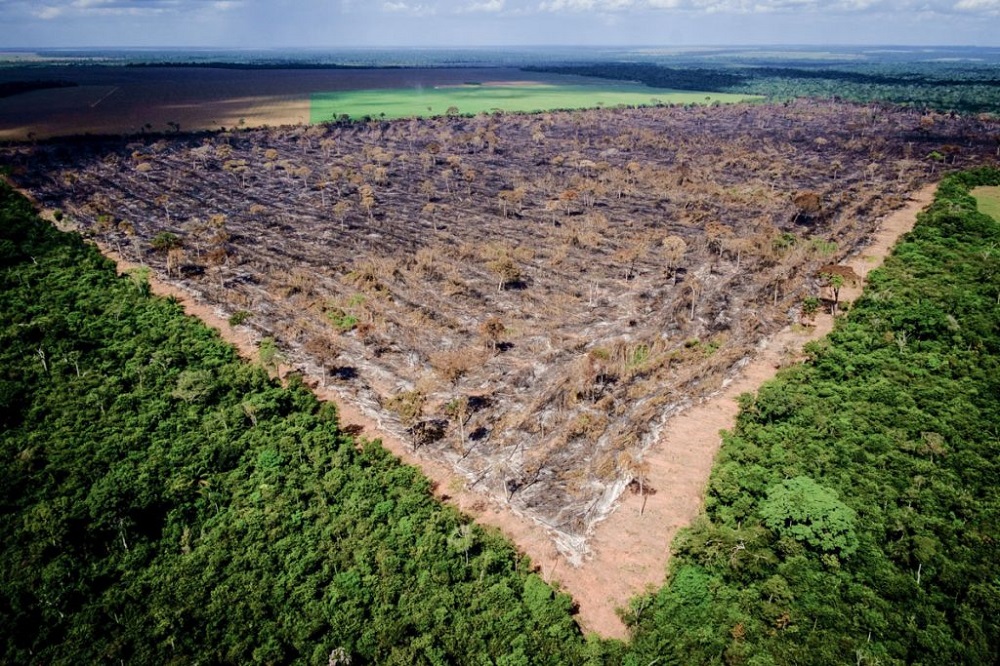
Although lumber is a product that is legally traded, the legislative change has lit a warning signal among environmentalists who operate in the Amazon region. It occurs at a time when Mato Grosso is becoming the largest producer of tropical timber in the Amazon, as well as the second-largest deforester in the biome, behind Pará alone.
From January to September this year, Mato Grosso has recorded deforestation in 1,617 square kilometers of its territory, according to data from the Deter-B system, developed by the National Institute for Space Research (INPE).
In Brazil, the Amazon forest covers nine states and this year it broke records in terms of forest fires, generating one of the main crises of Jair Bolsonaro’s government. “This very critical moment, in which deforestation and fires increase, is not the most appropriate to discuss a law that facilitates exploitation of the forest,” says researcher Paulo Amaral, of the Institute of Man and the Environment of the Amazon (IMAZON).
In Silgueiro’s opinion, for the time being, it is not possible to link an “automatic increase in deforestation”. “But we can’t rule out this option because monitoring is generally poor,” said the expert.
A survey conducted by the ICV in partnership with the State Secretariat of the Environment and published last October 17th, shows that 39 percent of all lumber produced in Mato Grosso comes from illegal deforestation. There were 60,400 hectares of illegally logged forests between August 2016 and July 2017, the latest data available in official records.
Ironically, although he championed this change in the law, Governor Mendes, while at an international event on forests in New York in September, asked for a further financial contribution to fight illegal deforestation in the Amazon.
“We need the world, the world’s wealthiest countries, to participate, not only in our state but in our country. To participate in tropical forest areas, doing their part, providing the financial contributions pledged and agreed in meetings that have already taken place around the world,” he said in a panel with other governors.
In a statement, the Environment Secretariat justified the change in the law as an adaptation to the Brazilian Forest Code, and denied that it is an incentive to deforestation. It further said that a technical committee with representatives of civil society and public bodies has extensively debated the issue, and claimed that the goal was to categorize consumers of lumber according to the size of the enterprise.
“Entrepreneurs are required to submit a project to demonstrate how they will meet the demand for woody raw materials through a Sustainable Sourcing Plan (PSS),” says an excerpt from the note sent to the story.
In fact, the Forest Code cites the PSS, but at no point does it deal with the limit of 49,500 cubic meters of wood as a parameter to define the size of consumers. It is up to each state to define this limit.
The pequi (souari nut) and chains
Another issue addressed in the bill was the authorization to cut down the ‘pequizeiro’ (pequi fruit tree) in the Amazon biome. Previously, Complementary Law 233 of 2005 prohibited the cutting and marketing of this tree, as well as rubber and Brazil nut tree species throughout the state.
The latter two will remain protected, as long as they are in a native, primitive and regenerated area, while the pequi fruit tree will only remain protected in the savanna, should the law be sanctioned.
However, one-third of the state is a kind of transition area between the savanna and the Amazon. “Knowing where one begins and where the other ends is difficult. It’s mixed,” Silgueiro alerted.
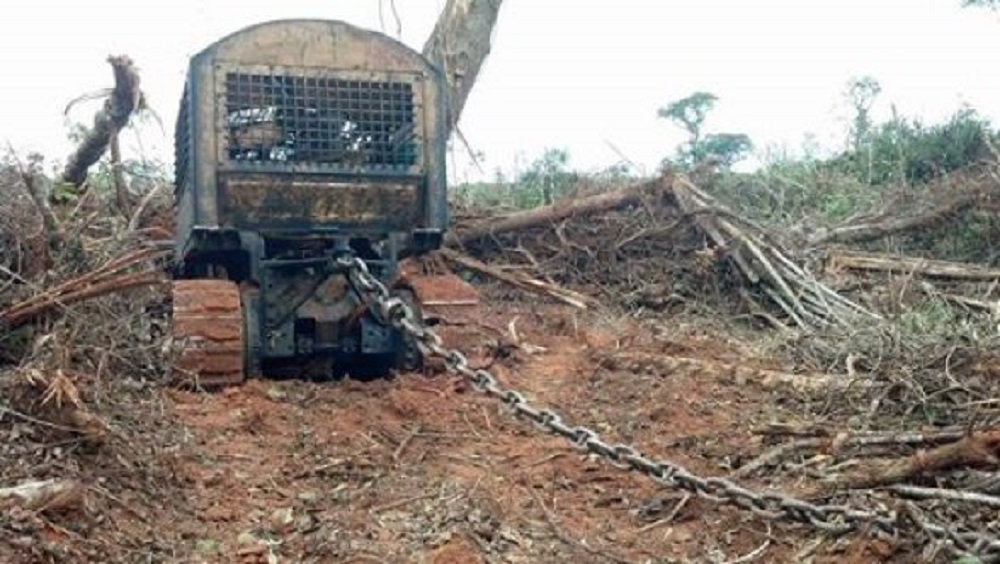
In the opinion of leftist Lúdio Cabral, a state deputy who objected to the project, when approving this change the government intended to ease the deforestation of areas for planting crops or as pastures for cattle herds. “It is easier to deforest with machines or with chains without protecting the pequi tree, because it will no longer be in their way,” he said.
Chain logging is an illegal technique in which two tractors use a chain attached to each to knock down all the vegetation they find in their way as they travel along parallel routes. Videos on the Internet show how it works.
The opposition to Mauro Mendes’ administration is seeking some legal means to prevent this law from coming into force. Before being approved on October 22nd, the bill had been rejected earlier in the month. At that time, it was expected that each project could extract up to 50,000 cubic meters of logs without the need for reforestation.
With this defeat, the governing coalition submitted an amendment to another legislative proposal, one dealing with the pequi tree, and changed the limit of lumber extraction.
Source: El Pais
More: Brazil news in English, every day from The Rio Times.
This article was produced by The Rio Times’ automated newsroom system. How we use AI · Report an error · Editorial responsibility: Matthias Camenzind, Editor-in-Chief