Mercosur-EU Agreement Could Have US$79 Billion Impact on Brazilian Economy
RIO DE JANEIRO, BRAZIL – The estimate is from the National Confederation of Trade in Goods, Services and Tourism (CNC), which released yesterday, October 11th, a study on the subject during the 2nd Conference on International Trade and Services of Mercosur (CI19), held at the organization’s headquarters, in Rio de Janeiro.
Considering the reduction of non-tariff barriers, the impact could reach US$112 billion in the period, according to the CNC.

The figures are slightly below those published by the Brazilian government, of US$87.5 billion and US$125 billion, including the non-tariff barriers in 15 years.
José Roberto Tadros, president of the CNC, explained that Brazil currently holds the rotating interim presidency of the Mercosur Council of Chambers of Commerce (CCCM), and therefore puts itself in the position of leading the debates on the agreement.
Trade relationship
“Foreign market is trading, so we’re in this context. Not only in the trade relationship but also in relation to tourism, services, so this is the place to deal with these issues and international relations”, he noted.
CNC economist Fábio Bentes, one of the people behind the study, explains that the amount was obtained by adding the trade balance, estimated at US$66 billion, to the aggregate investment of US$13 billion, plus US$33 billion for reducing non-tariff barriers such as phytosanitary, to reach US$112 billion.
“We took into account Brazil’s expected growth in the coming years, on the order of two or 2.5 percent, and Europe’s growth, which is a little lower, of 1.2 percent, but given the size of the continent’s economy, this also helps to maximize the agreement’s positive impact. Another supposition is the exchange rate, between R$3.80 and R$4 until 2024, according to the Central Bank’s Focus Bulletin, and then readjusted by inflation,” he argued.
In his opinion, the agreement is historic and will benefit exporters, importers, and consumers.
“From the standpoint of our exports, the trend is to benefit the agricultural export sector. Brazil is the second-largest exporter of agricultural products to Europe and will overtake the United States in a matter of two or three years. From the perspective of imports of goods and services, if we have access to quality products without high tariff barriers, we will import goods or services at a lower price and the population will have more competitive prices” explained the economist.
Carlos Arecco, director of the Argentinian Chamber of Commerce and Services, stressed the significance of opening Europe to the Mercosur countries.
“A market like Europe, with a quarter of the world’s Gross Domestic Product (GDP) in play, is a tremendously important thing. We have to work and get the small print right in the agreements that the governments of Mercosur and the European Union signed, [they] had 20 years to close this agreement.”
“Now, it’s up to us to push this through. Today, trade and services are virtually 70 to 80 percent of business in the world,” he said.
Hassan Mourat, Lebanon’s minister of state for foreign trade, who also attended the conference, explained that his country also hopes to be able to join this agreement with Europe, as other Arab countries have done, in addition to bolstering trade and friendly relations with Brazil, which, he said, is home to some 12 million people of Lebanese and Arab origin.
“Lebanon is doing everything it can to become a free trade zone in order to flow all the goods coming from Latin America, acting as a hub for other countries like China and the Middle East. On the other hand, [it intends] to reinforce this friendship between Brazil and Lebanon and also the trade and tourism relations,” he said.
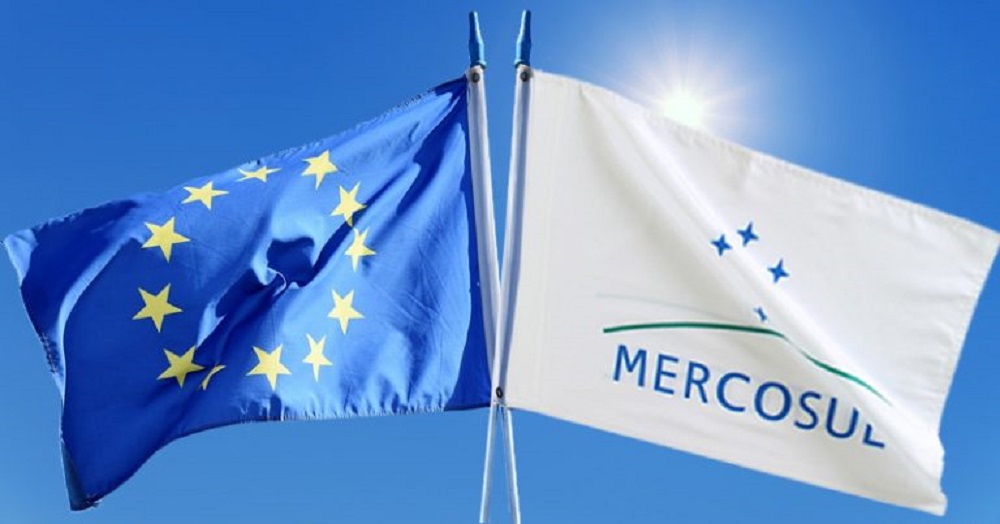
The Mercosur-EU agreement has yet to be ratified by each of the 32 countries that make up the two blocs in order to become effective. Negotiations began in 1999.
Source: Agência Brasil
For the full picture, see our Mercosur EU Trade Deal: Complete Guide.
More: Brazil news in English, every day from The Rio Times.
This article was produced by The Rio Times’ automated newsroom system. How we use AI · Report an error · Editorial responsibility: Matthias Camenzind, Editor-in-Chief
Brazil runoff, Sunday, October 25: Brazil runoff date. Latest: Brazil runoff polls, Flávio 51%, Lula 49%.