Moody’s and S&P: Base scenario for Brazil is respecting the spending cap, but there are risks
RIO DE JANEIRO, BRAZIL – “Our baseline scenario continues to be compliance with the spending cap. There may be reallocation [of spending within the ceiling], but that depends on the authorities,” commented Samar Maziad, vice president and senior analyst at Moody’s, in an interview with Valor.
According to her, Moody’s has been pointing out for some time that the fiscal issue is the main weakness of the Brazilian rating, which only increased last year, with the large fiscal package to combat the pandemic, which made the debt approach 90% of GDP.

Now, however, Samar points out that the main risk for Brazil is precisely the coronavirus pandemic, which has direct effects on the fiscal result and growth dynamics. Despite the “stable” outlook assigned by Moody’s to Brazil’s “Ba2” rating in May last year, she says that the risks seem to have grown in recent weeks, due to the worsening pandemic and political “noise.”
“The scenario is a bit mixed, because the Emergency PEC was approved, with a very important impact in the short term, and there are discussions about privatizations, but on the other hand, there is this political ‘noise’ that can hinder the progress that could be made,” she said. “We know that perhaps the risks may have increased in recent weeks, especially given the pace [of coronavirus cases] and progress in controlling the pandemic,” he added.
S&P also says that pressure on the government to increase spending is likely to continue in the coming months until the pandemic situation improves, potentially creating further episodes of market stress. “This was evidenced by the underestimation of mandatory spending in the recently approved 2021 budget. We expect the economic team to seek to fix this budget issue to comply with fiscal rules,” Lívia Honsel, director and sovereign ratings analyst for Latin America, said in a note.
The agency, however, also says the base case is for preserving the spending cap and implementing a gradual fiscal adjustment that helps preserve market confidence and adequate financing conditions for the government in local markets. “Our relatively low rating on Brazil [“BB-“, with a ‘stable’ outlook] already incorporates the country’s very weak fiscal and debt profile and slow and uneven progress in addressing fiscal imbalances in recent years.”
Moody’s Samar pointed out that the spending cap is Brazil’s main fiscal anchor and that without it, government spending would increase well above inflation, “as it has for several years.” “Without the ceiling, how can we maintain fiscal credibility?” he questioned.
The Moody’s analyst reinforced the need for the authorities to commit to the fiscal consolidation agenda. According to her, the approval of an administrative reform would be important to help the fiscal issue in the medium to long term, but more work needs to be done to deal with the issue of mandatory spending. “Investors have a lot of questions about how to maintain the spending ceiling year after year.”
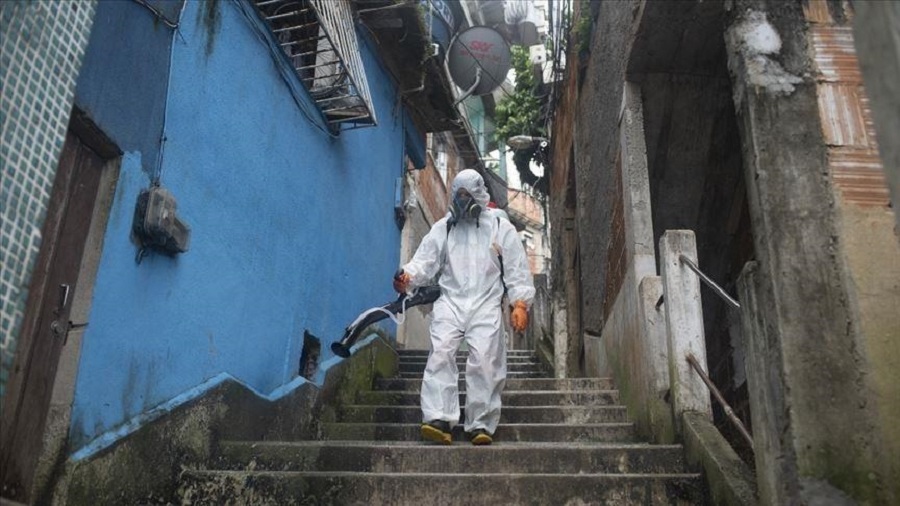
Samar pointed out that the uncontrolled pandemic in the country will impact growth dynamics and also public accounts. “Unfortunately the pace of vaccination is going to impact activity, Brazil’s situation is one of the worst in the world and there are pressures on new mobility restrictions. So it’s going to impact growth, in addition, of course, to the terrible impact on the loss of life.”
Fitch, which has a “BB-” rating for Brazil, with a negative outlook, declined to comment.
Source: Valor
More: Brazil news in English, every day from The Rio Times.
This article was produced by The Rio Times’ automated newsroom system. How we use AI · Report an error · Editorial responsibility: Matthias Camenzind, Editor-in-Chief