IBOV 177,866 ▲ 2.97% IPSA 11,057 ▲ 0.28% IPC MEX 66,496 ▲ 0.59% MERVAL 3,280,224 ▲ 2.43% COLCAP 2,307.67 ▲ 0.65% BVL PERÚ 56,194.27 ▲ 1.29% USD/BRL 5.11 — 0.00% USD/MXN17.48▲ 0.02% USD/CLP923.90▼ 0.41% USD/COP3,237▼ 0.27% USD/PEN3.41▲ 0.44% USD/ARS1,487▼ 0.03% USD/UYU40.22▲ 1.37% USD/PYG6,055▲ 1.45% USD/BOB10.14▲ 4.01% USD/DOP58.61▲ 0.22% USD/CRC448.82▲ 1.41% USD/GTQ7.63▲ 2.31% USD/HNL26.72▲ 0.09% USD/NIO 36.62 — 0.00% USD/VES719.54▼ 0.13% USD/PAB1.00— 0.00% USD/BZD2.00— 0.00% USD/JMD158.09▲ 0.40% USD/TTD6.75▲ 1.44% EUR/BRL5.84▲ 0.35% BRENT 77.79 ▲ 2.34% WTI 73.17 ▲ 2.46% IRON ORE 161.91 — — COPPER 6.26 ▲ 0.44% GOLD 4,077 ▼ 0.66% SILVER 58.84 ▼ 1.62% SOY 1,197 — 0.00% CORN 465.50 ▲ 6.28% WHEAT 637.25 ▲ 0.83% COFFEE 329.70 ▼ 3.88% SUGAR 14.70 ▼ 1.21% ORANGE JUICE 143.25 ▼ 4.44% COTTON 81.35 ▲ 1.79% COCOA 5,649 ▼ 4.56% BEEF 230.55 ▼ 2.00% CATTLE 354.60 ▼ 0.44% LITHIUM 72.32 ▼ 0.69% PETR4 39.65 ▲ 1.12% VALE3 74.18 ▲ 1.41% ITUB4 44.30 ▲ 4.02% BBDC4 18.86 ▲ 4.78% ABEV3 15.82 ▲ 0.64% BBAS3 20.58 ▲ 2.90% B3SA3 15.42 ▲ 4.26% WEGE3 46.51 ▲ 1.68% PRIO3 55.45 ▼ 0.29% SUZB3 41.55 ▲ 1.27% RENT3 41.10 ▲ 4.31% AZZA3 19.10 ▲ 3.47% CSAN3 4.07 ▲ 5.44% RAIZ4 0.35 ▼ 5.41% PCAR3 2.73 ▼ 1.09% GMAT3 3.97 ▲ 1.02% PSSA3 54.97 ▲ 3.04% CVCB3 1.25 — 0.00% POSI3 3.97 ▲ 3.12% SLCE3 14.02 ▲ 1.67% NATU3 8.68 ▲ 2.60% BRKM5 6.63 ▲ 4.25% RANI3 8.01 ▲ 1.91% CSNA3 5.18 ▲ 7.92% CMIN3 5.23 ▲ 8.28% USIM5 8.45 ▲ 1.20% GGBR4 23.01 ▲ 2.36% ENEV3 27.55 ▲ 5.15% CPFE3 47.87 ▲ 3.41% CMIG4 11.38 ▲ 2.71% EQTL3 40.91 ▲ 3.54% LREN3 14.62 ▲ 3.32% VIVT3 35.75 ▲ 3.62% RAIL3 14.36 ▲ 4.44% KLABIN 17.54 ▲ 0.80% RAIA DROGASIL 18.77 ▲ 3.53% RDOR3 36.02 ▲ 2.48% HAPV3 10.60 ▲ 5.26% FLRY3 16.42 ▲ 4.25% SMTO3 16.37 ▲ 1.99% UGPA3 30.71 ▲ 2.03% VBBR3 33.00 ▲ 2.80% BBSE3 40.35 ▲ 2.72% BPAC11 58.73 ▲ 5.48% CURY3 34.21 ▲ 4.62% AERI3 2.09 ▲ 1.46% VIVARA 23.53 ▲ 4.21% COMPASS 25.50 ▲ 3.32% VAMOS 3.06 ▲ 3.38% SANB11 27.62 ▲ 5.22% ASAI3 8.87 ▲ 4.85% SBSP3 31.11 ▲ 3.70% WALMEX 49.31 ▲ 0.59% GMEXICO 198.62 ▲ 1.68% FEMSA 223.20 ▲ 0.37% CEMEX 21.82 ▲ 0.51% GFNORTE 186.51 ▲ 0.63% BIMBO 56.06 ▲ 0.23% TELEVISA 9.74 ▲ 2.63% AMX 22.70 ▲ 0.27% GAP 412.01 ▼ 0.41% ASUR 285.12 ▲ 0.53% OMA 235.73 ▼ 0.95% KOF 182.08 ▲ 0.65% GRUMA 282.99 ▲ 0.14% KIMBER 38.13 ▼ 0.81% SQM-B 67,750 ▼ 1.95% COPEC 6,139 ▲ 1.98% BSANTANDER 79.00 ▲ 1.94% FALABELLA 5,905 ▲ 0.92% ENELAM 85.40 ▲ 1.47% CENCOSUD 2,045 ▼ 0.55% CMPC 1,109 ▲ 1.32% BANCO CHILE 188.88 ▲ 1.01% LATAM AIR 26.26 ▼ 0.53% YPF 74,450 ▼ 1.75% GGAL 8,350 ▲ 5.96% PAMPA 5,185 ▼ 0.38% TXAR 671.00 ▲ 0.98% ALUAR 978.00 ▲ 0.98% TGS 9,610 ▲ 3.22% CEPU 2,405 ▲ 3.89% MIRGOR 17,375 ▲ 1.02% COME 45.90 ▲ 1.06% LOMA NEGRA 3,583 ▲ 2.43% BYMA 314.00 ▲ 1.37% TELECOM ARG 4,248 ▲ 3.09% ECOPETROL 15.59 ▲ 1.27% BANCOLOMBIA 82.95 ▲ 2.50% GRUPO AVAL 5.08 ▲ 1.20% CREDICORP 400.81 ▲ 2.27% SOUTHERN COPPER 175.83 ▲ 0.80% BUENAVENTURA 30.00 ▲ 1.52% MERCADOLIBRE 1,852 ▲ 2.46% NUBANK 13.76 ▲ 0.66% XP 16.92 ▲ 3.11% PAGSEGURO 9.25 ▲ 2.78% STONE 11.21 ▲ 2.28% GLOBANT 29.96 ▼ 4.25% TECNOGLASS 43.90 ▲ 1.76% GAP AIRPORT 235.64 ▲ 0.50% ASUR 285.12 ▲ 0.53% OMA AIRPORT 108.09 ▼ 0.22% AMX ADR 26.04 ▲ 0.77% FEMSA ADR 127.70 ▲ 0.55% CEMEX ADR 12.48 ▲ 0.89% PETROBRAS ADR 17.32 ▲ 1.70% VALE ADR 14.46 ▲ 1.69% ITAU ADR 8.62 ▲ 4.11% SANTANDER BR 5.39 ▲ 4.86% AMBEV ADR 3.07 ▲ 0.99% CSN 1.01 ▲ 5.79% GERDAU 4.50 ▲ 2.04% LATAM ADR 56.45 ▼ 1.03% BTC 63,016 ▼ 1.16% ETH 1,781 ▼ 1.39% SOL 76.25 ▼ 0.81% XRP 1.08 ▼ 0.84% BNB 569.02 ▼ 0.86% ADA 0.16 ▼ 1.52% DOGE 0.07 ▼ 0.64% AVAX 6.66 ▲ 4.03% LINK 7.97 ▼ 0.28% DOT 0.83 ▼ 1.56% LTC 43.72 ▼ 0.57% BCH 238.52 ▼ 0.60% TRX 0.33 ▼ 0.45% XLM 0.18 ▼ 1.44% HBAR 0.07 ▼ 0.23% NEAR 1.91 ▲ 1.29% ATOM 1.54 ▼ 1.35% AAVE 95.82 ▼ 1.28% SELIC 14.25% EMBRAER 84.60 ▲ 0.88% EMBRAER ADR 66.01 ▲ 0.72% JBS 11.91 ▲ 1.53% JBS BDR 60.78 ▲ 1.22% MBRF3 15.55 ▲ 0.91% MBRFY 2.97 ▼ 1.00% INTER 5.82 ▲ 1.93% IBOV 177,866 ▲ 2.97% IPSA 11,057 ▲ 0.28% IPC MEX 66,496 ▲ 0.59% MERVAL 3,280,224 ▲ 2.43% COLCAP 2,307.67 ▲ 0.65% BVL PERÚ 56,194.27 ▲ 1.29% USD/BRL 5.11 — 0.00% USD/MXN 17.48 ▲ 0.04% USD/CLP 923.90 ▼ 0.41% USD/COP 3,237 ▼ 0.27% USD/PEN 3.41 ▲ 0.44% USD/ARS 1,487 ▼ 0.03% USD/UYU 40.22 ▲ 1.37% USD/PYG 6,055 ▲ 1.45% USD/BOB 10.14 ▲ 4.01% USD/DOP 58.61 ▲ 0.22% USD/CRC 448.82 ▲ 1.41% USD/GTQ 7.63 ▲ 2.31% USD/HNL 26.72 ▲ 0.09% USD/NIO 36.62 — 0.00% USD/VES 719.54 ▼ 0.13% USD/PAB 1.00 — 0.00% USD/BZD 2.00 — 0.00% USD/JMD 158.09 ▲ 0.40% USD/TTD 6.75 ▲ 1.44% EUR/BRL 5.84 ▲ 0.35% BRENT 77.79 ▲ 2.34% WTI 73.17 ▲ 2.46% IRON ORE 161.91 — — COPPER 6.26 ▲ 0.44% GOLD 4,077 ▼ 0.66% SILVER 58.84 ▼ 1.62% SOY 1,197 — 0.00% CORN 465.50 ▲ 6.28% WHEAT 637.25 ▲ 0.83% COFFEE 329.70 ▼ 3.88% SUGAR 14.70 ▼ 1.21% ORANGE JUICE 143.25 ▼ 4.44% COTTON 81.35 ▲ 1.79% COCOA 5,649 ▼ 4.56% BEEF 230.55 ▼ 2.00% CATTLE 354.60 ▼ 0.44% LITHIUM 72.32 ▼ 0.69% PETR4 39.65 ▲ 1.12% VALE3 74.18 ▲ 1.41% ITUB4 44.30 ▲ 4.02% BBDC4 18.86 ▲ 4.78% ABEV3 15.82 ▲ 0.64% BBAS3 20.58 ▲ 2.90% B3SA3 15.42 ▲ 4.26% WEGE3 46.51 ▲ 1.68% PRIO3 55.45 ▼ 0.29% SUZB3 41.55 ▲ 1.27% RENT3 41.10 ▲ 4.31% AZZA3 19.10 ▲ 3.47% CSAN3 4.07 ▲ 5.44% RAIZ4 0.35 ▼ 5.41% PCAR3 2.73 ▼ 1.09% GMAT3 3.97 ▲ 1.02% PSSA3 54.97 ▲ 3.04% CVCB3 1.25 — 0.00% POSI3 3.97 ▲ 3.12% SLCE3 14.02 ▲ 1.67% NATU3 8.68 ▲ 2.60% BRKM5 6.63 ▲ 4.25% RANI3 8.01 ▲ 1.91% CSNA3 5.18 ▲ 7.92% CMIN3 5.23 ▲ 8.28% USIM5 8.45 ▲ 1.20% GGBR4 23.01 ▲ 2.36% ENEV3 27.55 ▲ 5.15% CPFE3 47.87 ▲ 3.41% CMIG4 11.38 ▲ 2.71% EQTL3 40.91 ▲ 3.54% LREN3 14.62 ▲ 3.32% VIVT3 35.75 ▲ 3.62% RAIL3 14.36 ▲ 4.44% KLABIN 17.54 ▲ 0.80% RAIA DROGASIL 18.77 ▲ 3.53% RDOR3 36.02 ▲ 2.48% HAPV3 10.60 ▲ 5.26% FLRY3 16.42 ▲ 4.25% SMTO3 16.37 ▲ 1.99% UGPA3 30.71 ▲ 2.03% VBBR3 33.00 ▲ 2.80% BBSE3 40.35 ▲ 2.72% BPAC11 58.73 ▲ 5.48% CURY3 34.21 ▲ 4.62% AERI3 2.09 ▲ 1.46% VIVARA 23.53 ▲ 4.21% COMPASS 25.50 ▲ 3.32% VAMOS 3.06 ▲ 3.38% SANB11 27.62 ▲ 5.22% ASAI3 8.87 ▲ 4.85% SBSP3 31.11 ▲ 3.70% WALMEX 49.31 ▲ 0.59% GMEXICO 198.62 ▲ 1.68% FEMSA 223.20 ▲ 0.37% CEMEX 21.82 ▲ 0.51% GFNORTE 186.51 ▲ 0.63% BIMBO 56.06 ▲ 0.23% TELEVISA 9.74 ▲ 2.63% AMX 22.70 ▲ 0.27% GAP 412.01 ▼ 0.41% ASUR 285.12 ▲ 0.53% OMA 235.73 ▼ 0.95% KOF 182.08 ▲ 0.65% GRUMA 282.99 ▲ 0.14% KIMBER 38.13 ▼ 0.81% SQM-B 67,750 ▼ 1.95% COPEC 6,139 ▲ 1.98% BSANTANDER 79.00 ▲ 1.94% FALABELLA 5,905 ▲ 0.92% ENELAM 85.40 ▲ 1.47% CENCOSUD 2,045 ▼ 0.55% CMPC 1,109 ▲ 1.32% BANCO CHILE 188.88 ▲ 1.01% LATAM AIR 26.26 ▼ 0.53% YPF 74,450 ▼ 1.75% GGAL 8,350 ▲ 5.96% PAMPA 5,185 ▼ 0.38% TXAR 671.00 ▲ 0.98% ALUAR 978.00 ▲ 0.98% TGS 9,610 ▲ 3.22% CEPU 2,405 ▲ 3.89% MIRGOR 17,375 ▲ 1.02% COME 45.90 ▲ 1.06% LOMA NEGRA 3,583 ▲ 2.43% BYMA 314.00 ▲ 1.37% TELECOM ARG 4,248 ▲ 3.09% ECOPETROL 15.59 ▲ 1.27% BANCOLOMBIA 82.95 ▲ 2.50% GRUPO AVAL 5.08 ▲ 1.20% CREDICORP 400.81 ▲ 2.27% SOUTHERN COPPER 175.83 ▲ 0.80% BUENAVENTURA 30.00 ▲ 1.52% MERCADOLIBRE 1,852 ▲ 2.46% NUBANK 13.76 ▲ 0.66% XP 16.92 ▲ 3.11% PAGSEGURO 9.25 ▲ 2.78% STONE 11.21 ▲ 2.28% GLOBANT 29.96 ▼ 4.25% TECNOGLASS 43.90 ▲ 1.76% GAP AIRPORT 235.64 ▲ 0.50% ASUR 285.12 ▲ 0.53% OMA AIRPORT 108.09 ▼ 0.22% AMX ADR 26.04 ▲ 0.77% FEMSA ADR 127.70 ▲ 0.55% CEMEX ADR 12.48 ▲ 0.89% PETROBRAS ADR 17.32 ▲ 1.70% VALE ADR 14.46 ▲ 1.69% ITAU ADR 8.62 ▲ 4.11% SANTANDER BR 5.39 ▲ 4.86% AMBEV ADR 3.07 ▲ 0.99% CSN 1.01 ▲ 5.79% GERDAU 4.50 ▲ 2.04% LATAM ADR 56.45 ▼ 1.03% BTC 63,016 ▼ 1.16% ETH 1,781 ▼ 1.39% SOL 76.25 ▼ 0.81% XRP 1.08 ▼ 0.84% BNB 569.02 ▼ 0.86% ADA 0.16 ▼ 1.52% DOGE 0.07 ▼ 0.64% AVAX 6.66 ▲ 4.03% LINK 7.97 ▼ 0.28% DOT 0.83 ▼ 1.56% LTC 43.72 ▼ 0.57% BCH 238.52 ▼ 0.60% TRX 0.33 ▼ 0.45% XLM 0.18 ▼ 1.44% HBAR 0.07 ▼ 0.23% NEAR 1.91 ▲ 1.29% ATOM 1.54 ▼ 1.35% AAVE 95.82 ▼ 1.28% SELIC 14.25% EMBRAER 84.60 ▲ 0.88% EMBRAER ADR 66.01 ▲ 0.72% JBS 11.91 ▲ 1.53% JBS BDR 60.78 ▲ 1.22% MBRF3 15.55 ▲ 0.91% MBRFY 2.97 ▼ 1.00% INTER 5.82 ▲ 1.93%
since 2009
Monday, July 13, 2026

Brazil Business - Brazil

Analysis: New Lost Decade? Pandemic Exposes Brazil’s Old Shortcomings

By · January 30, 2021 · 6 min read

Daily Brief

The morning intel from across Latin America. Free.

By subscribing you agree to our privacy policy. We never share your email.

RIO DE JANEIRO, BRAZIL – How to picture the post-Pandemic world, not in terms of the damage done, but with an eye to the future? And what would be Brazil’s position in this scenario? With this challenge in mind, Columbia University in New York convened more than a dozen panelists at the “Changing Role of the State: Brazil in Global Perspective” online event on Thursday and Friday, January 28th and 29th.

Renowned economists analyzed the shock of Covid-19, which produced uncertainties and had a distinct impact among countries and even regions.

One-stop reference
Company Intelligence
Every listed company in Latin America — financials, ownership and structure for 1,450+ companies across 26 exchanges, in one place.
Browse the directory →
the Brazilian economy may be facing its second lost decade
The Brazilian economy may be facing its second lost decade. (Photo internet reproduction)
RT
Ask Rio Times
Latin American markets, currencies and companies.
Open the full Ask Rio Times →

After undergoing a deep recession, the Brazilian economy may be facing its second lost decade, according to the insights provided by event participants. After emerging as one of the largest economies on the planet, the country lost its growth path and the challenges imposed by the health crisis exposed old shortcomings even more.

“Brazil, despite having a significant stimulus package, has only been able to partially mitigate the impact of the Covid-19 crisis,” says Willem Buiter, one of the guests in the set of ten meetings that the American educational institution promoted to address the challenges of fiscal and monetary policies, inequalities and the attention given to health in different countries.

Considered one of the greatest economic commentators in the field, Buiter compares the economic growth of several countries before the pandemic and the projections for 2021. According to the Columbia professor and former chief economist at Citigroup, “none of the advanced economies are expected to grow by 2022 at the rate they were growing in 2019.”

Emerging markets and developing economies, he adds, “will not return to their 2019 growth levels either.” In the case of Brazil, the economist highlights that the country had already been experiencing a low growth performance before the pandemic.

Despite expecting a return to normality after the first results of vaccination, Buiter states that “one cannot help but also consider the possibility that immunization will take time and infections will continue to rise,” which would imply further losses or growth stagnation in 2021.

Brazil has not solved basic problems like sewage and education

For José Scheinkman, professor of economics at Columbia University and emeritus professor of economics at Princeton, “one of the problems in Brazil is the low quality of government services,” he says, mentioning education and sanitation as examples.

This is the opinion of those who know Brazil intimately. Born in Rio de Janeiro, where his parents were part of the Jewish community, Scheinkman grew up and was educated in Brazil before moving to the United States to pursue a PhD in Economics at Rochester University in New York.

Before that, he completed his bachelor’s degree in Economics (1969) and his master’s degree in Mathematics (1970) at the Federal University of Rio de Janeiro and at the Institute of Pure and Applied Mathematics, both in the capital city of Rio de Janeiro.

The economist highlights that “Brazil, which has always had a history of investing little in education, in recent years has spent about 6.2% of its GDP in education, which places it among the ten countries that invest the most in the area, according to World Bank data. However, the result is much worse than expected,” he laments.

“In the past, some Brazilian cities received oil royalty funds that should be used in education. However, although they spent much more, the result in these cities is poor, there is no difference in relation to others, despite the investment,” comments the professor.

As for the vaccination campaign against Covid-19 in Brazil, Scheinkman uses economic world rules to explain the country’s reaction to the crisis.
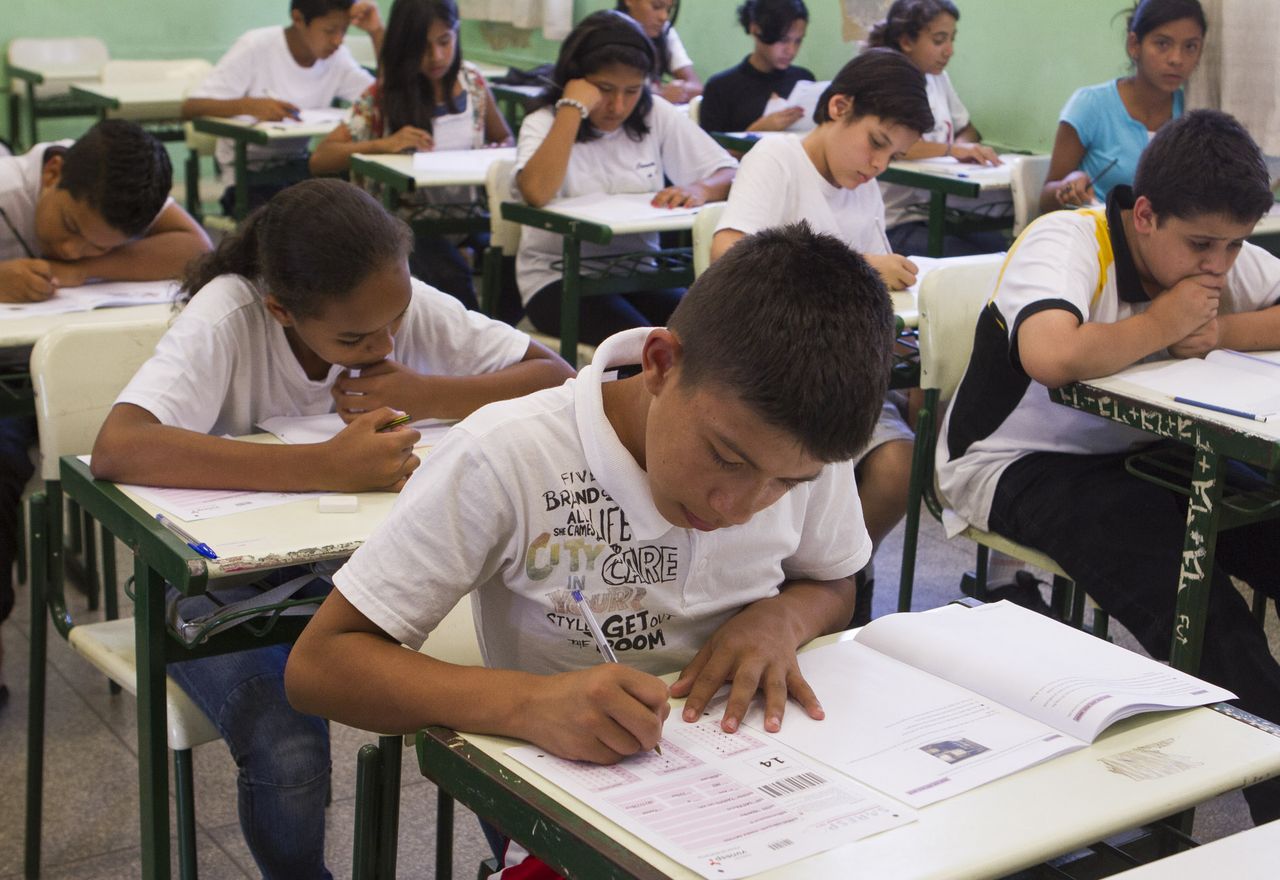
one of the problems in Brazil is the low quality of government services," he says, mentioning education and sanitation as examples
One of the problems in Brazil is the low quality of government services as education and sanitation. (Photo internet reproduction)

“When there is great uncertainty about supply, you diversify the sources and buy extra, because you do not know which will work. This was the strategy of virtually all countries in relation to the vaccine. Brazil has ordered little in relation to its population and from few laboratories”, he analyses. “You can’t do anything more stupid to find a solution to a problem of this magnitude,” he adds.

Scheinkman, who has also worked as a consultant for several financial institutions, further commented on the relationship between the taxes collected in Brazil and the size of the sanitation system. “Although it collects a lot in taxes, the percentage of the Brazilian population connected to the sanitation network is under 50%,” he says.

United States got the vaccine right, but failed in distribution

Overall, “world economic conditions have changed because of the epidemic and the health crisis that followed it, and not because of the trajectory of economic activity itself,” explains Jak Lew, professor of International Relations at Columbia University. “The recession was indeed caused by the pandemic,” he stresses.

In the American case, Lew points out that economic growth had been steady for a decade, until the pandemic halted all activity, thereby creating a recession.

Commenting on the country’s reaction to Covid-19, the professor who was also Secretary of the U.S. Treasury between 2013 and 2017 in President Obama’s administration, says that “the success of the United States was the vaccine, but the failure was its distribution.”

That is, while science is doing its job well, the logistics for delivering the doses leaves much to be desired, according to the expert, who expects “a better second semester, with the prospect of progress in vaccination campaigns”.

However, “the poor GDP figures are there to show that the task is difficult,” he adds. Moreover, “the problems in the labor market should remain with countries, even after the pandemic,” he adds.

Analyzing the global scenario, Jak Lew states that China, although it did not manage the outbreak of the pandemic well, “was able to rely on a difference in governance and the ability to impose solutions that would not be accepted in other countries, to contain the spread of the virus”; that, in the end, resulted in a strong and successful reaction to the crisis.

As for the future, according to the expert, everything will hinge on an equation that involves the likelihood that “people will be able to go back to work and school, which has an impact on growth.”
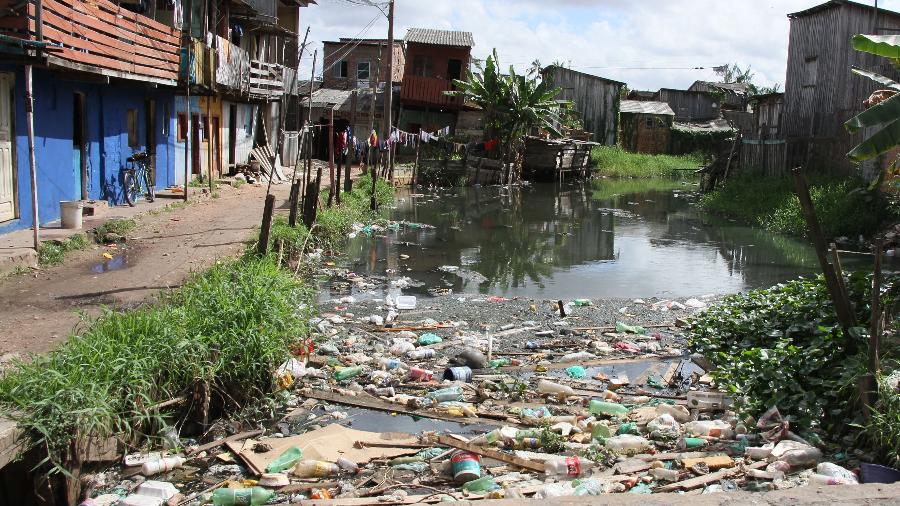
48 percent of the Brazilian population has no sewage collection
48 percent of the Brazilian population has no sewage collection. (Photo internet reproduction)

‘Europe emerges politically and economically stronger’

Also according to Professor Lew, “Europe reacted well and collectively to something that could not be solved individually by each country.” The American said he was struck by the fact that, “for the first time since World War II, Europe did everything without the help of the United States.”

But both the European bloc and the U.S. will face similar scenarios in the future, with the need to experiment with more or less strict lockdowns and the constant recourse to health barrier actions, which directly impacts the economy.

Lew adds that in the United States, the question many people are asking at the moment is “whether there is a group of Republicans wanting to work with the Democrats to advance consensual projects,” he argues.

As for emerging markets, the professor explains that with less ability to offer a fiscal response to the crisis, as seen in developed countries, they will depend on a global reaction to the pandemic issue.

The good news is that “the Fed (Federal Reserve), along with the ECB (European Central Bank), the Bank of Japan and virtually all monetary authorities capable of doing so are using every possible tool to try to boost the world economy,” explains Jak Lew. “This produces a low interest rate environment,” he adds.

“The International Monetary Fund (IMF) points to economic growth for next year, even better than in its last report, which is a direct reflection of the arrival of the vaccine and the expectation of a return to normality soon,” he says.

Finally, Jak Lew also commented on the appointment of Janet Yellen, whom he referred to as a “personal friend,” chosen to be the first woman to head the U.S. Treasury Department. Lew celebrated President Joe Biden’s choice by saying he didn’t know anyone better prepared for the position.

“We are very lucky. She has the required economic expertise and provides unity, with a strong leadership and presence on the world stage. She is a professor par excellence“, he said.

Read More from The Rio Times

The Rio Times · Power Map
See who really holds power in Latin America
Click to open the Power Map

Rotate for Best Experience

This report is optimized for landscape viewing. Rotate your phone for the full experience.