Number of judges leaving the career in Brazil is growing
RIO DE JANEIRO, BRAZIL – Beginning with the negative exposure that has been blown up by the “lavajatism” campaign – in which attempts are made to place all judges under suspicion, especially those who confront the rampant populism that has taken over the country.
Precise figures are unavailable, but the increase in responsibilities, with a greater workload, pressure for targets, and the loss of purchasing power are ejecting some of the best judges from the courts in advance.

Leaving the career before “expulsion” has its price. Quitting implies a significant reduction in remuneration. You give up 1/3 vacation, the bonus for accumulation, food allowance, besides paying social security, which you were not subject to while you were active, because of your right to the permanence allowance.
The main blow came with the surprising announcement, about a month ago, of the premature departure of justice Nefi Cordeiro of the Superior Court of Justice. At the age of 57, he gave up 18 years in the most important Brazilian court in legal matters. It was unexpected but not an isolated move.
Last week, the former president of the Association of Federal Judges of Brazil (Ajufe), Fernando Mendes, from São Paulo, also announced his resignation and return to law practice. A few days apart, the Federal Regional Court of the 2nd Region judge, Abel Gomes, at 62, did the same.
In the 3rd Region, Fábio Prieto, who presided the TRF, at 59 years old; Cecília Marcondes; and Tânia Marangani gave up their careers. Longest-serving, Cecília Mello. In the 4th Region, Jorge Maurique (who also presided over Ajufe) anticipated retirement. Also, in the 1st Region, judge Alexandre Vidigal resigned.
In January, Judge Nizete Lobato resigned from the Federal Regional Court of the 2nd Region (RJ and ES) at 66, almost a decade before her compulsory retirement.
On April 1st, it was Judge Ronei Danielli, from Santa Catarina, after ten years dedicated to the Court of Justice. He will dedicate his time to his family and other professional and social projects.
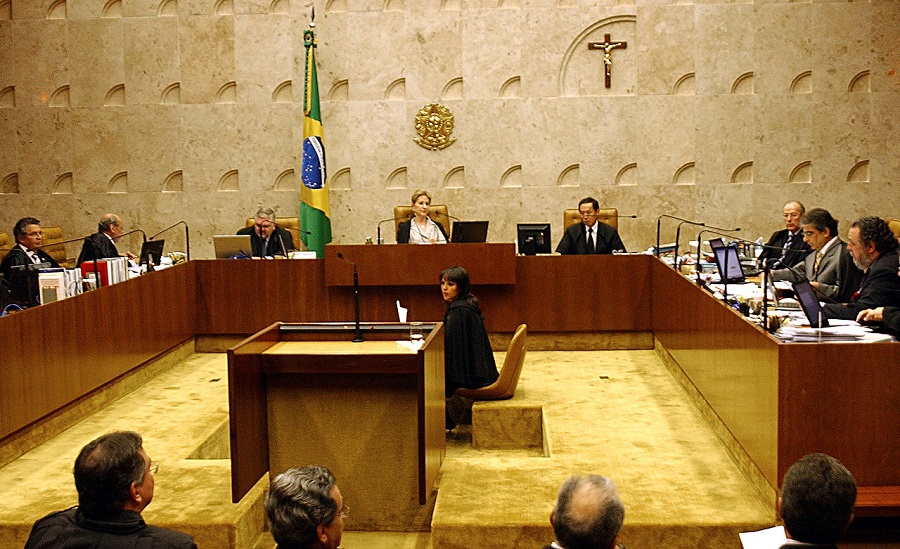
The largest court in the country, the TJ-SP, has a symptomatic performance when it comes to judges’ early retirement. From 2020 on, Roberto Galvão de França Carvalho (71 years old), Gilberto Gomes de Macedo Leme (67 years old), José Roberto Furquim Cabella (67 years old), Renato de Salles Abreu Filho (66 years old), Eros Piceli (71 years old) and former president Manoel de Queiroz Pereira Calças (70 years old) and Denise Retamero left their careers after a long journey in the lower court and four years in the court.
Judges consulted by ConJur point out that each of them expressed personal reasons for leaving their careers. But they recognize that, to some extent, the judiciary is no longer attractive: it has been attacked by public opinion, suffers from what they define as “salary flattening,” was the target of the 2019 Pension Reform, and is at the mercy of the Law against Abuse of Authority (Law 13.869/2019).
In the crosshairs
Magistrates assess that when the Judiciary is attacked, this ends up being reflected in the career’s image.
The most prominent offenses are directed at members of the higher courts. Not surprisingly, there are ongoing investigations at the Supreme Court and the STJ to investigate attempts by people seeking notoriety, such as prosecutors from the Federal Prosecutor’s Office – this one suspended by Minister Rosa Weber’s order.
According to one magistrate, colleagues who work seriously and responsibly, although almost anonymous, also end up being victims of this deconstruction process.
One of the reasons for the displeasure was in Congress during this whole period of spectacularization and was sanctioned in 2019 by President Jair Bolsonaro: the Law of Abuse of Authority (Law 13.869/2019), supported by the legal profession, but widely questioned in the STF by the most varied entities. It generated an immediate reaction in the Judiciary. Among the punishments provided are the obligation to indemnify, disqualify from holding public office for up to five years, and lose office.
“What discourages judges the most is that the act of judging has been criminalized, as in the case of the law of abuse of authority, with open criminal types and the crime of hermeneutics. The authorization of lockdown or judicial denial, for example, places the magistrate in the condition of an administrative investigator. Not to mention that countless legislative texts have deprived the career established in the Republic’s Constitution as a protection of society. We fight so that the judiciary continues to be the last door to the citizen. And that it can act independently, without pressure,” says Renata Gil, president of the Association of Brazilian Magistrates.
Class Crisis
Other issues have helped to make the magistrature career less attractive. The first is what judges call “salary flattening”, due to the lack of readjustment and the polemics involving the various bonuses they can count on – the main one being the housing allowance.
The second is the Pension Reform, approved by the Bolsonaro government in 2019. Among many other points already challenged in lawsuits in the STF, it determined the increase of the pension contribution through progressive rates, which can reach 22% in the case of federal servers.
“Without a doubt, the career has been increasingly devalued. This is bad for society in general,” said one magistrate.
Source: Conjur
More: Brazil news in English, every day from The Rio Times.
This article was produced by The Rio Times’ automated newsroom system. How we use AI · Report an error · Editorial responsibility: Matthias Camenzind, Editor-in-Chief