Peru’s President Tries to Clean up Tangled Political System with Elections January 26th
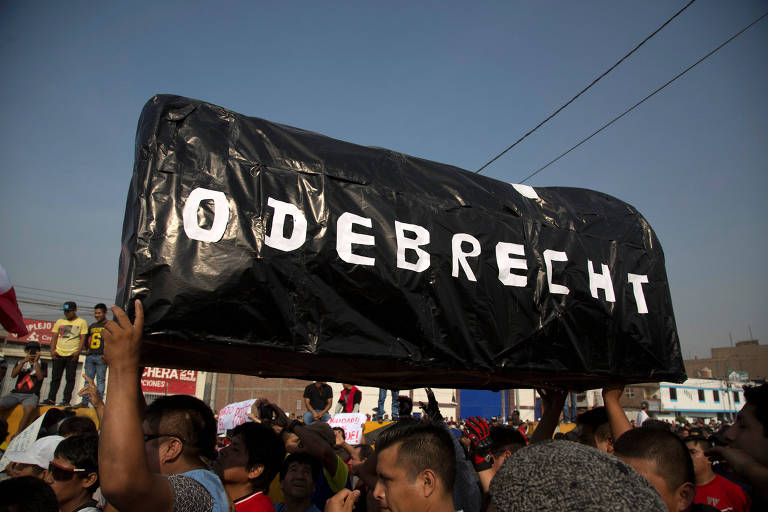
RIO DE JANEIRO, BRAZIL – The corruption scandal surrounding the Brazilian construction company Odebrecht has triggered a political earthquake in Peru. President Vizcarra is stamping his authority on the fight against corruption. When the Peruvian parliament did not support him, he called new elections.
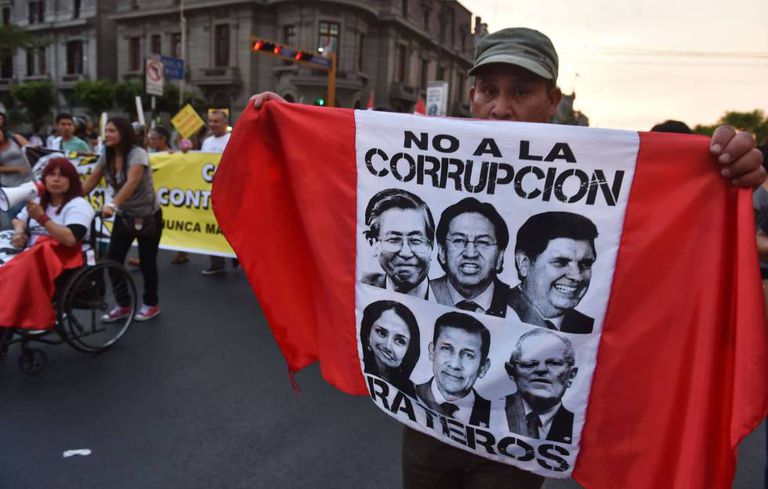
Consider four individuals. One shot himself as the police stood outside his door to arrest him. Another is in custody in the USA, awaiting extradition. A third is under house arrest. A fourth faces criminal charges and has only limited freedom of movement.

The four individuals have two things in common: (1) they were once president of Peru; and (2) they are suspected of involvement in the corruption surrounding Brazilian construction giant Odebrecht. The bribery scandal has sparked a political landslide in Peru, unlike any other country.
Odebrecht triggers political earthquake
The list is long: Even opposition leader Keiko Fujimori, who was released from a 13-month sentence in November, is accused of accepting illegal campaign donations from the construction company. Investigations are also underway against former governors, mayors, ministers and members of parliament. Over the years, Odebrecht has bribed politicians and officials with figures amounting to US$785 million (R$3.1 billion) in numerous Latin American countries, in order to obtain public construction contracts.
According to Marcelo Odebrecht, the company’s managing director at the time, US$29 million were paid out in Peru alone. Of the last five Peruvian heads of state, only Martín Vizcarra, the current president, has clean hands in the affair. This lends him credibility as a consistent anti-corruption campaigner.
Vizcarra only holds the presidency because his predecessor, Pedro Pablo Kuczynski, stumbled after evidence of corruption in March 2018, and Vizcarra, his vice president, succeeded him in office. From the outset, the non-party Vizcarra has made it his mission to clean up the tangled web of political wrongdoing with a comprehensive reform agenda.
But he quickly realized how difficult it was going to be. The opposition party, which holds the majority in Congress, continually blocked his plans. He did not let this deter him, however.
The 56-year-old accuses MPs of torpedoing his efforts in the fight against corruption, in order to protect their own interests. For months now, a power struggle has been raging between the President and parliament, which reached a new peak in autumn.
Parliament stands at odds
This was triggered by a congressional decision regarding the appointment of six of the eleven judges at the Constitutional Tribunal. The deputies tried to appoint hand-picked candidates with political ties to the opposition. Vizcarra criticised the plan, demanded procedural transparency, and gave Congress an ultimatum: if Congress did not comply with his demands, he would dissolve Parliament.
Congress did not acknowledge what Vizcarra considered a vote of no confidence. It immediately dissolved and Vizcarra called new parliamentary elections on 26 January. The ballot should actually have taken place in April 2021, when the next presidential elections will also be held.
The opposition dismissed the move as unconstitutional, suspended Vizcarra from his post and appointed Vice-President Mercedes Aráoz as interim head of state. However, the military and police immediately backed Vizcarra, which is why Aráoz resigned after only one day. The dissolution of parliament was also met with popular approval. In several cities throughout Peru, government supporters took to the streets cheering.
Vizcarra wants to take the new elections as an opportunity to clean up Peru’s political landscape. Several criminal proceedings are currently underway against members of the opposition party, Voluntad, notorious in Congress for corruption.
Since these members enjoy parliamentary immunity, many of the trials have been put on hold. The appointment of judges who are sympathetic toward them, and who would also be in charge of deciding whether to remove their immunity, would have been entirely in their interests.
This manoeuvre failed. In addition, the cases of the suspected Members of Parliament will be reopened by the judiciary if they are not re-elected at the end of the month.
Will re-election strike a blow for liberty? Despite broad support for Vizcarra’s dissolution of parliament, the action has also provoked criticism in certain circles. But Peru’s constitutional court ruled that Vizcarra’s dissolution of parliament was legal. Whether the new elections will lead to the president getting his reforms off the ground, still remains to be seen.
In a speech in mid-December, Vizcarra called on Peruvians to elect candidates on January 26th who would support his agenda in the fight against corruption. The high number of undecided voters makes the outcome of the election unpredictable.
However, experts believe that moderate forces will dominate in the end. Whether they will support Vizcarra in his reform plans is not a given. If the new Congress backs them, experts agree that he could go down in Peru’s history books as a consistent anti-corruption campaigner.
More: Brazil news in English, every day from The Rio Times.
This article was produced by The Rio Times’ automated newsroom system. How we use AI · Report an error · Editorial responsibility: Matthias Camenzind, Editor-in-Chief